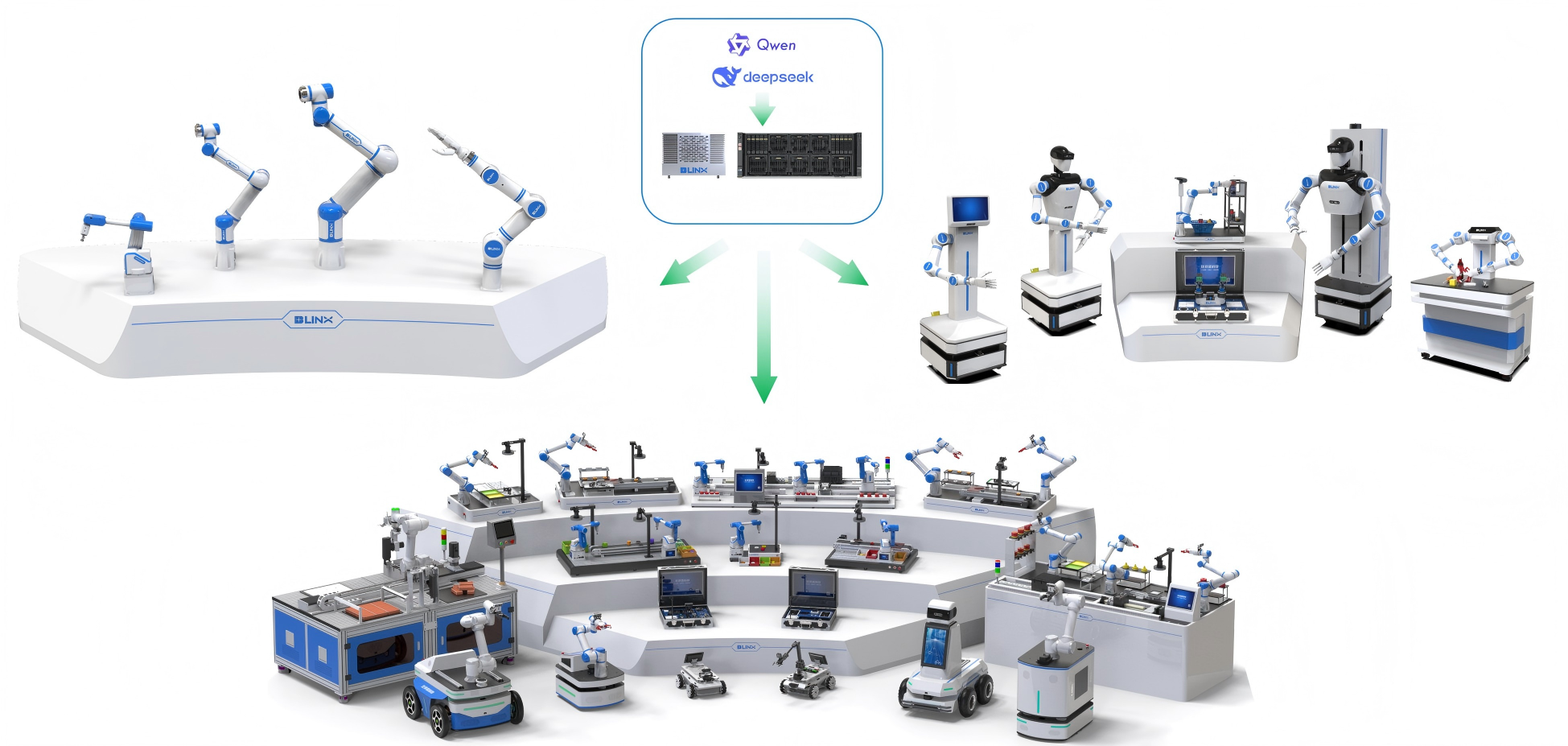
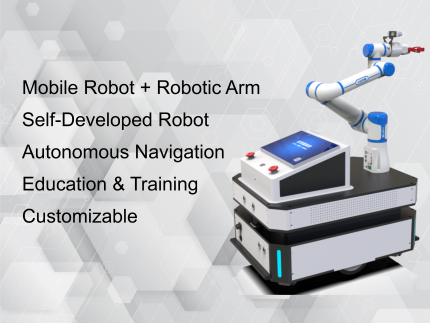
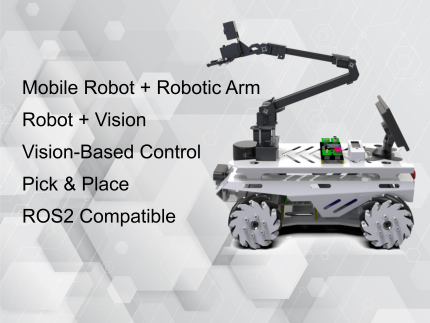
Five years, more than 60 university projects, and one lesson that changed the way I think about University AI Laboratory planning.
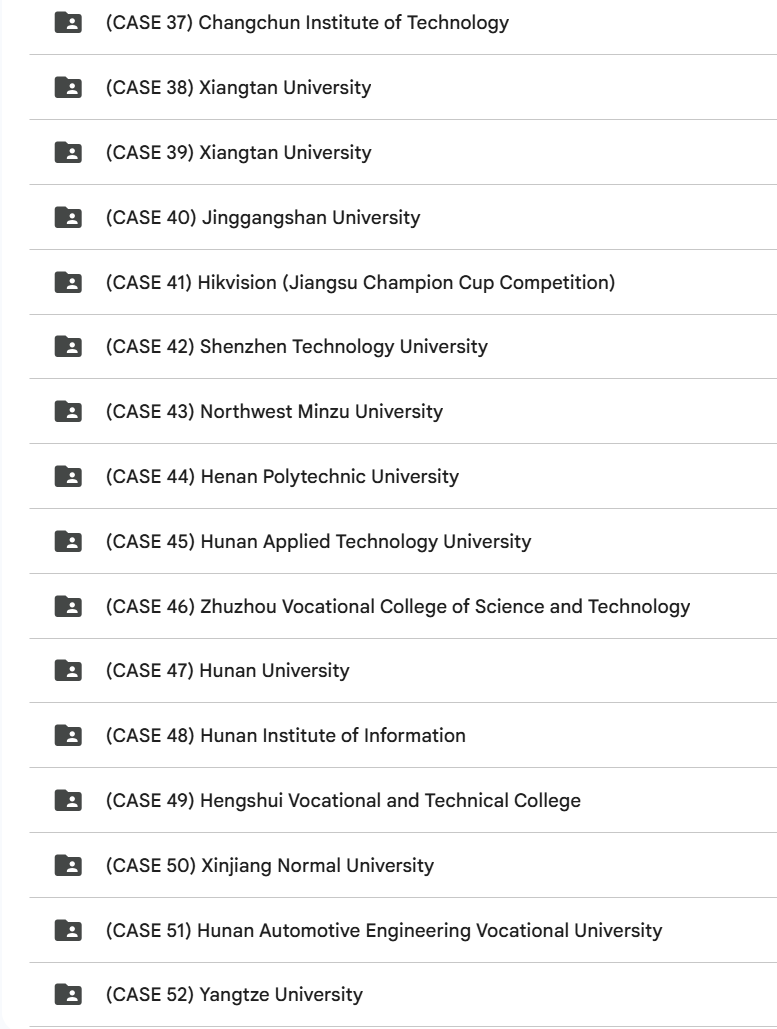
Over the past five years, I have contributed to the needs analysis, solution planning, and technical proposal development for more than 60 university AI and robotics laboratory projects.
These projects involved different institutions, disciplines, budgets, teaching priorities, and levels of technical readiness. Some focused on artificial intelligence and machine vision. Others involved industrial robots, mobile robotics, smart manufacturing, multimodal interaction, or embodied AI.
At the beginning of my career, I believed that better equipment would naturally lead to a better University AI Laboratory.
More powerful computers, more accurate robots, higher-resolution cameras, and more advanced software seemed to be the obvious ingredients of a successful project.
However, after participating in more projects and speaking with professors, system integrators, engineers, and university administrators, I gradually realized that this assumption was incomplete.
I saw laboratories with impressive equipment that struggled to support regular teaching.
I also saw laboratories with more modest configurations that were used continuously for courses, student projects, competitions, and faculty research.
The difference was rarely explained by a single technical specification.
More often, it came down to the questions asked before the equipment was selected.
The most important lesson I have learned is simple:
Better AI and robotics laboratories do not begin with better equipment. They begin with better questions.
1. The First Question Is Often the Wrong One
At the beginning of many University AI Laboratory projects, the first discussion is usually about budget or equipment.
Questions often include:
- How many robots should we purchase?
- What payload should the robot have?
- Which GPU should we use?
- Which brand should we select?
- How many systems can the available budget cover?
- What specifications should be included in the tender?
These are all necessary questions.
But they are usually asked too early.
Before discussing robot payload, computing performance, camera resolution, or equipment quantity, there are more fundamental questions that need to be answered:
- Which programs will use the laboratory?
- Which courses need practical teaching platforms?
- What should students be able to design, develop, and troubleshoot?
- How will professors integrate the equipment into their courses?
- Will the laboratory support teaching, research, competitions, or industry collaboration?
- How many students will use the systems at the same time?
- What capabilities might the university need three to five years from now?
If these questions remain unclear, a technically impressive equipment list may still produce a weak educational solution.
The problem is not that equipment specifications are unimportant.
The problem is that specifications should be the result of educational planning, not the starting point.
2. Universities Are Not Really Buying Robots
A university may issue a purchase order for robots, vision systems, computing platforms, sensors, and software.
But these products are not the final objective.
They are tools.
What the university is actually trying to build is a practical learning environment in which students can develop relevant technical and engineering capabilities.
A University AI Laboratory is not created simply so that students can press a start button or repeat a fixed robotic motion.
It may be designed to help students understand:
- robot kinematics and motion control,
- computer vision and visual positioning,
- sensor integration and data acquisition,
- AI model development and deployment,
- autonomous navigation,
- human-robot interaction,
- system integration,
- engineering debugging,
- and project implementation.
The equipment matters because it creates a physical environment in which these capabilities can be developed.
This changes the way a laboratory should be evaluated.
Instead of asking only:
What equipment will the university receive?
We should also ask:
What will students be able to do after using it?
Can they independently modify the program?
Can they connect new sensors?
Can they analyze data instead of only observing a demonstration?
Can they combine vision, AI, and robot control into a complete project?
Can they identify a system failure and determine whether the problem comes from hardware, software, communication, calibration, or algorithms?
These questions reveal the educational value of a University AI Laboratory more clearly than the number of devices in the room.
3. Professors, Integrators, and Suppliers Are Often Having Different Conversations
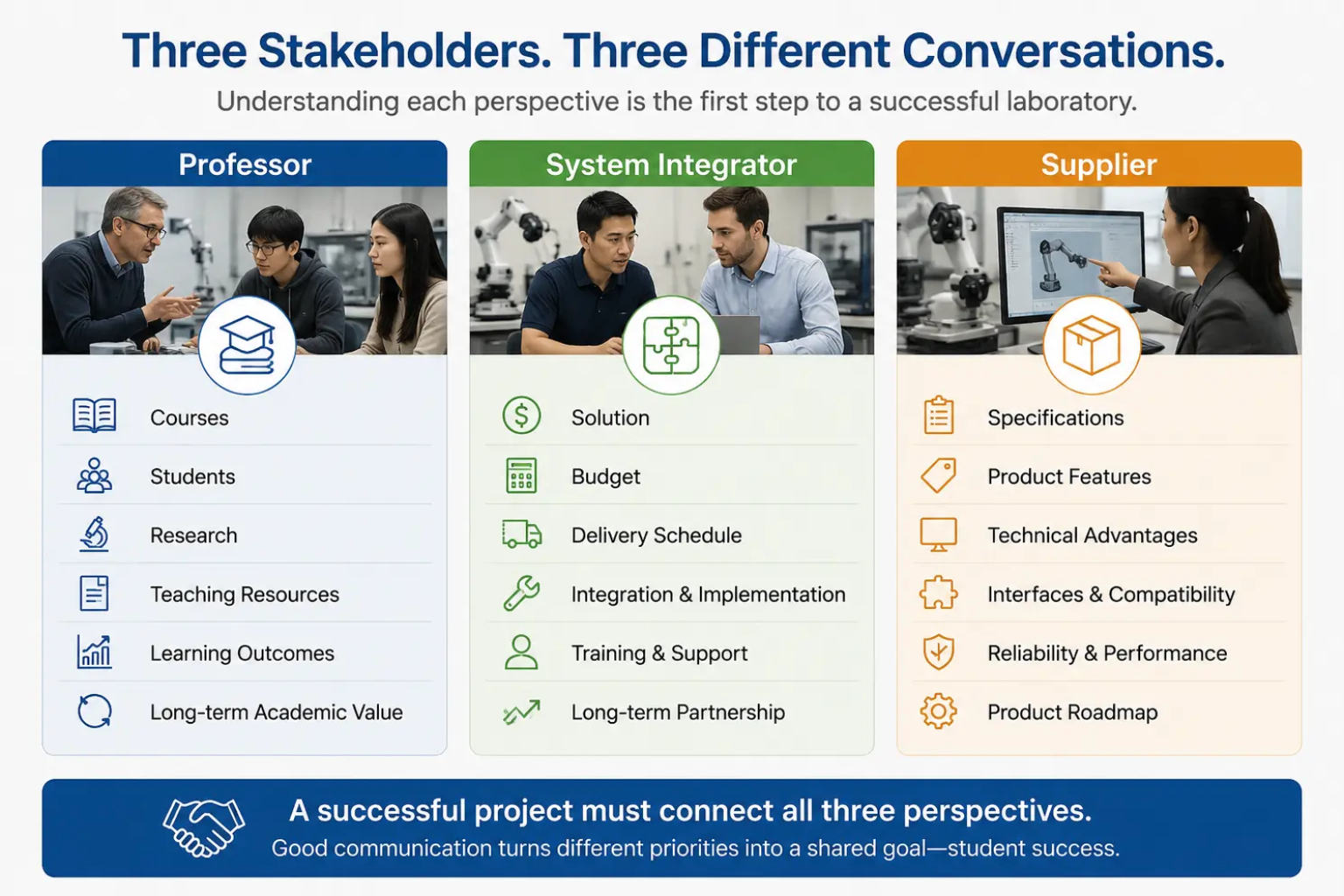
One reason laboratory projects become difficult is that the main participants are often discussing different priorities.
University administrators may be thinking about:
- program development,
- student recruitment,
- accreditation,
- institutional visibility,
- budget utilization,
- and long-term development.
Professors may be thinking about:
- course content,
- laboratory exercises,
- student workload,
- research projects,
- graduation projects,
- technical support,
- and how much preparation time is required before each class.
System integrators may focus on:
- overall solution design,
- budget allocation,
- product compatibility,
- installation,
- delivery,
- acceptance,
- and after-sales responsibility.
Equipment suppliers naturally pay attention to:
- product capabilities,
- specifications,
- technical differentiation,
- interfaces,
- and commercial competitiveness.
None of these perspectives is wrong.
The problem begins when nobody connects them.
A professor may describe a need in educational language:
“I want students to understand visual guidance and robotic sorting.”
An equipment supplier may respond in product language:
“This camera has six million pixels, and this robot has a repeatability of ±0.02 mm.”
Both statements may be correct, but they are not yet a complete University AI Laboratory solution.
Someone still needs to translate the educational objective into:
- learning outcomes,
- course modules,
- practical projects,
- required system capabilities,
- equipment architecture,
- training,
- documentation,
- and long-term support.
This is where a capable system integrator can create real value.
The most important integration work is not simply connecting hardware.
It is connecting educational needs with a technically feasible and deliverable laboratory architecture.
4. The Best System Integrators Do Not Start with Products
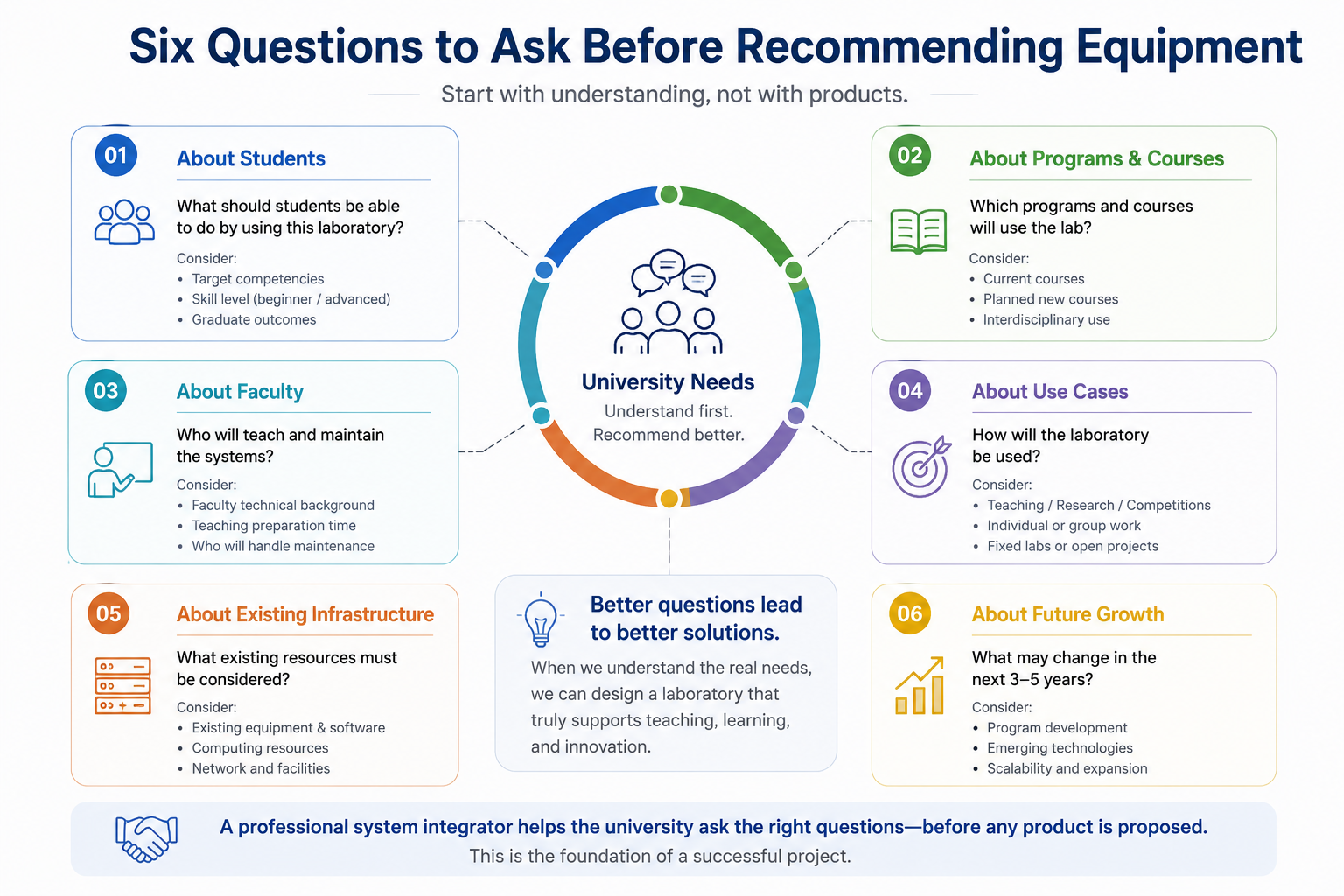
A strong system integrator does not need to recommend a product immediately.
Sometimes, the most professional response is to ask more questions.
When meeting a university for the first time, I believe the most valuable questions are not:
- What is your budget?
- Which robot brand do you prefer?
- How many devices do you want?
Those questions will eventually need answers, but they should come later.
The discussion should begin with questions such as:
What do you want students to be able to do?
Should they understand basic concepts, develop applications, integrate systems, conduct research, or solve industry-oriented engineering problems?
Which courses will use the laboratory?
A University AI Laboratory intended for introductory AI education should not be planned in the same way as a robotics research laboratory or an industrial automation training center.
Who will teach and maintain the systems?
A platform may be technically powerful but still unsuitable if it creates an unreasonable preparation or maintenance burden for faculty.
How will students use the equipment?
Will students work individually, in pairs, or in groups? Will the platform be used for fixed exercises, open projects, competitions, or graduation work?
What existing infrastructure must be considered?
The university may already have computing servers, robots, cameras, PLC systems, software licenses, or teaching platforms. A new project should not automatically replace everything that already exists.
What may change in the next three to five years?
The university may later add courses related to large language models, AI agents, embodied intelligence, autonomous robots, digital twins, or smart manufacturing.
This does not mean every laboratory must purchase all of these technologies today.
It means the architecture should avoid unnecessary limitations that make future development difficult.
A good system integrator does not simply provide faster answers.
A good system integrator helps the university ask more accurate questions.
5. Advanced Equipment Does Not Automatically Create a Successful Laboratory
It is easy to assume that an advanced laboratory will naturally be widely used.
In reality, University AI Laboratory utilization depends on much more than hardware capability.
A system may gradually become underused when:
- the software environment is difficult to configure,
- course materials are incomplete,
- experiments depend heavily on vendor engineers,
- professors cannot modify the examples,
- different devices use incompatible interfaces,
- troubleshooting requires too much time,
- the learning curve is too steep for introductory courses,
- or the equipment supports demonstrations but not student development.
This is why the most advanced technical solution is not always the most suitable educational solution.
For teaching applications, a laboratory needs a balance between capability, openness, stability, and usability.
If a platform is too closed, students and faculty cannot explore beyond predefined exercises.
If it is too complex, teachers may not have enough time to prepare, maintain, and troubleshoot it.
If it is too simplified, students may only learn operational procedures without understanding the underlying engineering principles.
A successful teaching platform should provide a gradual learning path.
For example:
- Students first understand the hardware and software architecture.
- They reproduce basic experiments.
- They modify parameters and program logic.
- They connect additional sensors or modules.
- They combine multiple functions into an integrated project.
- They eventually design and validate their own applications.
The goal is not to remove complexity completely.
The goal is to organize complexity so that students can progressively understand and manage it.
6. The University AI Laboratory Planning Framework I Use Today
Today, I prefer to think about University AI Laboratory planning in the following order:
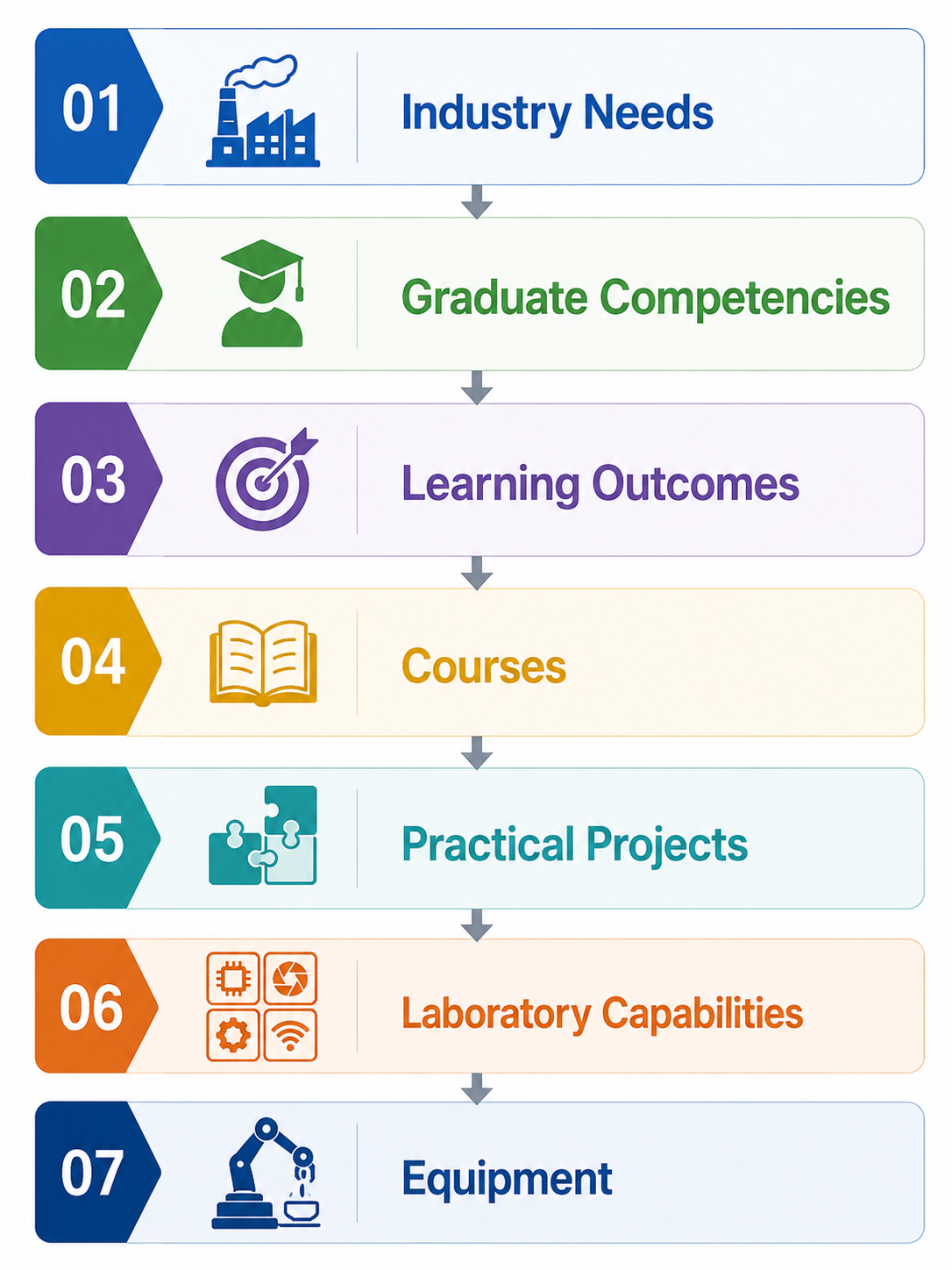
Industry Needs
What types of technical roles and engineering problems are emerging in the industries the university serves?
This does not mean that universities should follow every short-term technology trend. It means that laboratory planning should remain connected to real engineering practice.
Graduate Competencies
What should students be capable of doing when they graduate?
For example, should they be able to train an AI model, deploy it to an edge device, integrate a vision system, control a robot, configure a communication network, or debug a complete automation process?
Learning Outcomes
What specific knowledge, skills, and engineering methods should students gain at each stage?
Learning outcomes should be observable and assessable.
“Understanding robotics” is too broad.
“Completing hand-eye calibration and using the calibration results to guide robotic picking” is much more specific.
Courses
Which courses will develop these outcomes?
Different courses may share the same equipment while focusing on different layers of the system.
A machine vision course may focus on image acquisition and processing.
A robotics course may focus on coordinate systems and motion control.
A system integration course may combine vision, robots, sensors, communication, and production workflows.
Practical Projects
What will students actually build, test, and troubleshoot?
Projects should progress from basic verification to integrated engineering applications.
Laboratory Capabilities
What technical capabilities are required to support those projects?
These may include:
- AI computing,
- machine vision,
- robot manipulation,
- mobile navigation,
- multimodal perception,
- data acquisition,
- industrial communication,
- edge deployment,
- or system integration.
Not every university needs every capability.
The appropriate combination depends on its programs, faculty, budget, and development strategy.
Equipment
Only after the previous questions are clear should specific equipment, configurations, quantities, and brands be selected.
This approach does not make equipment less important.
It makes equipment selection more meaningful.
Earlier in my career, I often thought about equipment first and then considered what it could be used to teach.
Today, I try to begin with education and allow the equipment requirements to emerge from the learning system.
In other words:
Equipment should come last in the planning sequence—but it should fit everything that comes before it.
7. If I Could Start Again
If I could return to the beginning of my work in University AI Laboratory planning, I would spend less time discussing products during the earliest stages of a project.
I would spend more time asking about:
- the students,
- the professors,
- the curriculum,
- the teaching process,
- the institution’s existing capabilities,
- and its long-term development plan.
I would discuss fewer isolated specifications and more complete learning scenarios.
I would ask fewer questions about what a device can demonstrate and more questions about what students can independently develop.
I would treat faculty training as part of the laboratory system, rather than as a short activity completed during delivery.
I would think about software updates, course evolution, interface compatibility, and future expansion before finalizing the equipment list.
I would also be more careful about assuming that one successful configuration could be copied directly to another university.
No single laboratory architecture, equipment list, or technology platform is suitable for every institution.
A research university, an applied university, and a technical college may all work with AI and robotics, but their teaching goals, faculty capabilities, student backgrounds, and project expectations can be very different.
University AI Laboratory planning should therefore be based on the institution’s actual educational context—not on the most advanced technology available or the most familiar product portfolio.
These observations are not universal specifications, nor are they a fixed laboratory model.
They are planning principles drawn from projects involving different disciplines, budgets, teaching priorities, and implementation conditions.
The purpose of these principles is not to make every laboratory identical.
It is to help each institution build a laboratory that is more relevant, usable, and adaptable to its own goals.
Better Questions Lead to Better Laboratories
After working on more than 60 university AI and robotics laboratory projects, I no longer believe that the best University AI Laboratory begins with the most advanced equipment.
Equipment is important.
Technical specifications are important.
Budget, delivery, installation, and support are all important.
But they only create long-term value when they are connected to a clear educational purpose.
Before asking which robot to purchase, we should ask what students need to learn.
Before deciding how many systems to install, we should ask how courses will be organized.
Before pursuing the latest technology, we should ask whether faculty can use, maintain, and develop it.
Before defining a laboratory as successful, we should ask whether it continues to support students and professors after the acceptance process is complete.
A laboratory is not simply a room filled with devices.
It is a learning system made up of people, courses, projects, software, hardware, support, and continuous development.
The equipment will change.
The software will change.
AI and robotics technologies will continue to evolve.
A well-planned laboratory should be able to evolve with them.
That is why the most important lesson I have learned is not about robots, cameras, GPUs, or algorithms.
It is about questions.
Better laboratories do not begin with better equipment.
They begin with better questions.
For those involved in University AI Laboratory and robotics laboratory projects:
What is the first question you ask before recommending a solution?