Professional supplier of AI and robot teaching equipment
Professional supplier of AI and robot teaching equipment
Available on backorder
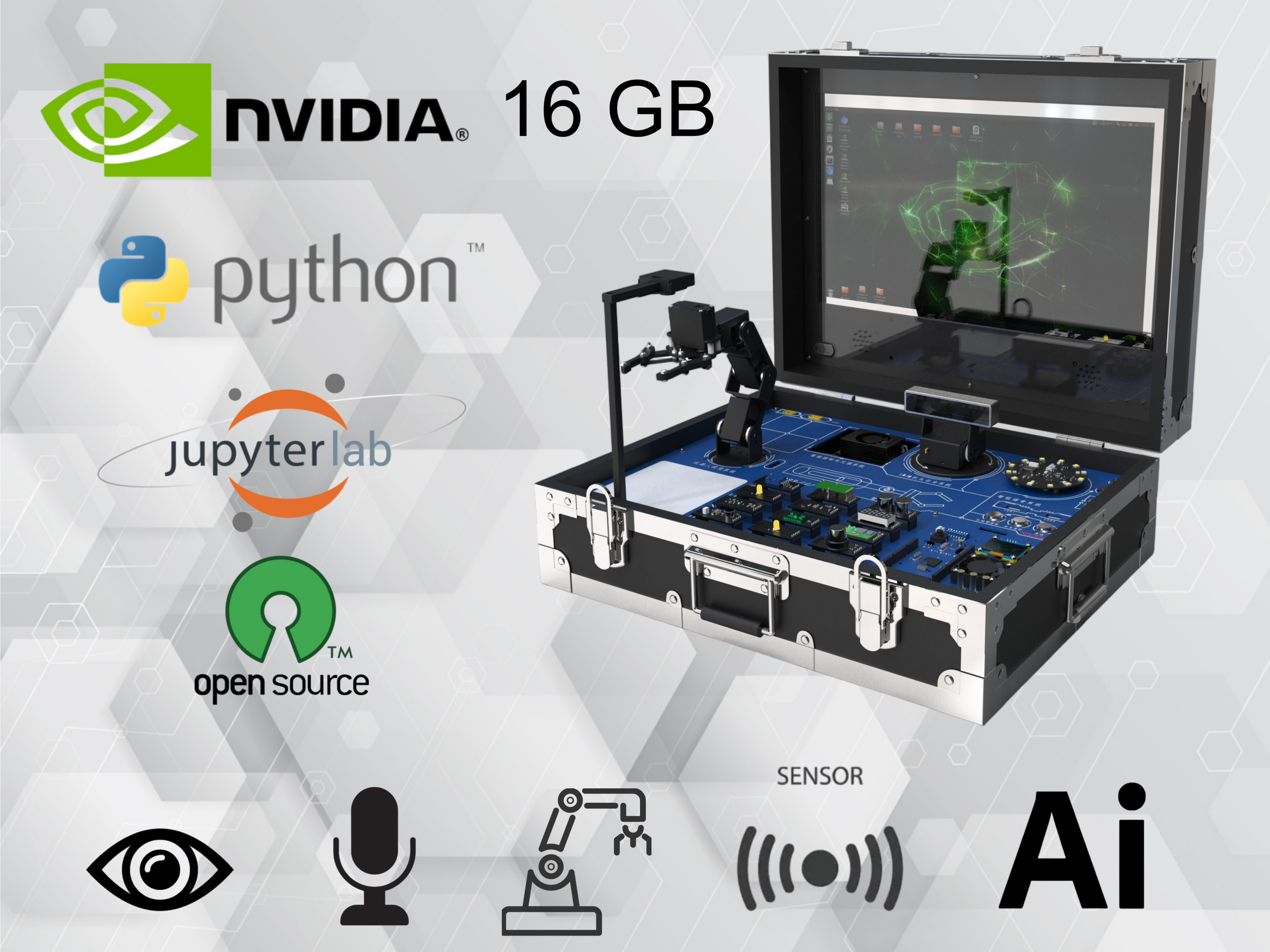
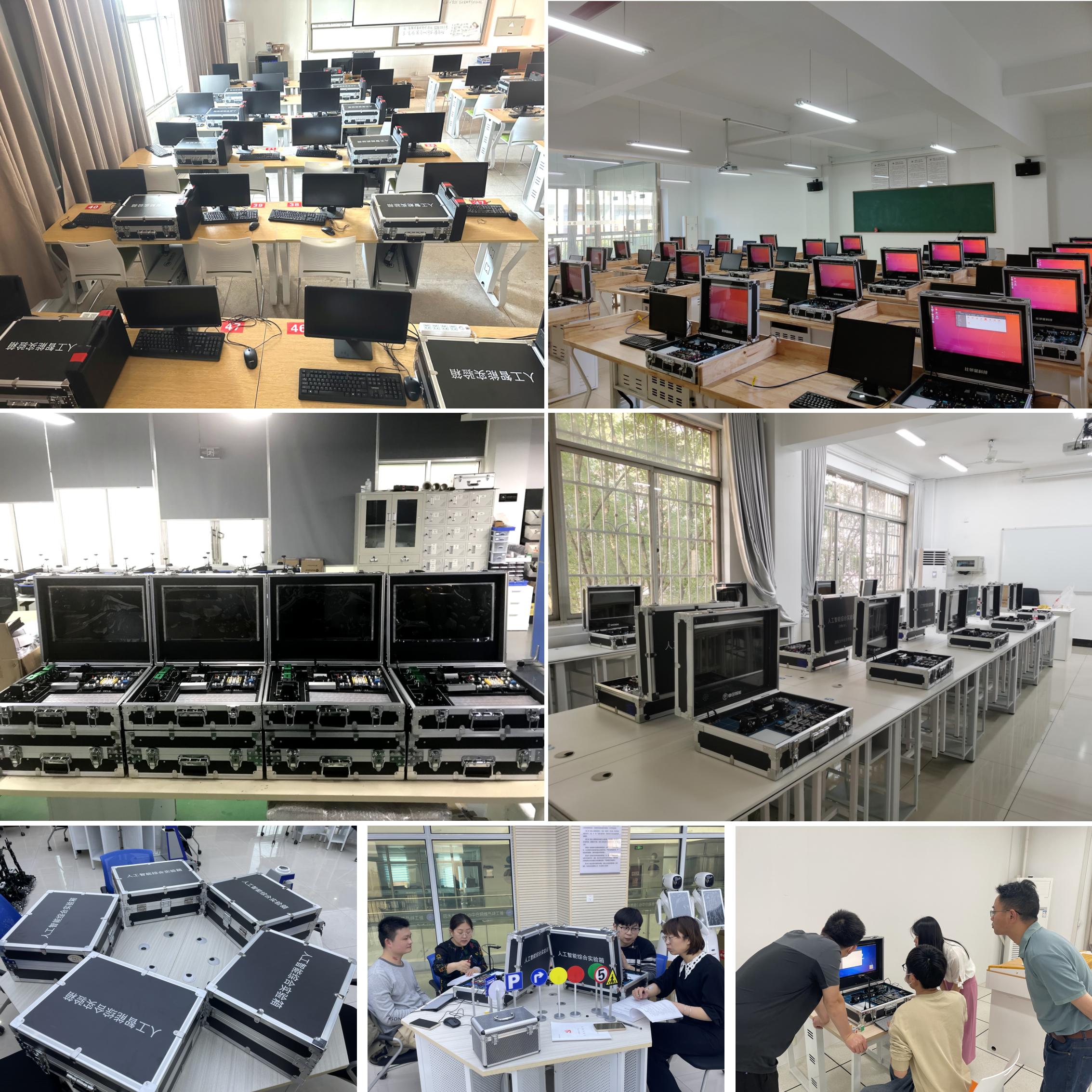
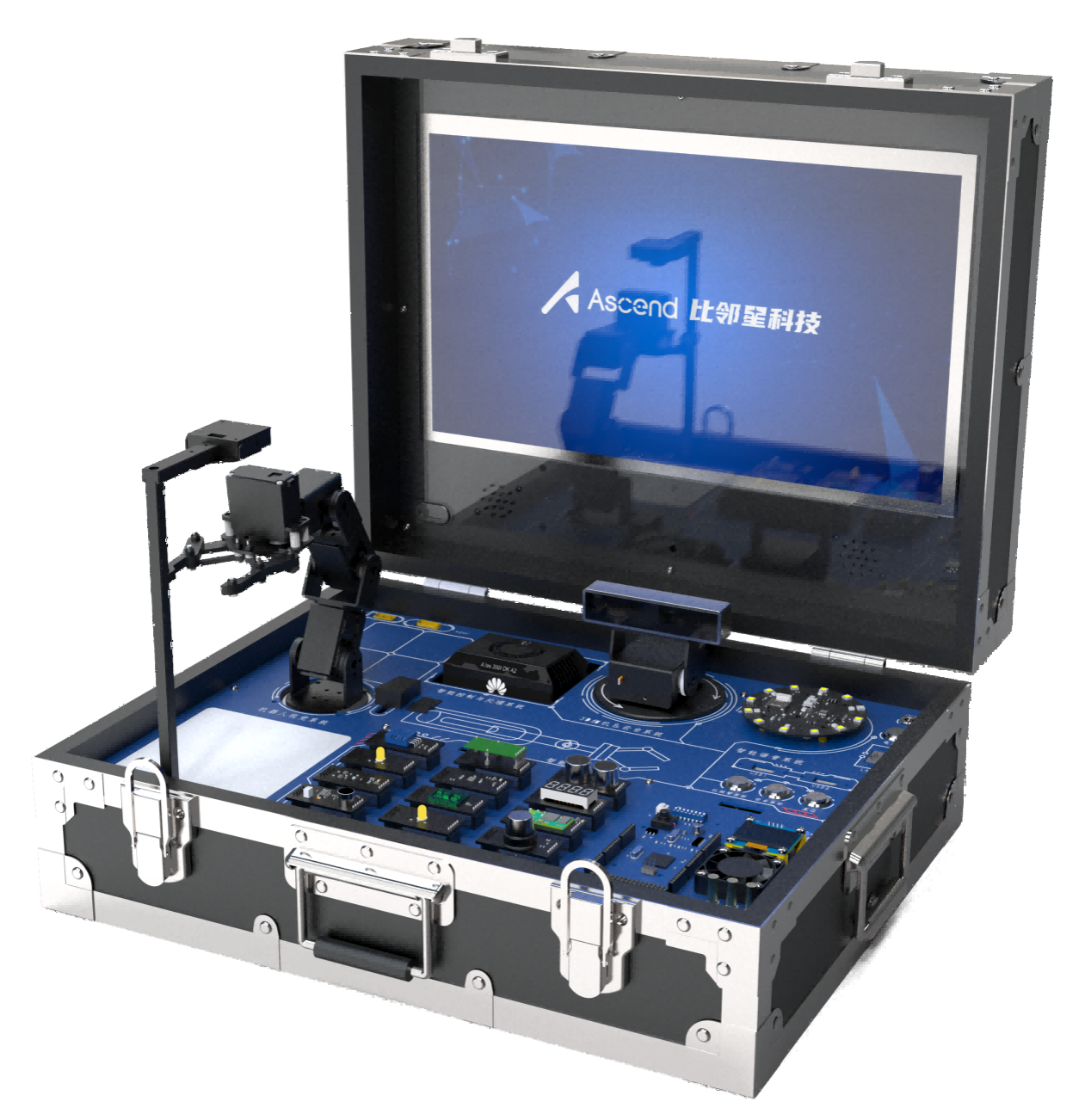
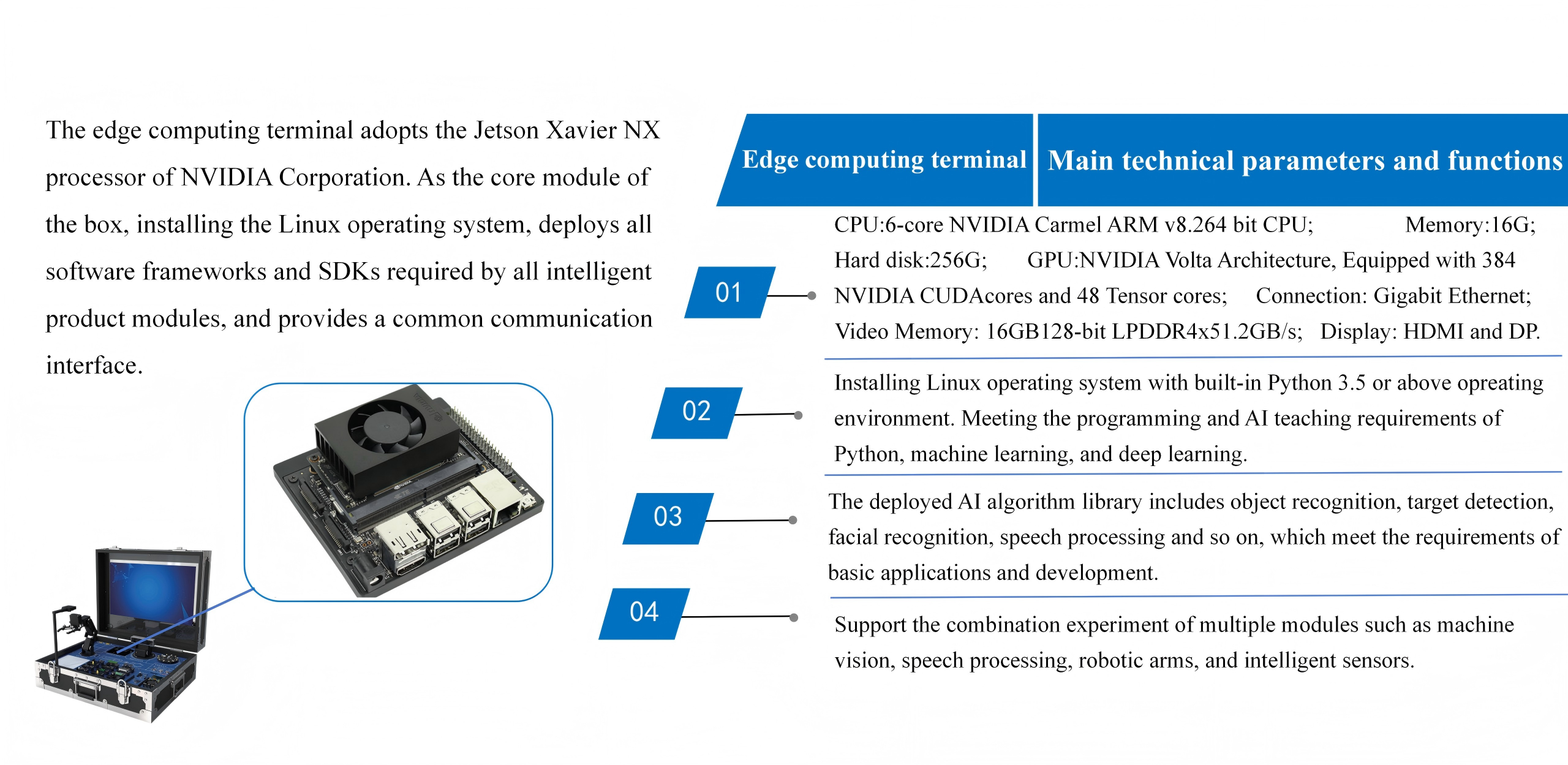
The Advanced AI Experiment Box is an upgraded solution designed for higher-level AI education and research. Building on the functionality of the standard version, it features significantly enhanced computing performance, enabling local deployment of AI models without reliance on cloud services. The system supports edge-side inference and training for machine learning and deep learning applications, meeting the requirements of more complex AI scenarios.
Based on a Linux operating system and supporting Python-based development, the advanced edition allows students to work with computer vision, speech recognition, multimodal interaction, intelligent control, and AI model optimization in a fully offline environment. With its expanded computing resources and open architecture, the platform is well suited for advanced courses such as deep learning, edge AI, intelligent robotics, multimodal AI systems, and large-model application development, effectively bridging the gap between theoretical learning and real-world AI deployment.
Dimensions (in)
18.9×15×7.9
Weight (kg)
12
Communication Interface
USB, Wi-Fi, Bluetooth
Structure
Aluminum alloy, integrated design, includes keyboard, mouse, power adapter, and educational tools; plug-and-play
Display
17-inch IPS screen, ≥ 1920×1080 resolution
Integrated Components
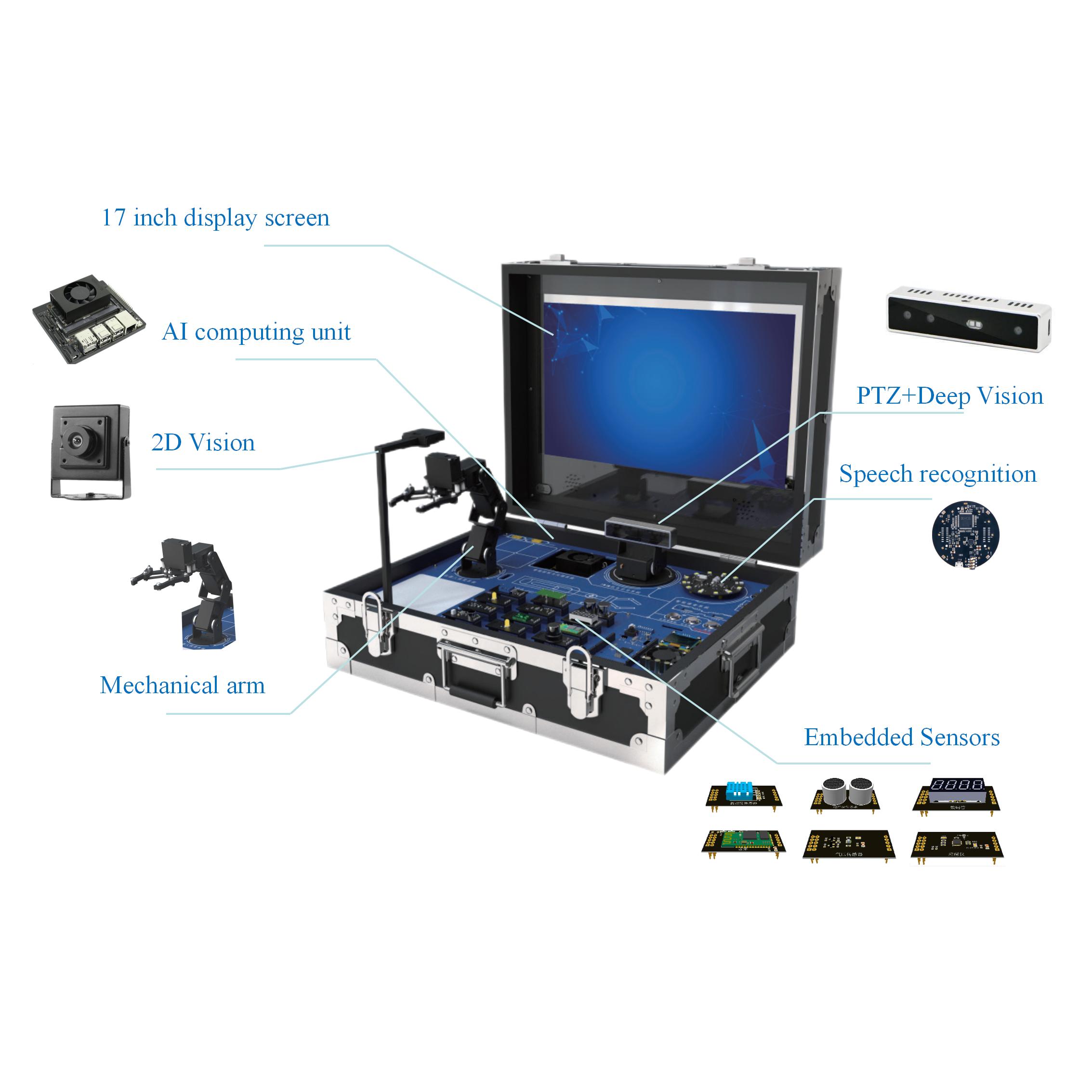
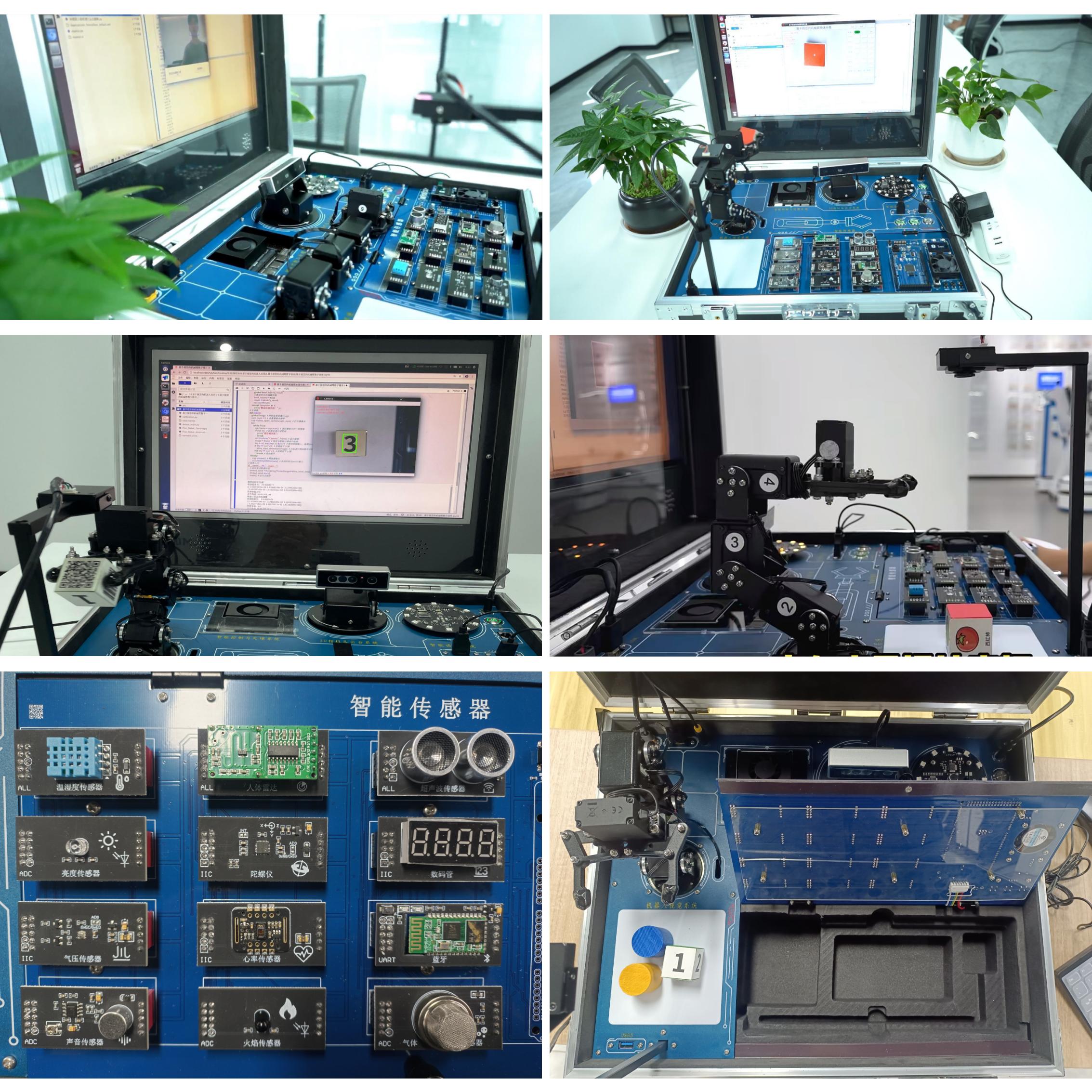
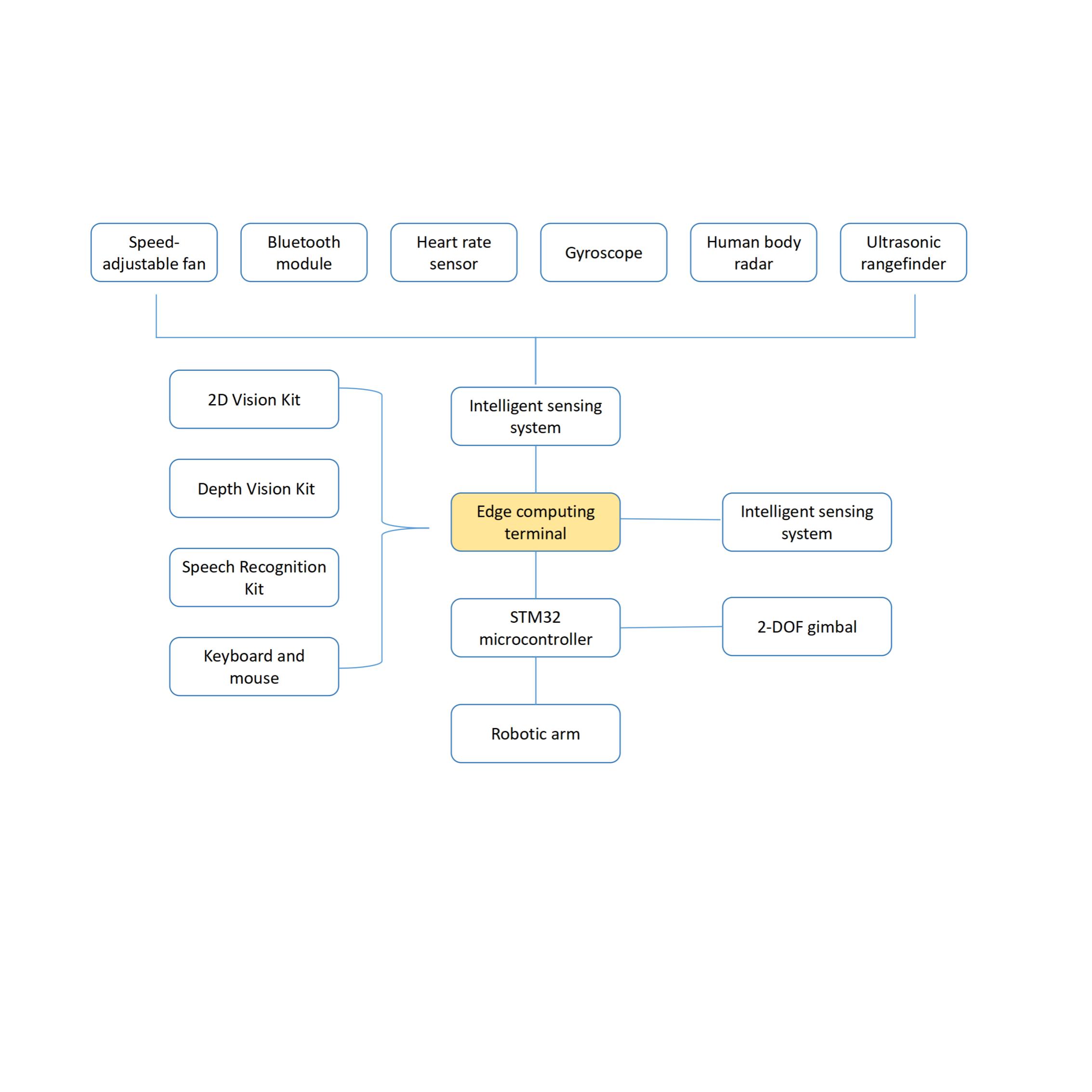
Robotic arms, 2D vision, depth vision, two-axis gimbal, voice module, embedded sensors, etc.
Computing Unit
6-core NVIDIA Carmel ARM CPU, 16GB RAM, 256GB storage, NVIDIA Volta GPU with 16GB memory
Vision Systems
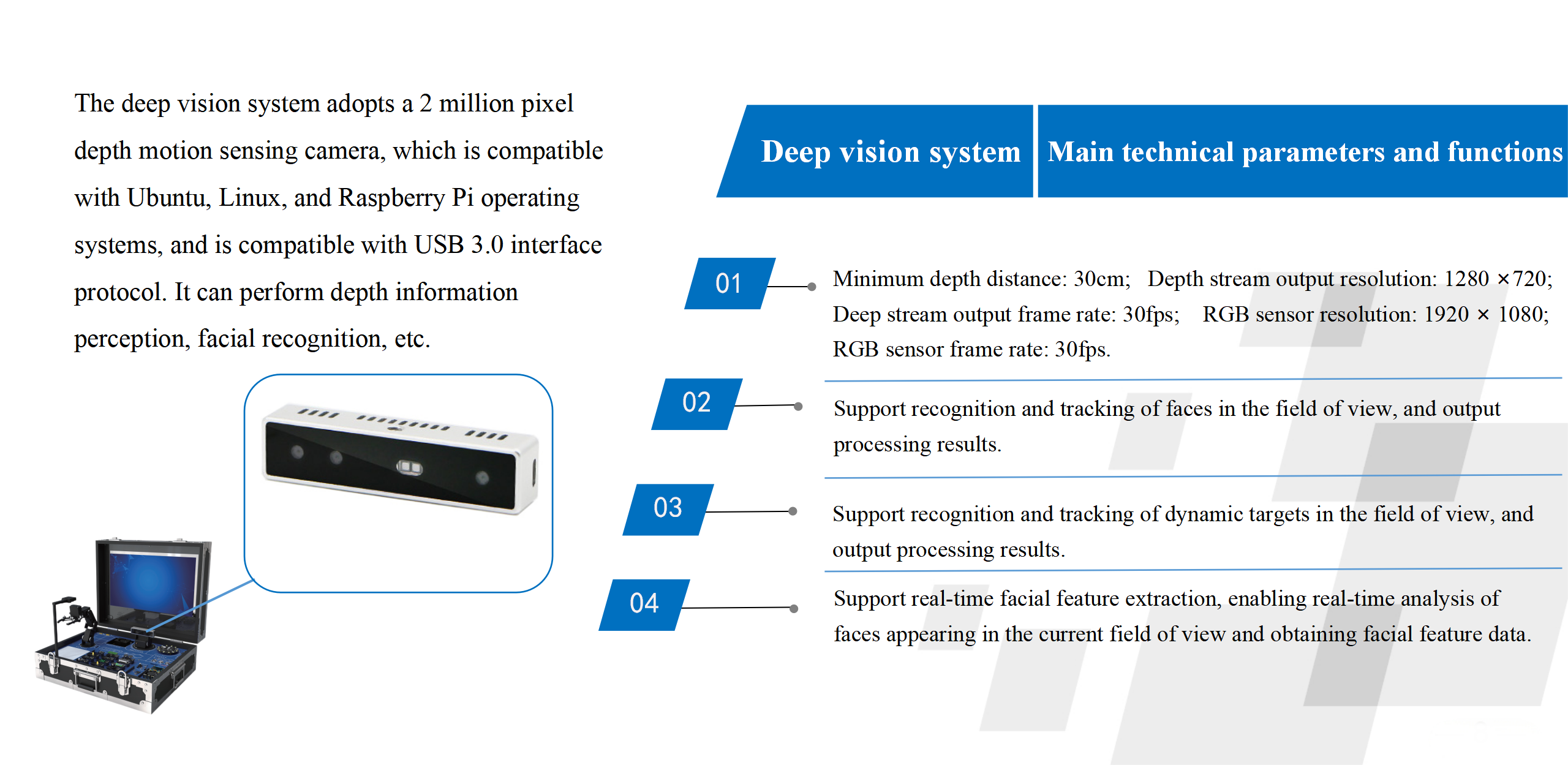
2D vision: ≥ 640×480 resolution, Depth camera: ≥ 640×400 resolution
Robot Arm
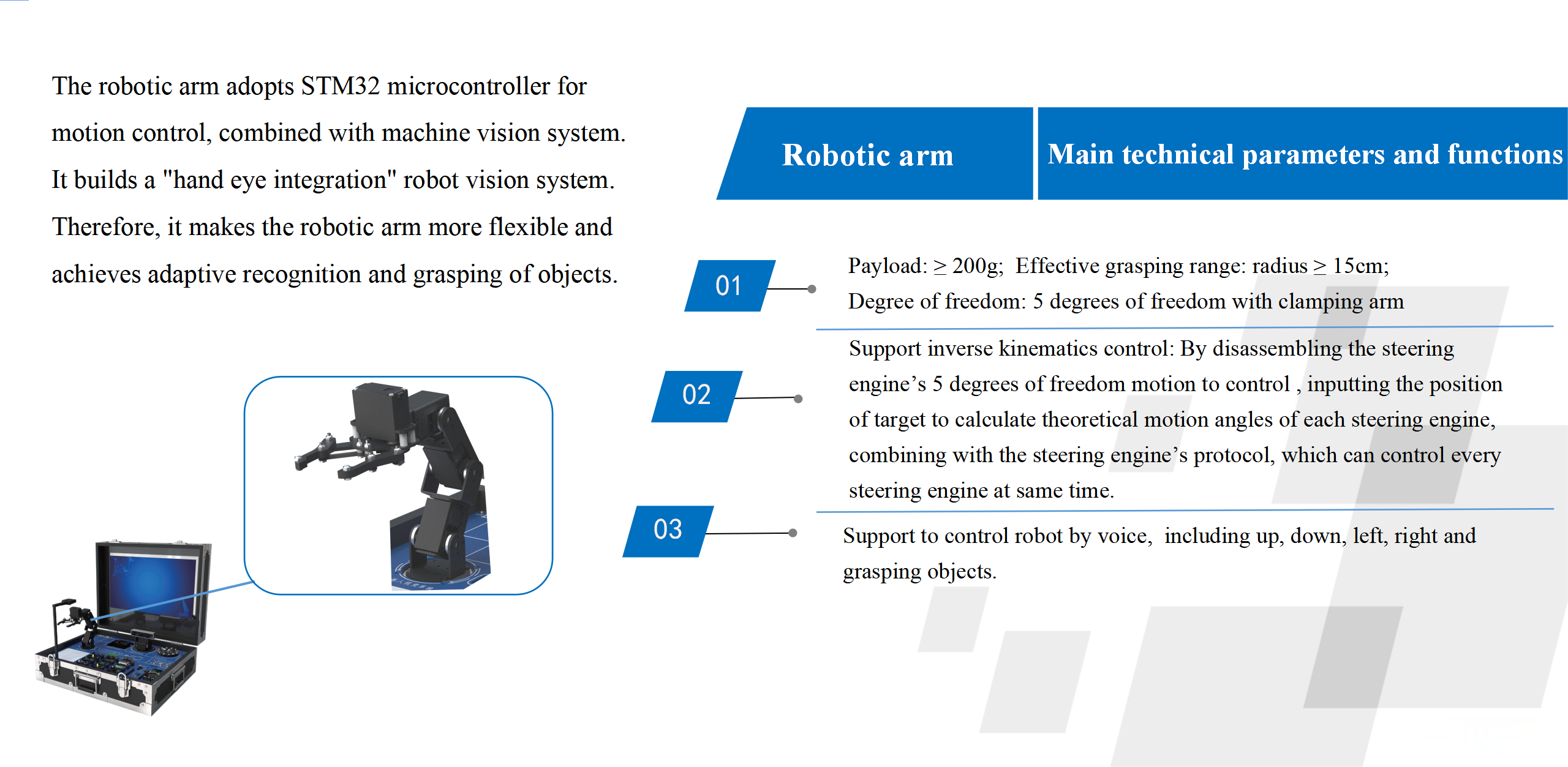
5-axis, 15cm gripping range, two-finger gripper, kinematic solver, one-button start/reset
Sensors
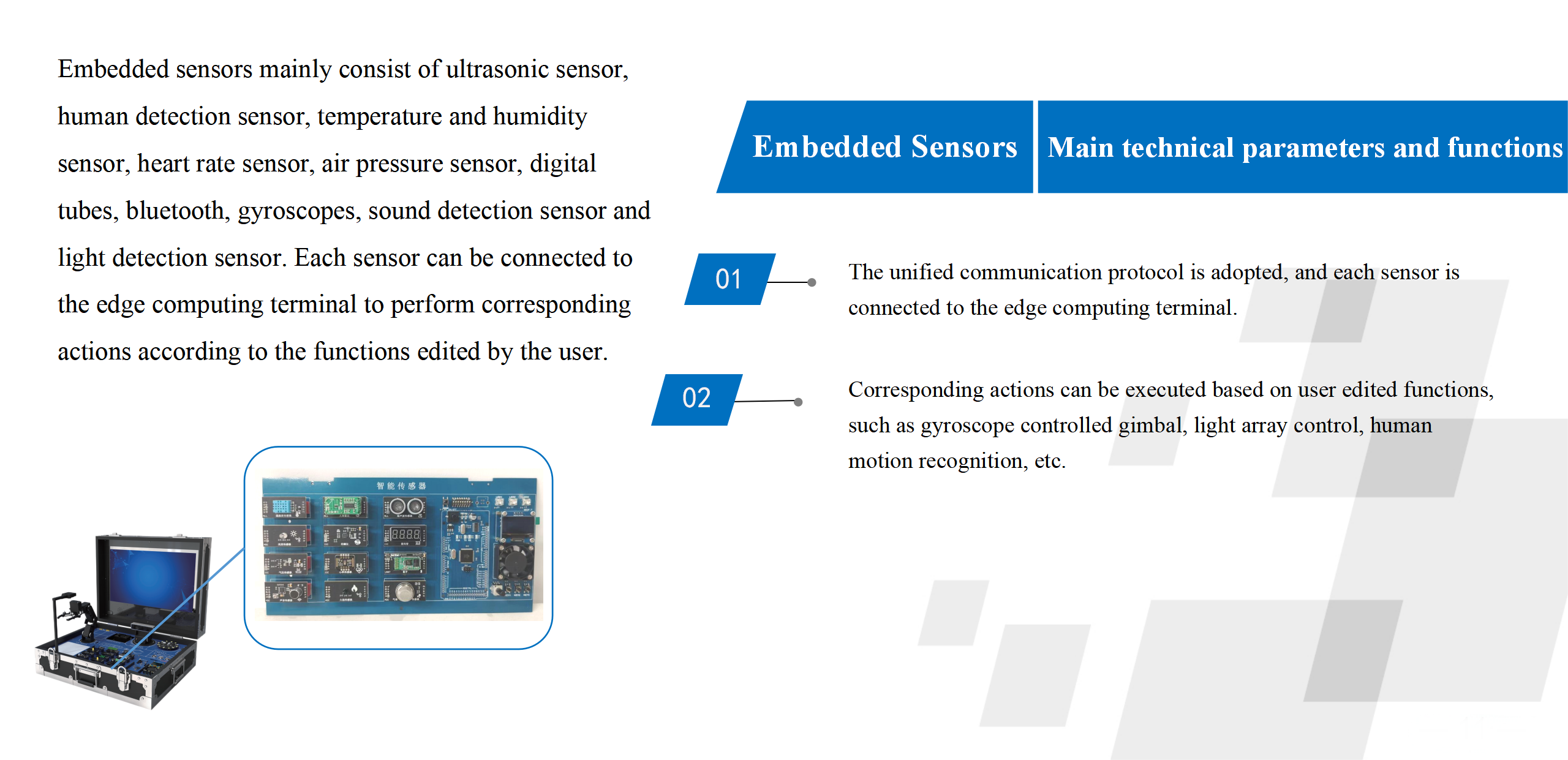
Ultrasonic, temperature, heart rate, pressure, Bluetooth, gyro, OLED display
Open-Source Software
Full software and source code for secondary development
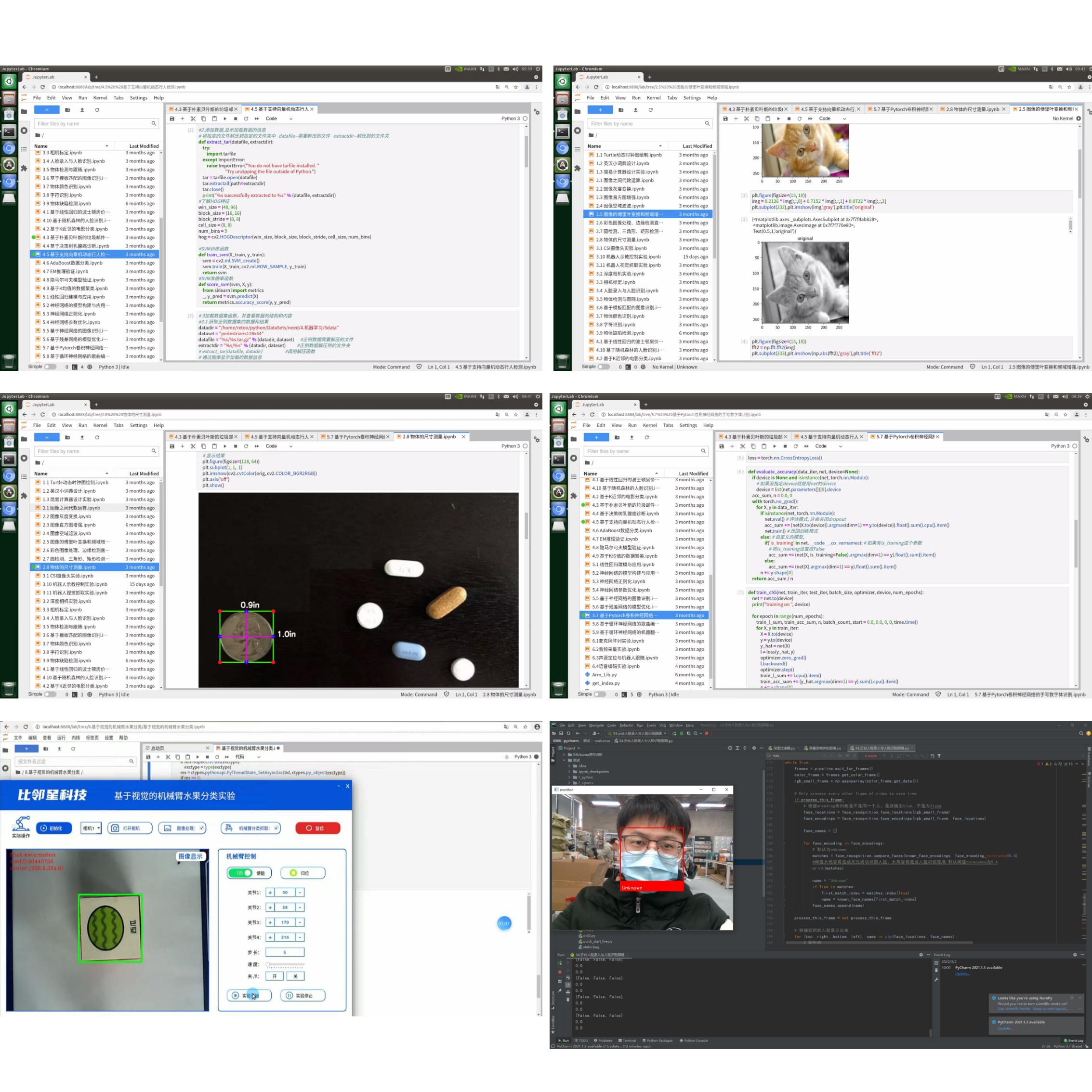
The AI Experiment Box allows the experiment code to be executed in the Jupyter Notebook environment with the following features:
The robotic arm combines with the vision system for target sorting and smart stacking. It uses deep learning models for complex object recognition and real-world industry training.
Depth vision enables height, distance, and contour detection, ideal for obstacle detection, live object recognition, and target tracking experiments.
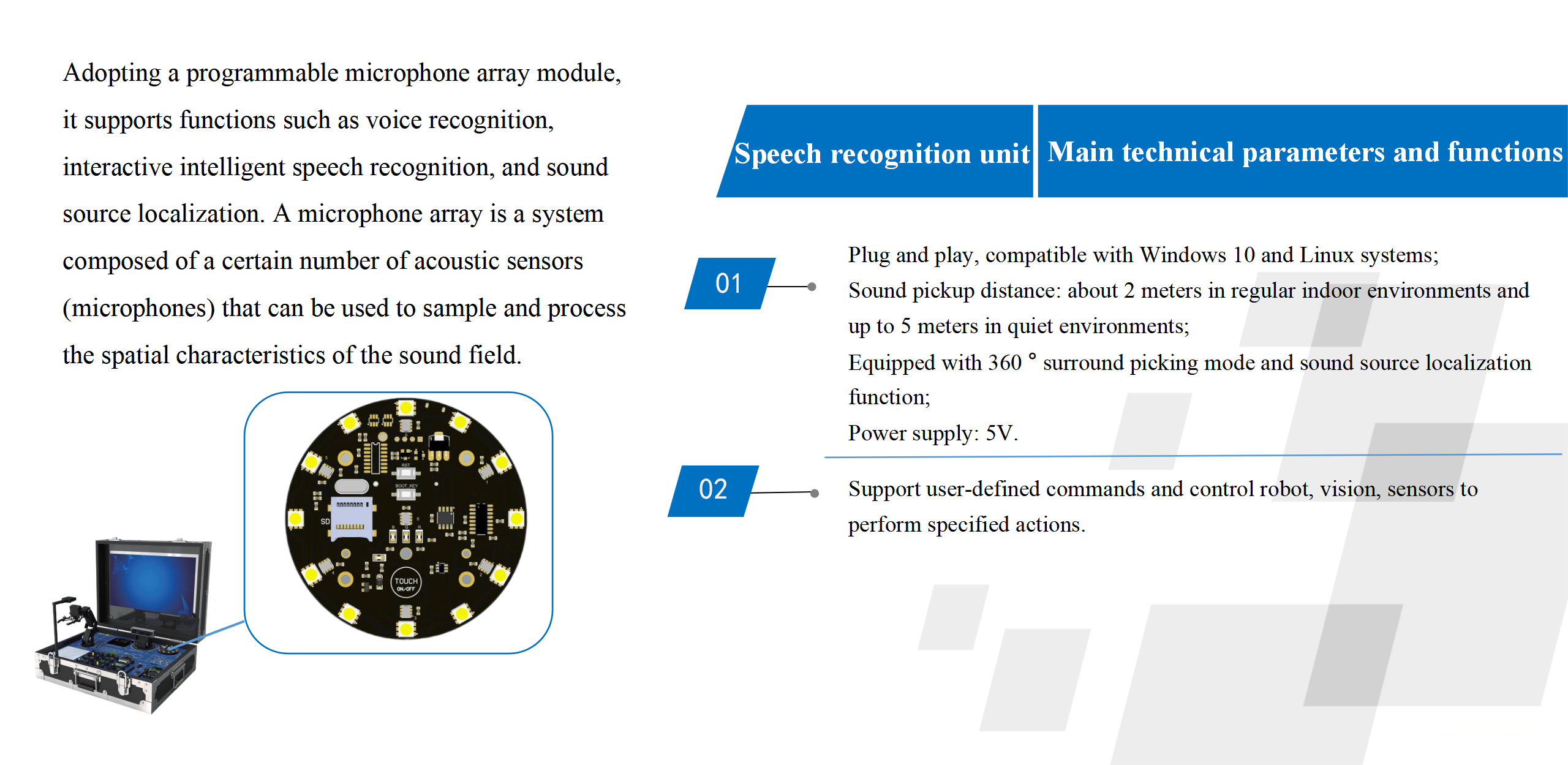
The microphone supports sound detection and recognition. Interaction with the AI processor guides the robotic arm to perform tasks based on voice commands.
Offers 12 types of sensors for experiments like facial recognition, voice control, and temperature control systems.
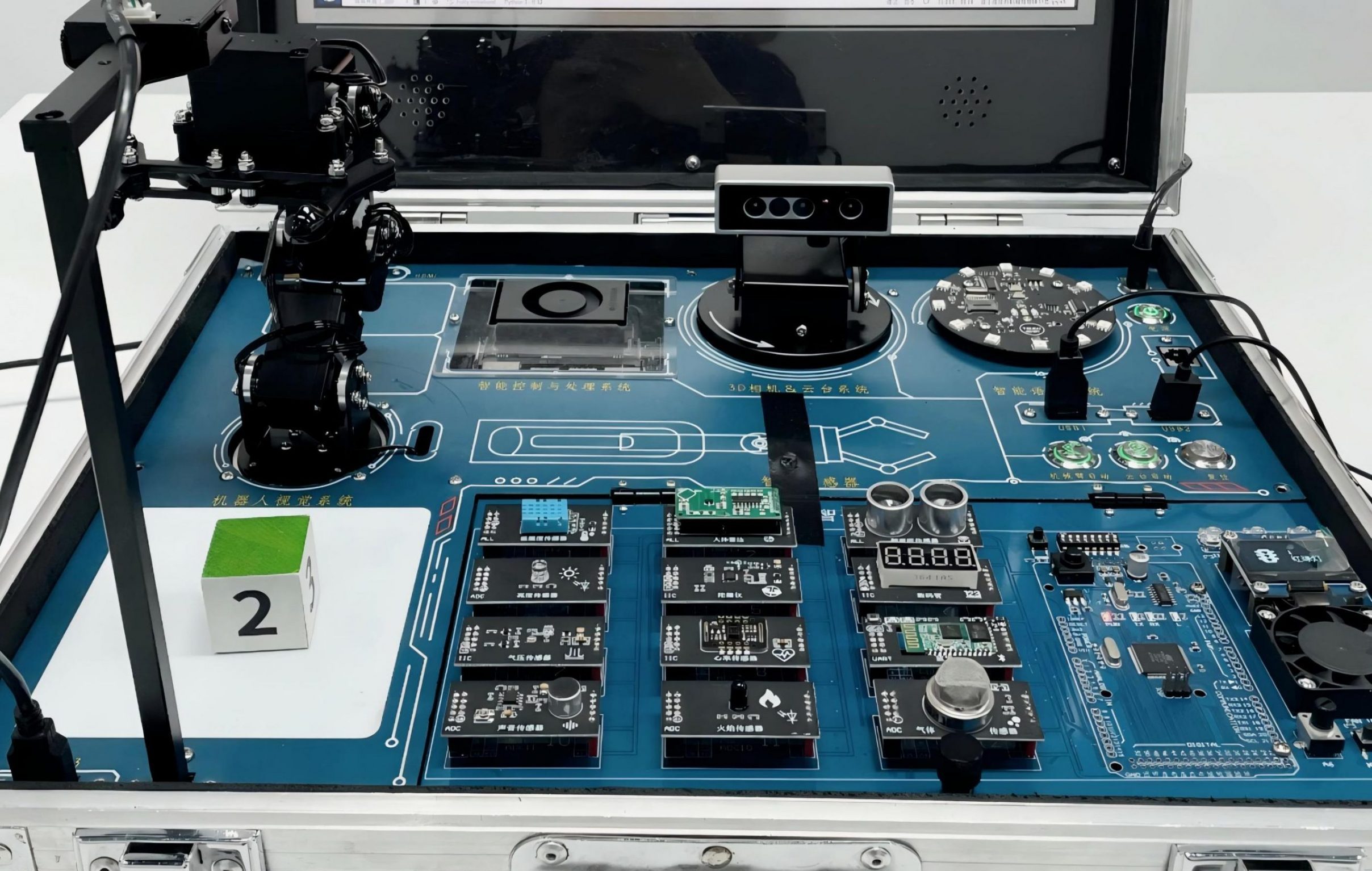
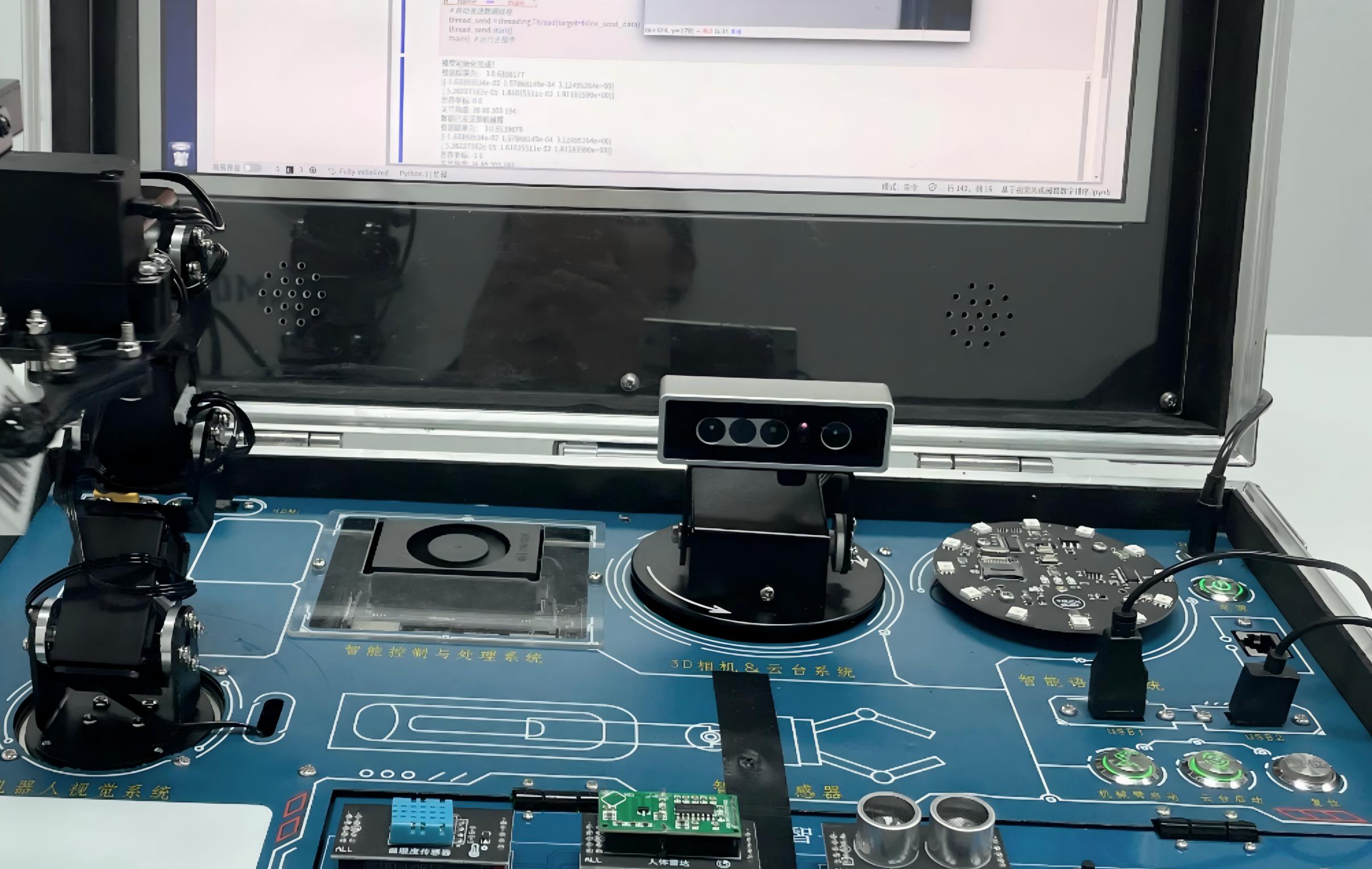
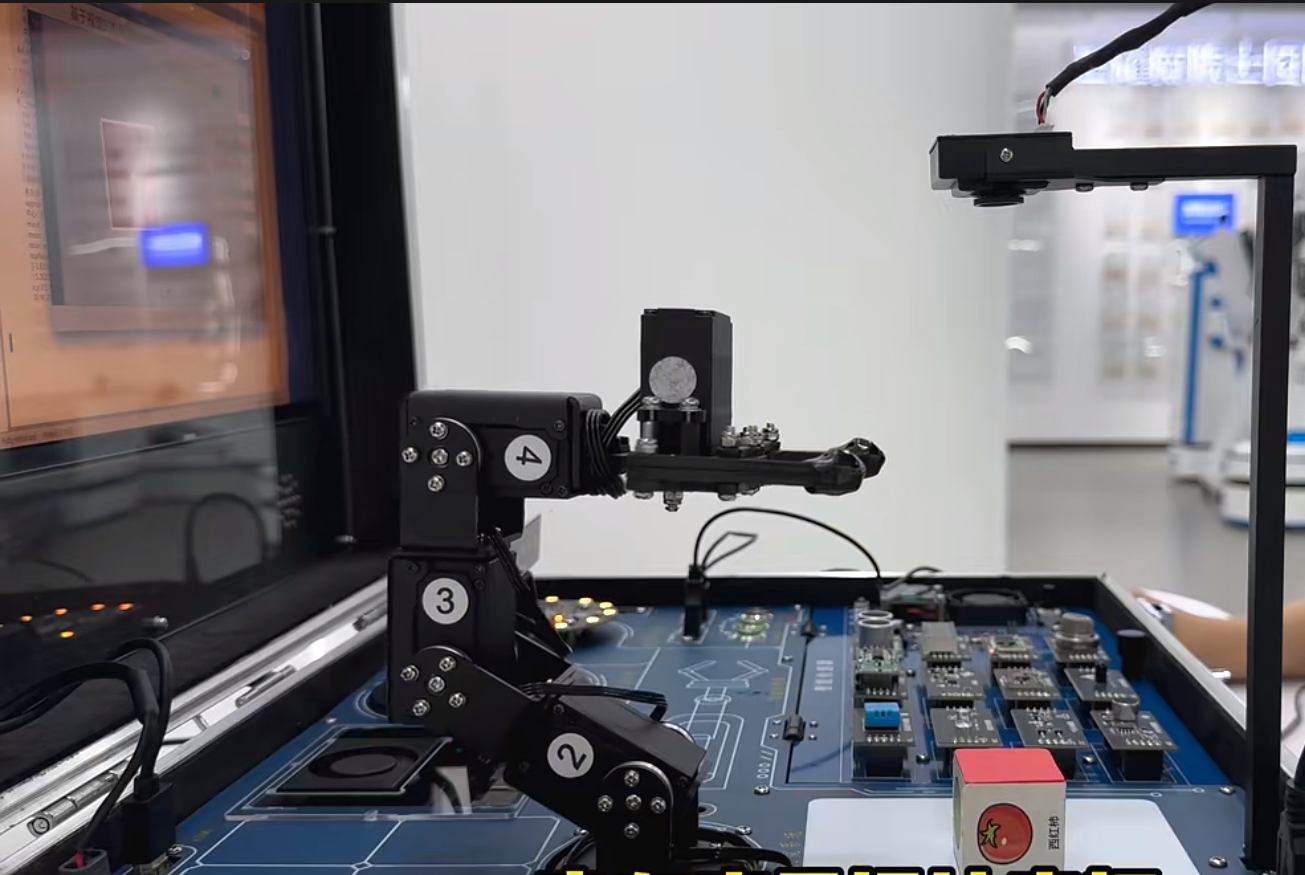
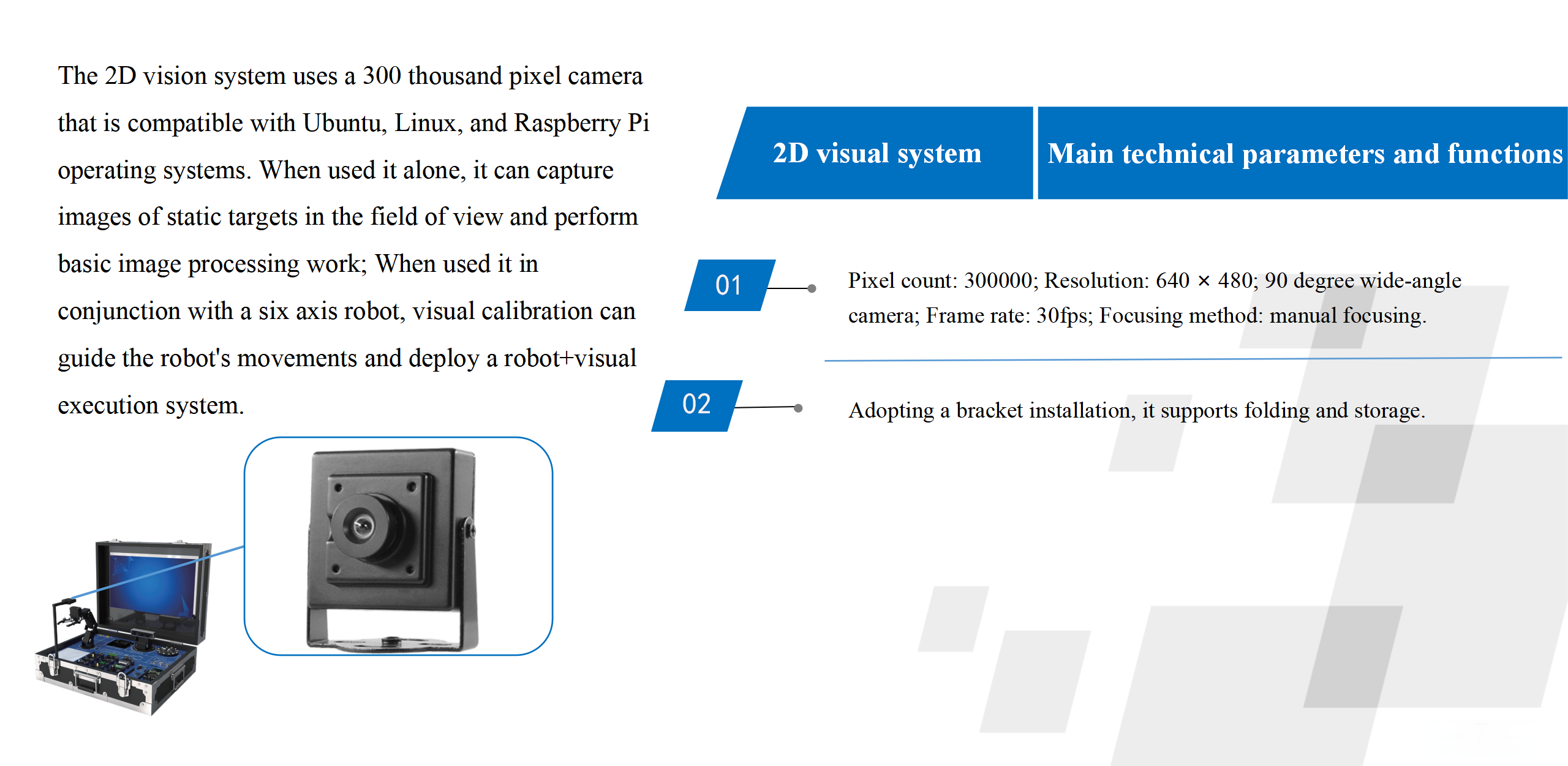
Freely add or remove devices as needed. Contact us for assistance.
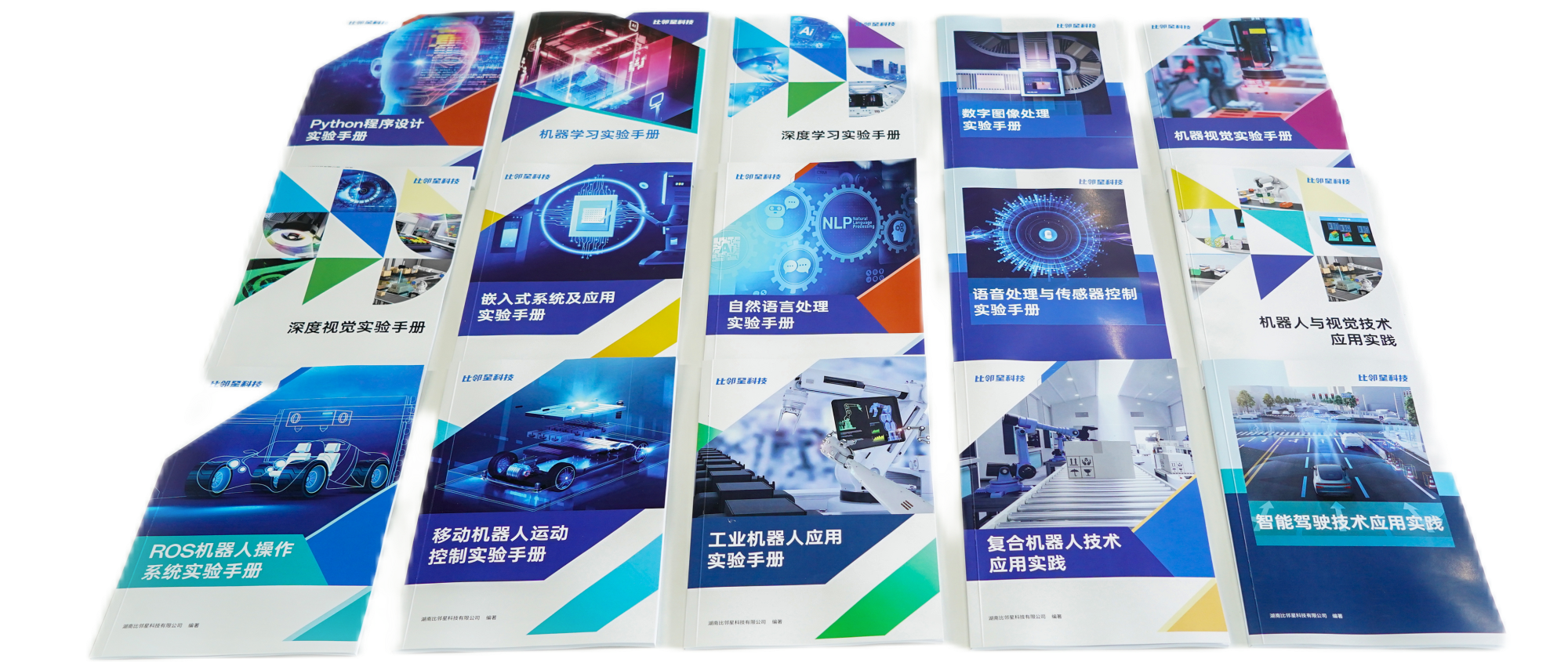
(1) Data Types, Conversion, and Operations
(2) Basic Usage of Python Operators, Built-in Functions, and Sequences
(3) Program Selection Structures
(4) Experiment on Loop Structures
(5) List Experiment
(6) Set Experiment
(7) Function Applications
(8) String Experiment
(9) Data Processing in Python
(10) 0 File Operations in Python
(11) Extracting telephone numbers using regular expressions
(12) Data Visualisation
(13) Python Multi-Processing
(14) Multithreading in Python
(15) The Difference Between Python Processes and Threads
(16) Python-based Serial Communication
(17) Socket TCP Communication in Python
(18) UDP Socket Communication in Python
(19) Modbus Communication in Python
(20) Understanding Object-Oriented Programming in Python
(21) Using Python Classes and Class Instantiation
(22) Using Instantiated Objects in Python
(23) Using Inheritance in Python Classes
(24) Setting up the PyQt5 environment
(25) Using PyQt5
(1) Data Classification on the AdaBoost Movie Dataset
(2) Verification of a Two-Coin Toss Model using the EM algorithm
(3) Clustering of Unlabeled Data Using the K-Means Algorithm
(4) Film Genre Classification Based on the K-Nearest Neighbors Algorithm
(5) Dynamic Pedestrian Detection Based on HOG and Support Vector Machine (SVM)
(6) Decision Tree-Based Diagnosis of Breast Cancer
(7) Naive Bayes-Based Spam Filtering
(8) Face Recognition Based on Random Forests
(9) House Price Forecasting Based on Linear Regression
(1) Linear Regression Modeling and Training
(2) Clothing Classification Using a Neural Network
(3) Neural Network Regularization-Based Clothing Classification
(4) Optimization of Neural Network Parameters
(5) Building and Testing Neural Network Models
(6) Design of an Optimization Model Based on Residual Networks
(7) Neural Network Optimizer
(8) Handwritten Digit Recognition Based on LeNet
(9) Image Object Detection Based on YOLOv5
(1) Algebraic Operations on Images
(2) Image Processing, Encryption, and Decryption
(3) Spatial Domain Filtering
(4) Affine Transformations of Images
(5) Frequency-Domain Filtering of Images
(6) Morphological Rice Grain Detection
(7) Image Extraction Based on the Canny Algorithm
(8) Watershed-Based Contour Segmentation
(9) Hu Moment-Based Shape Matching
(10) Smoothing and Morphological Processing
(1) Introduction to the Vision System
(2) Pixel Dimension Measurement
(3) Bearing Dimension Measurement
(4) Object Localization and Angle Measurement
(5) Measurement of Object Edge Lengths and Area
(6) Object Color and Shape Recognition
(7) Offline Barcode Recognition
(8) Offline QR Code Recognition
(9) Character Segmentation
(10) Character Training and Recognition
(11) Product Surface Defect Detection Based on Morphological Processing
(12) LED Defect Detection
(13) Screw Appearance Defect Detection
(14) Camera Checkerboard Calibration
(15) Electronic Product Recognition
(16) License Plate Recognition Using OpenCV
(17) Vision-Based Barcode Recognition
(18) Vision-Based QR Code Recognition
(19) Vision-Based Object Shape and Color Recognition
(20) Vision-Based Fruit Classification
(1) 3D Camera Face Detection and Distance Measurement
(2) 3D Camera Face Detection and Pan-Tilt Tracking
(3) Face Enrolment and Recognition
(4) Face Mask Detection
(5) Pedestrian Detection
(1) Introduction to Intelligent Sensing Systems
(2) OLED Display
(3) Temperature and Humidity Monitoring
(4) Human Body Radar Detection
(5) Light Detection
(6) Heart Rate Monitor
(7) Ultrasonic Rangefinder
(8) Smart traffic lights
(9) Fan Speed Control
(1) Audio Recording
(2) Audio Recognition
(3) Real-time speech recognition
(4) Voice-based Intelligent Sensor Control
(5) Voice-controlled robotic arm
(6) Text-to-speech
(1) Robotic Arm Fundamentals and Basic Operations
(2) Robotic Arm Teaching and Motion Control
(3) Calibration of the Robotic Arm and the Vision System
(4) Vision-Based Robotic Arm Object Classification
(5) Vision-Based Robotic Arm Object Palletising
(6) Vision-Based Robotic Arm Digital Sorting
(7) Vision-Based Robotic Arm Fruit Sorting
(1) An Intelligent Text Q&A System Based on Large Language Models
(2) Intelligent Voice Dialogue System Based on Large Language Models
(3) Using prompts to guide the output of large language models
(4) An Agent Action Orchestration System Based on Large Language Models
(5) Intelligent Fruit and Vegetable Sorting System Based on LLM-Driven Agents
Contact us if you need a custom course.
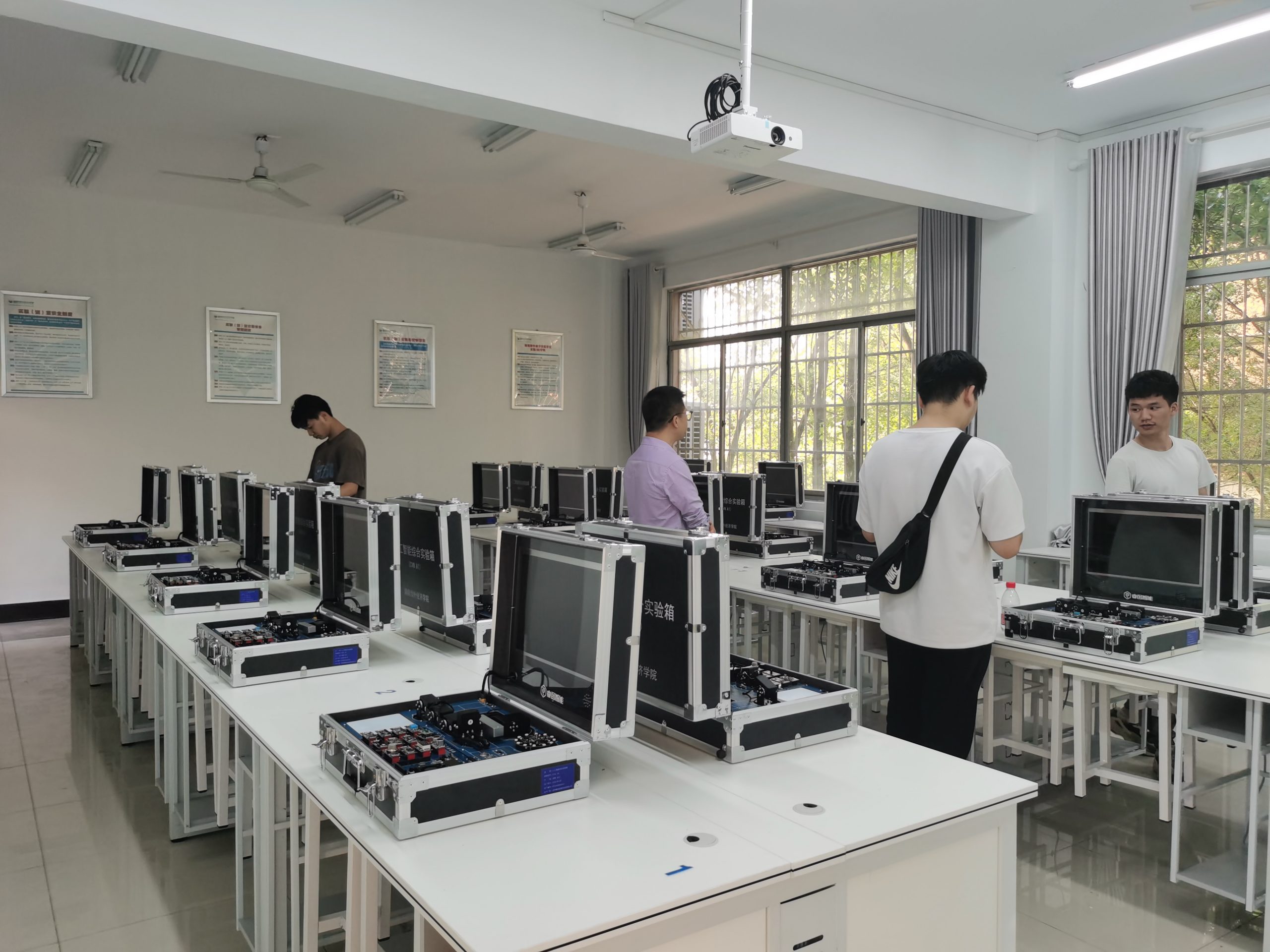
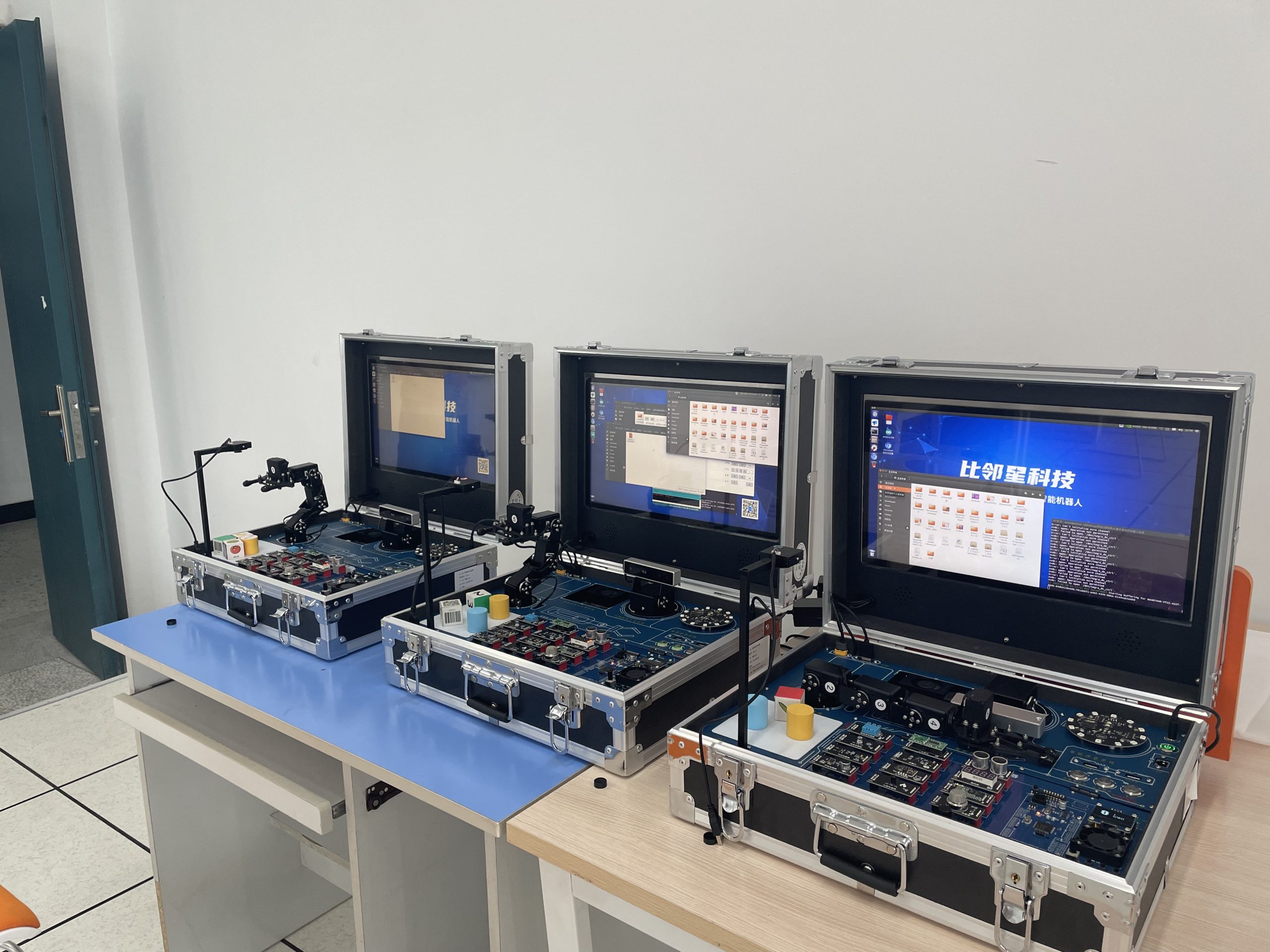
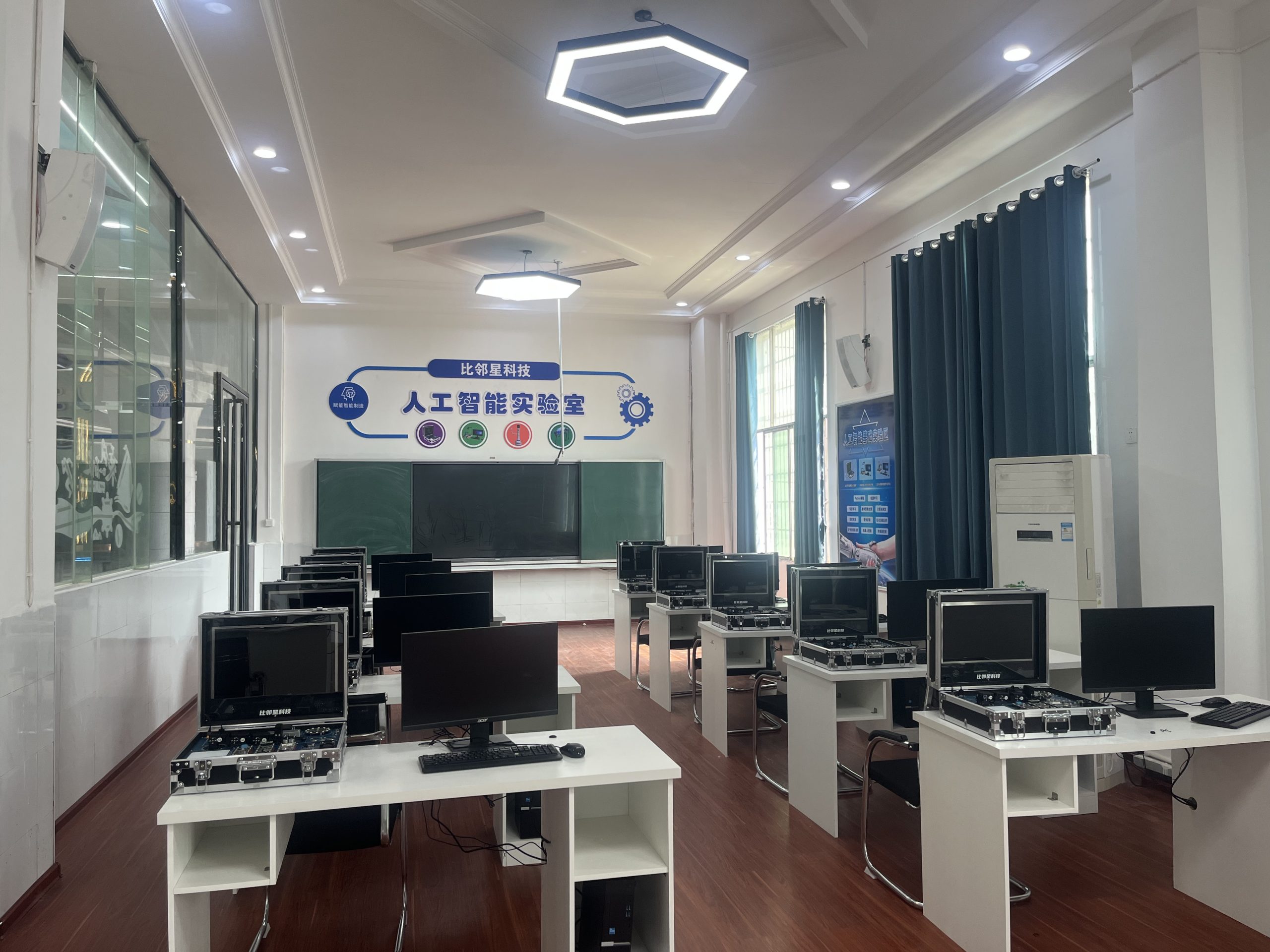
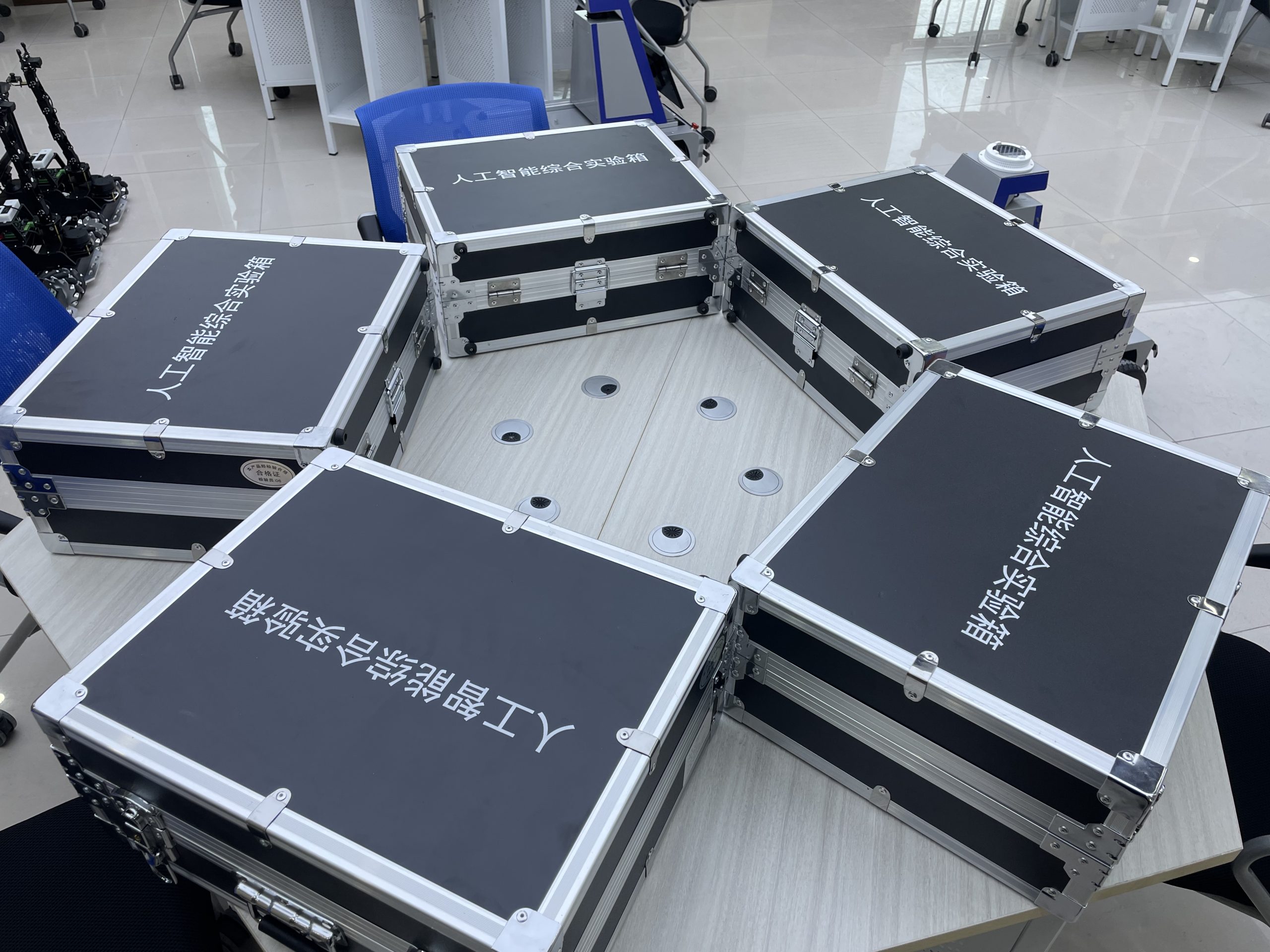
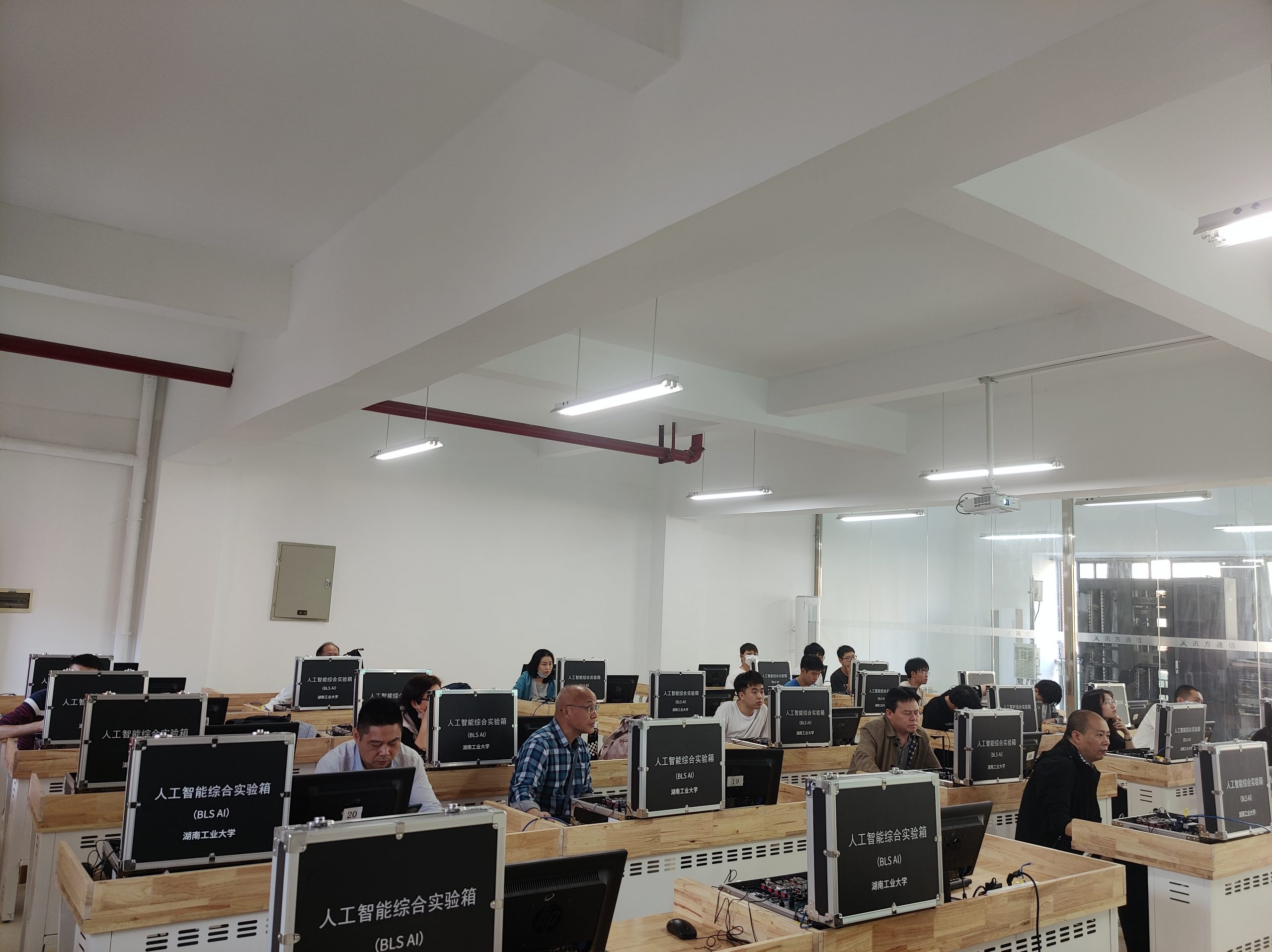
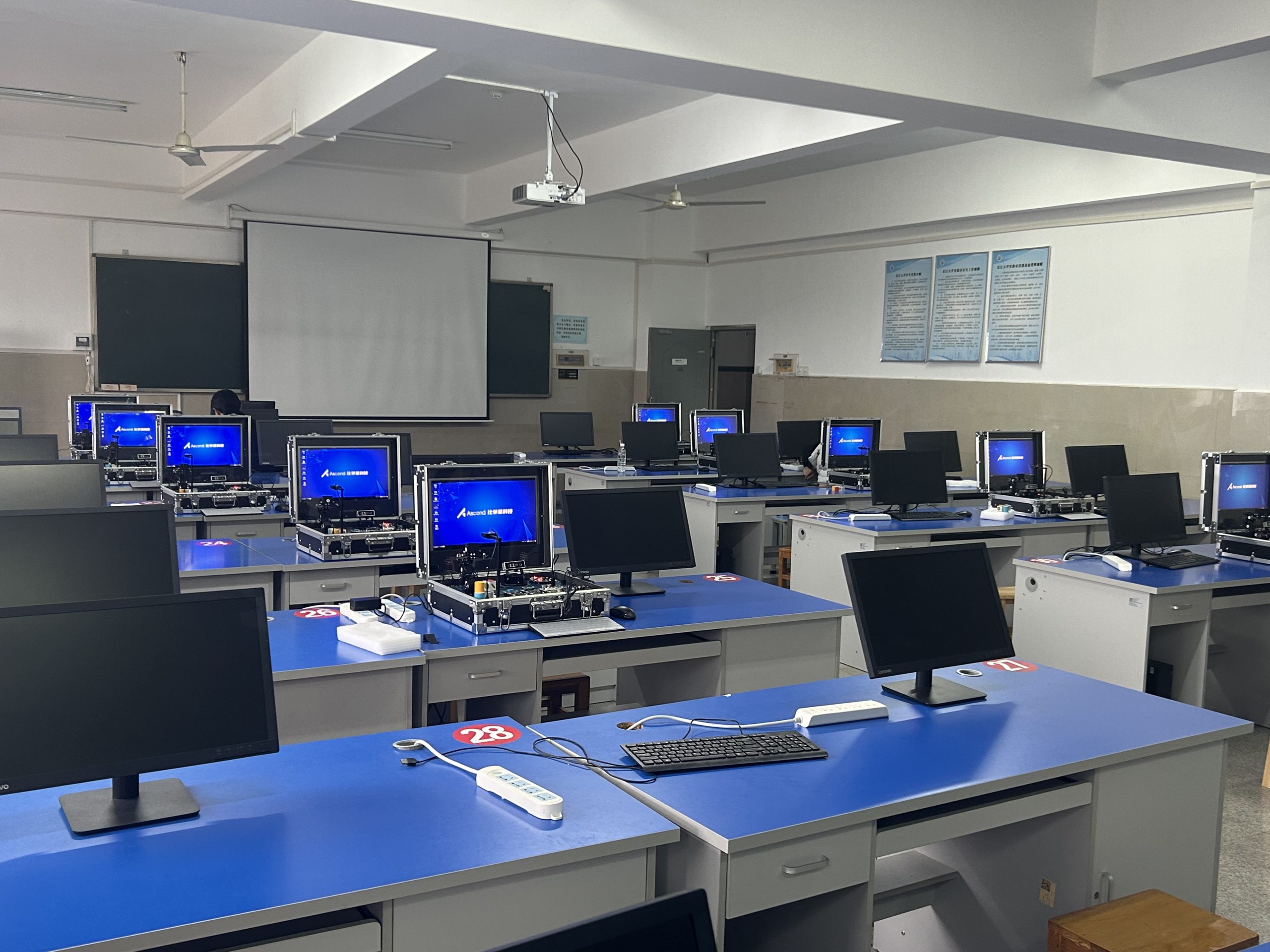
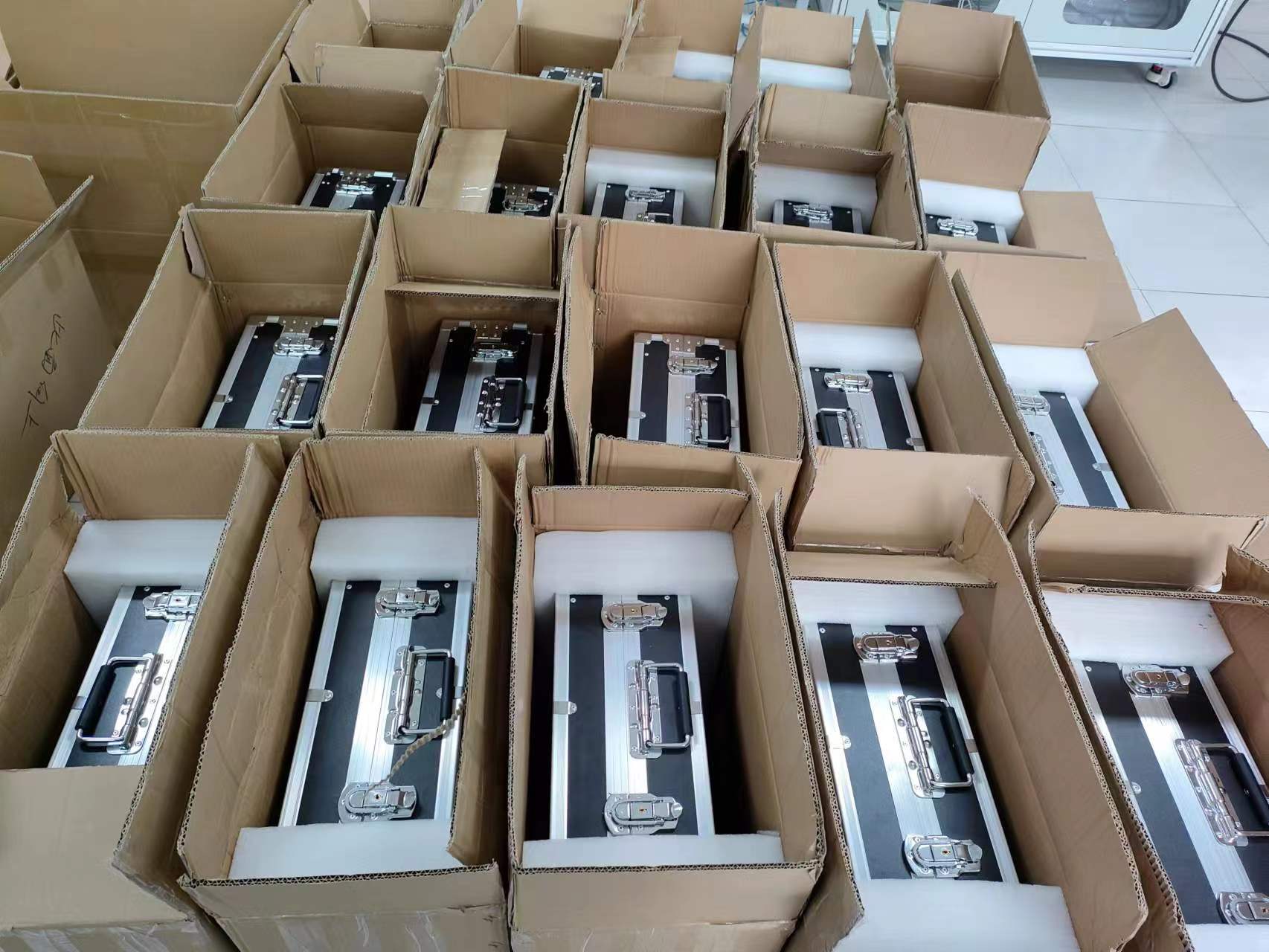
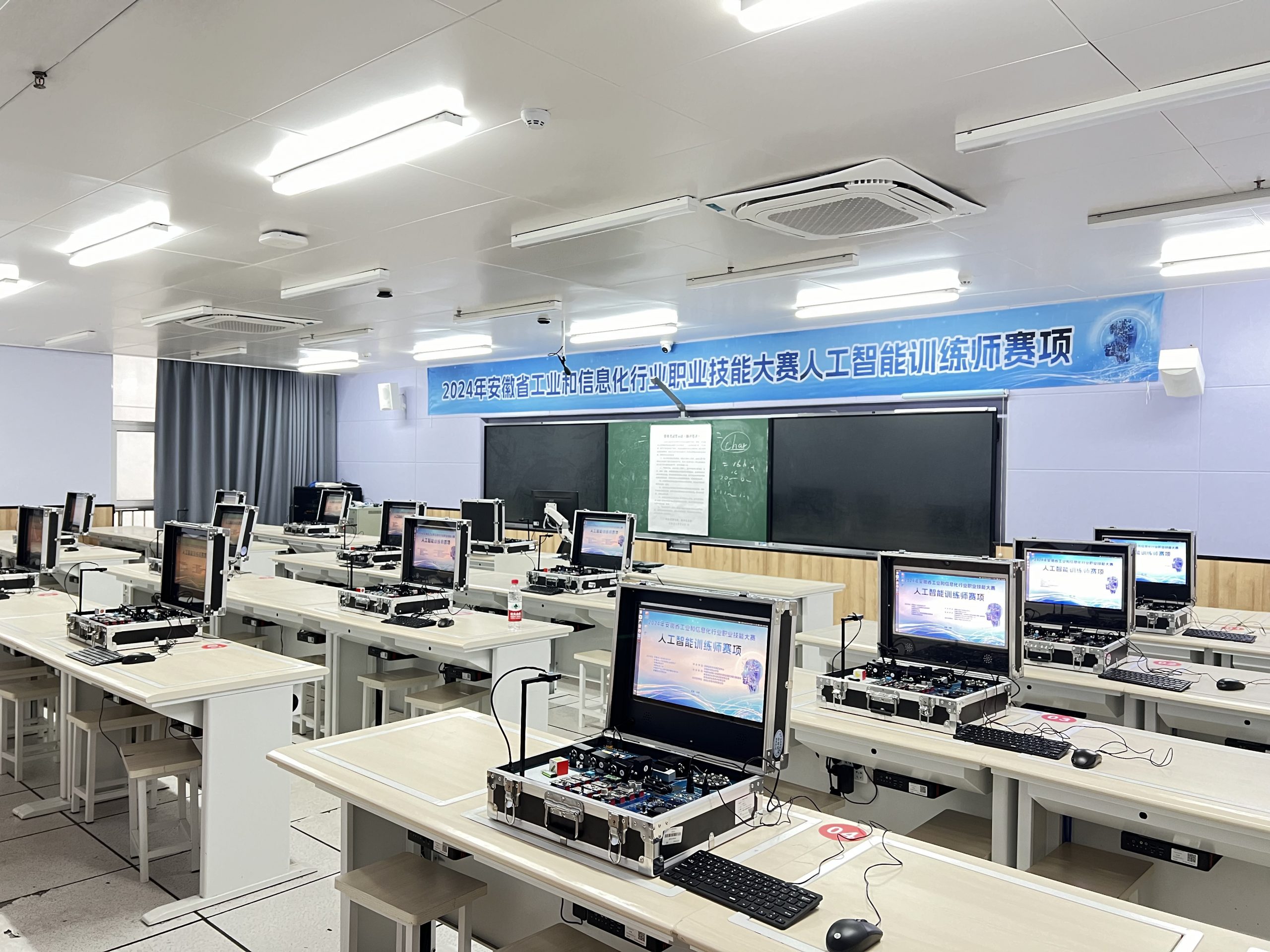
The key differences lie mainly in software capabilities and computing performance, while the overall hardware structure remains largely the same.
The AI Experiment Box (Standard) focuses on foundational AI education and hands-on practice.
The AI Experiment Box (Pro) is designed for higher-level AI courses, edge AI applications, and local AI model deployment.
Yes.
The Standard version supports foundational courses such as:
Python programming
Introduction to AI
Computer vision basics
Sensor data processing
The AI Experiment Box (Pro) includes additional course resources focused on:
Large model deployment and optimization
Edge AI and intelligent systems
Multimodal AI applications
AI engineering and system integration
This allows institutions to progress from basic teaching to advanced AI engineering training using the same platform.
The AI Experiment Box (Standard) is ideal for introductory AI courses and undergraduate teaching.
The AI Experiment Box(Pro) is better suited for advanced undergraduate programs, graduate-level courses, applied AI majors, and AI engineering training.
Many institutions adopt a combined approach, using the Standard version for foundational education and AI Experiment Box(Pro) for advanced experimentation and project-based learning.
Please submit your download request, and we will send the relevant information to your email within 2 business days.