Professional supplier of AI and robot teaching equipment

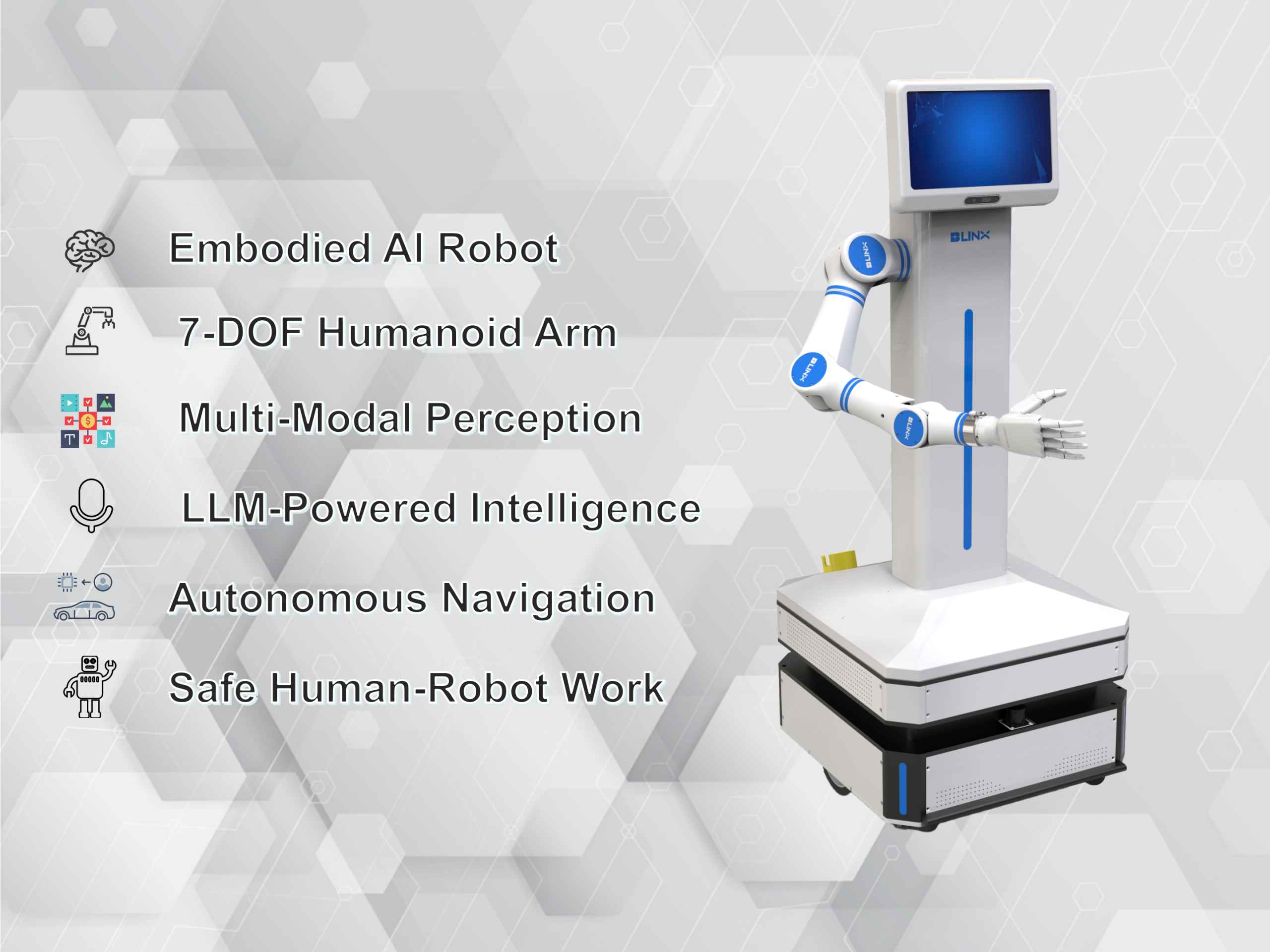
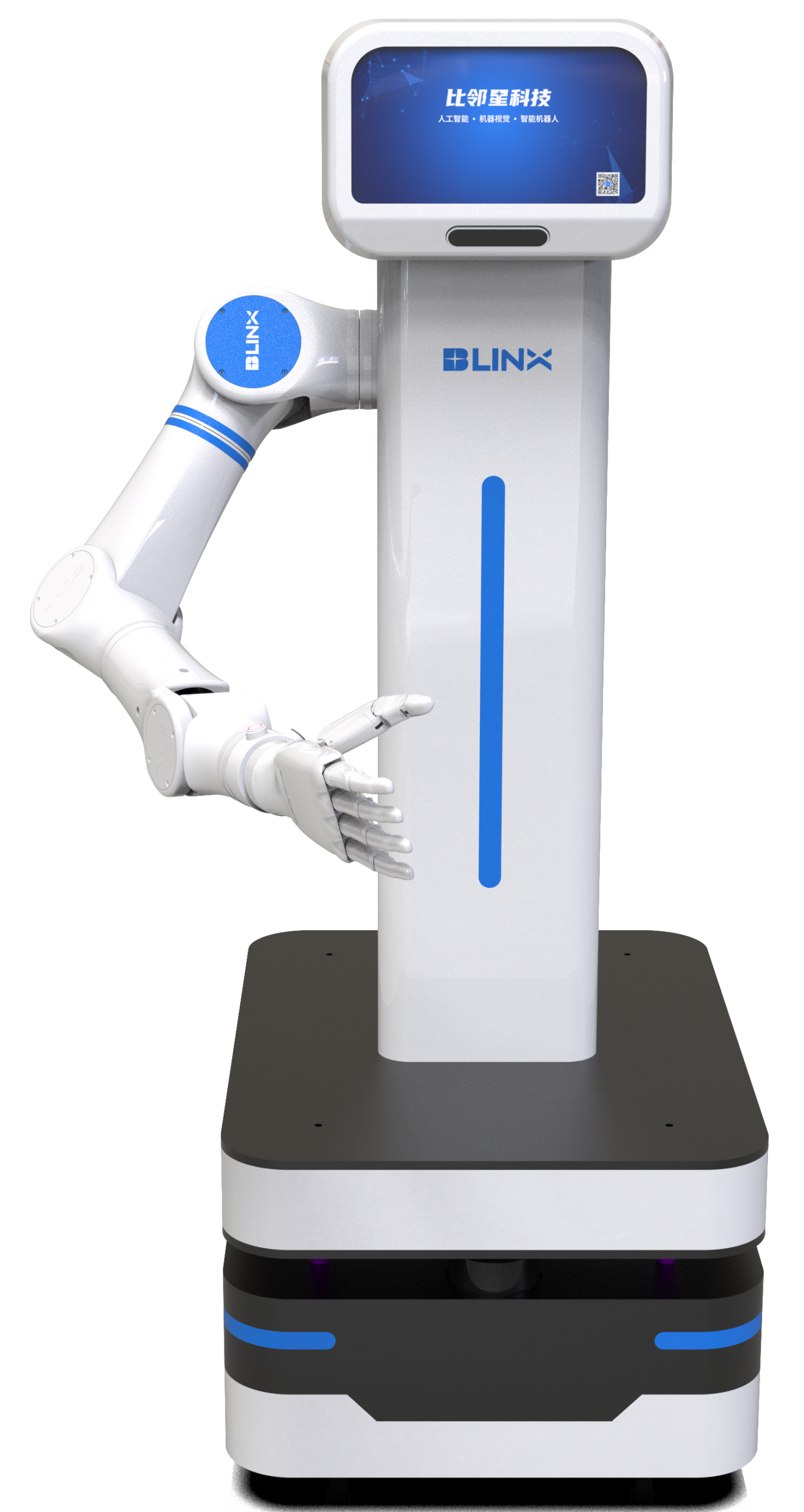
The robot integrates vision, voice, and sensor technologies to form a closed-loop system of perception–decision–execution, building a comprehensive multi-modal perception network. With locally deployed large language models (LLMs), it can understand complex user commands, infer true intent, and make autonomous decisions.
For example, in a smart manufacturing scenario, a user can issue a command such as: “Place the screwdriver on the table into the blue box on the shelf.” The system will interpret the task by identifying the target object (screwdriver), its location (table), and the destination (blue box on the shelf). It then generates step-by-step execution instructions and completes the task accurately with the assistance of the vision system. During execution, it continuously integrates visual, tactile, and positional data to optimize task performance.
The robot is equipped with capacitive electronic skin made of high-sensitivity flexible materials, covering the surface of the robotic arm. It can detect nearby objects within a range of 5–15 cm, enabling centimeter-level spatial awareness and obstacle avoidance.
In human-robot collaboration scenarios, a dual-layer safety mechanism—pre-contact warning + contact emergency stop—significantly enhances operational safety.
Through a hierarchical reinforcement learning framework and cross-scenario transfer learning, the robot can continuously adapt to complex environments.
For instance, when performing a task like “bring me a cup of water,” the system can decompose it into sub-tasks such as object recognition (locating the cup), navigation (moving to the target), and manipulation (grasping with optimal posture). This layered strategy reduces training time and improves efficiency. Through continuous interaction and learning, the robot dynamically refines its behavior models, enabling self-evolution and rapid adaptation to diverse scenarios.
The combination of reinforcement learning and self-evolution drives the robot toward becoming a general-purpose intelligent agent capable of fully autonomous decision-making.
The robot is equipped with a wide range of sensors, including 3D vision, voice recognition, LiDAR, ultrasonic sensors, and electronic skin, forming a robust environmental perception system.
In practical applications, the voice module supports sound detection, speech recognition, and sound source localization, while the head-mounted 3D vision system captures multiple types of interaction data, such as speech, gestures, facial expressions, and object information. Powered by the central computing unit, the robot can interpret natural language commands and translate them into actionable instructions, enabling seamless human-robot collaboration and intelligent voice-controlled operations.