Professional supplier of AI and robot teaching equipment
Professional supplier of AI and robot teaching equipment
Available on backorder
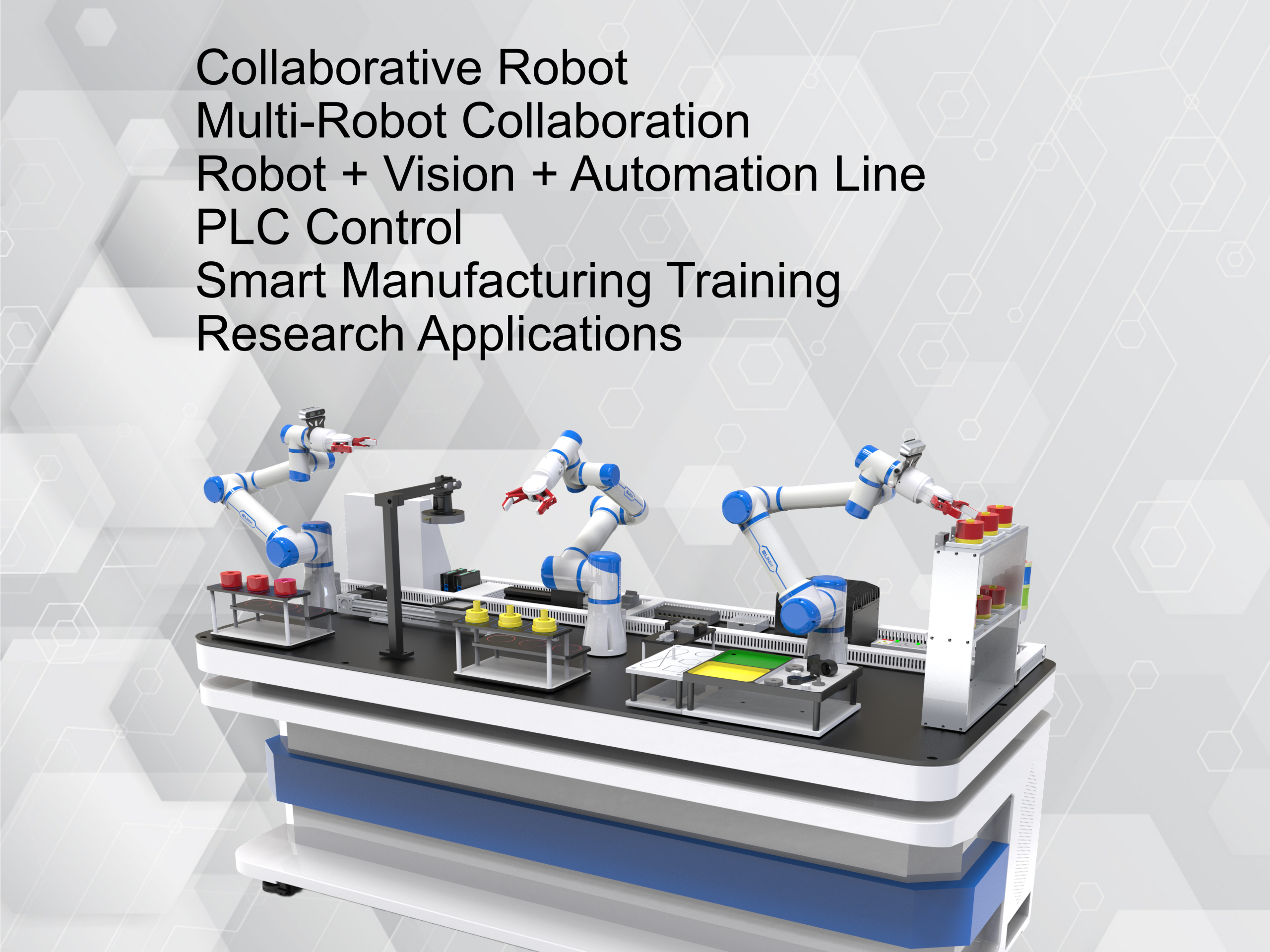
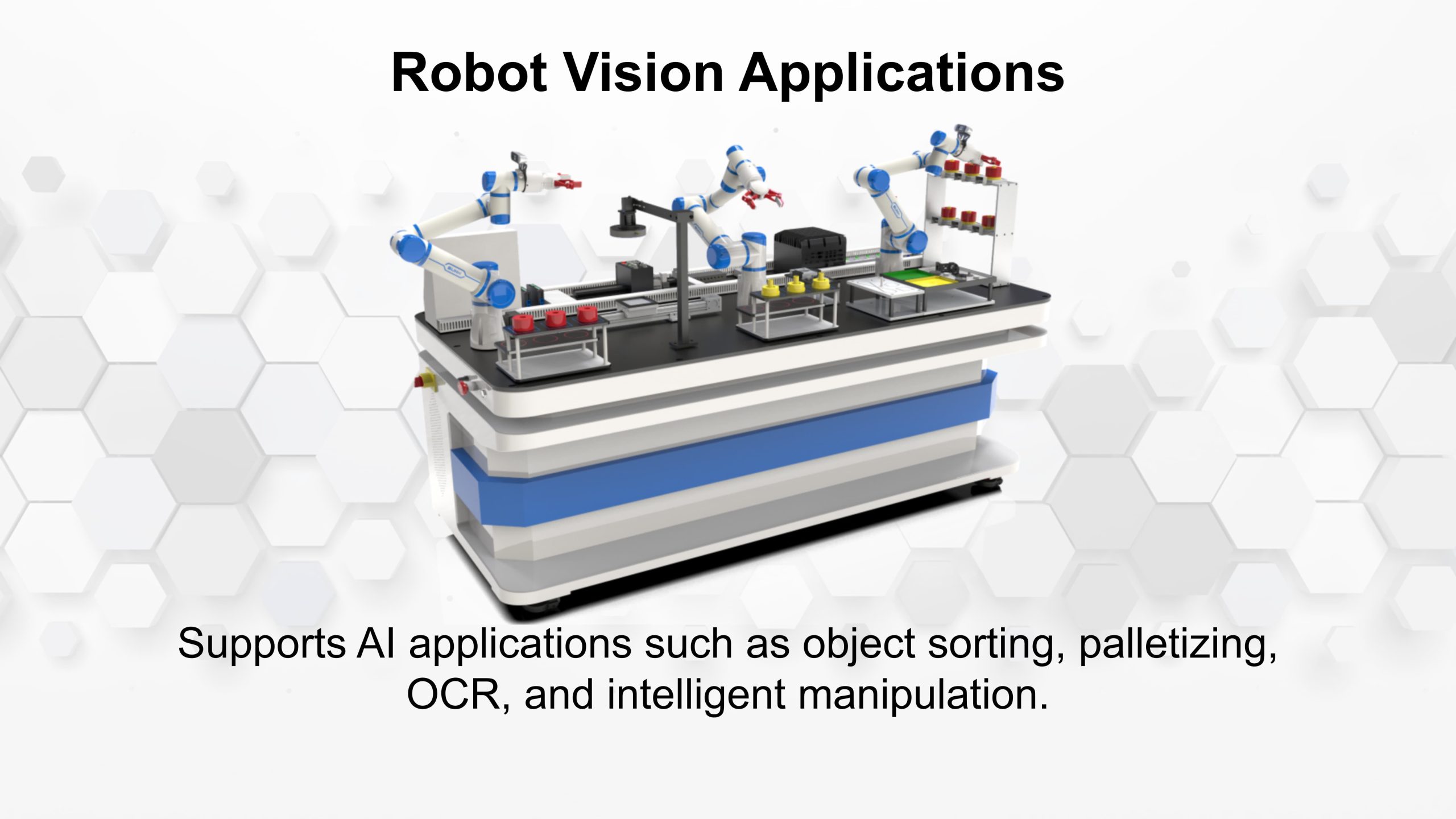
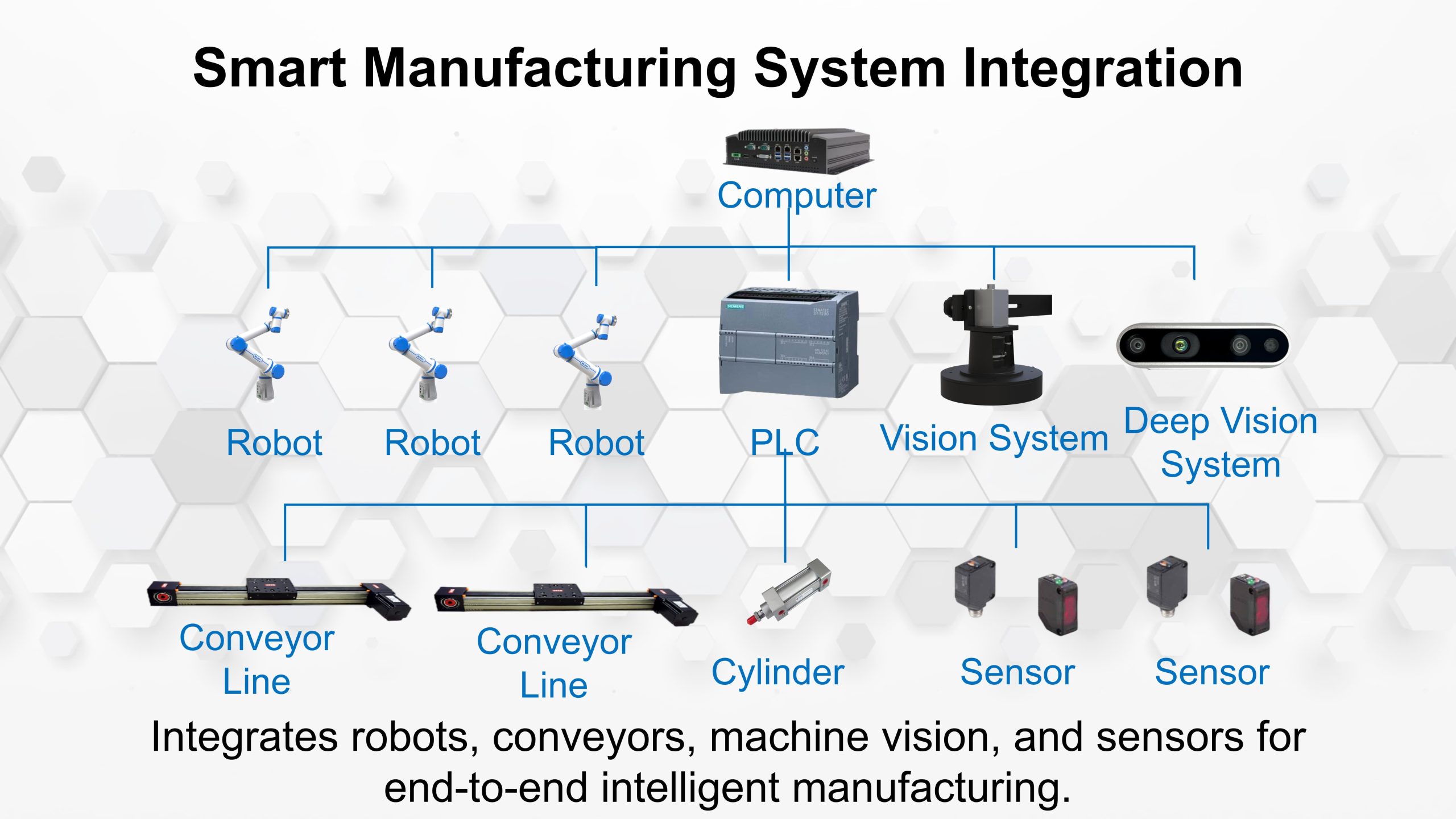
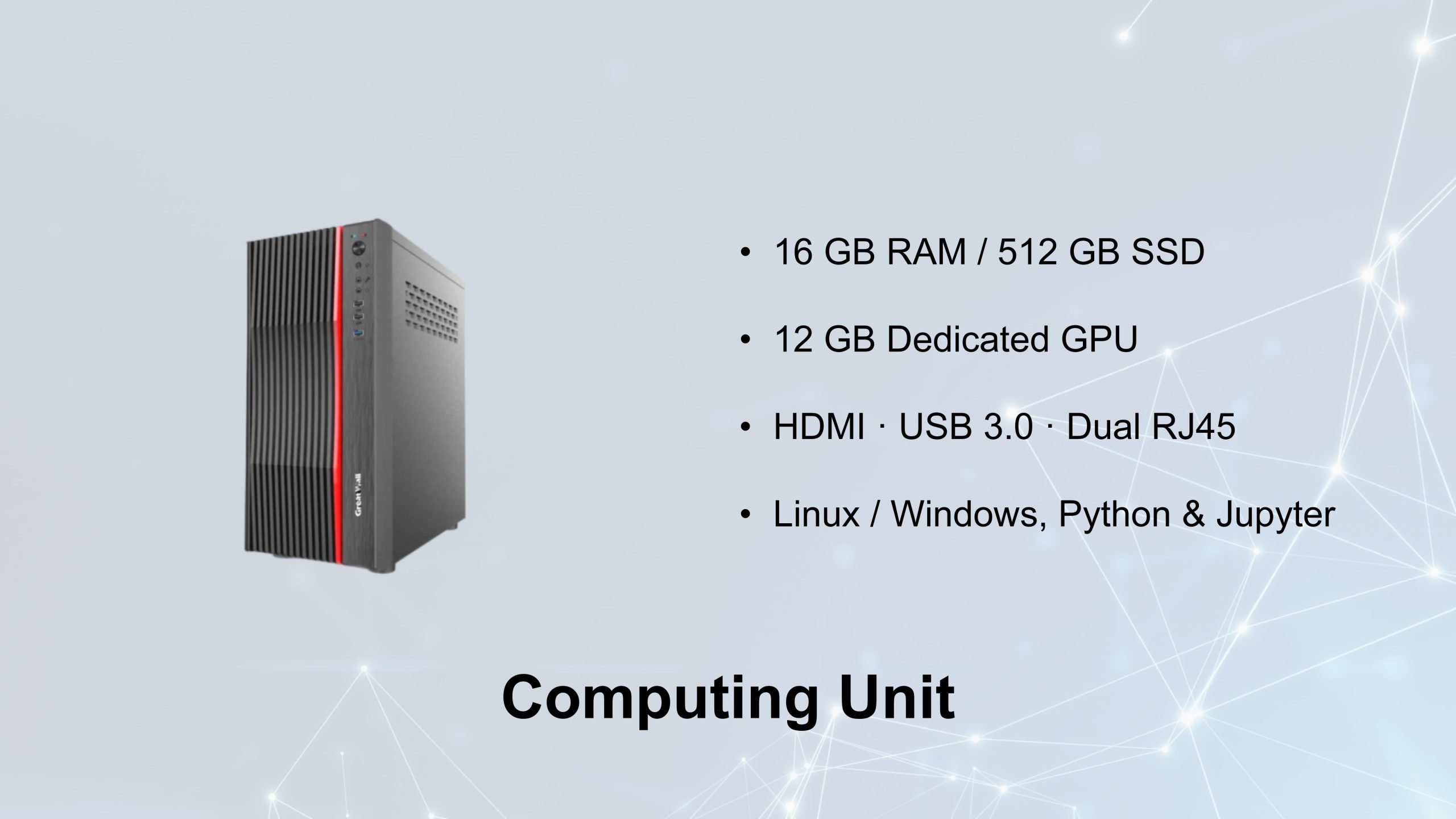
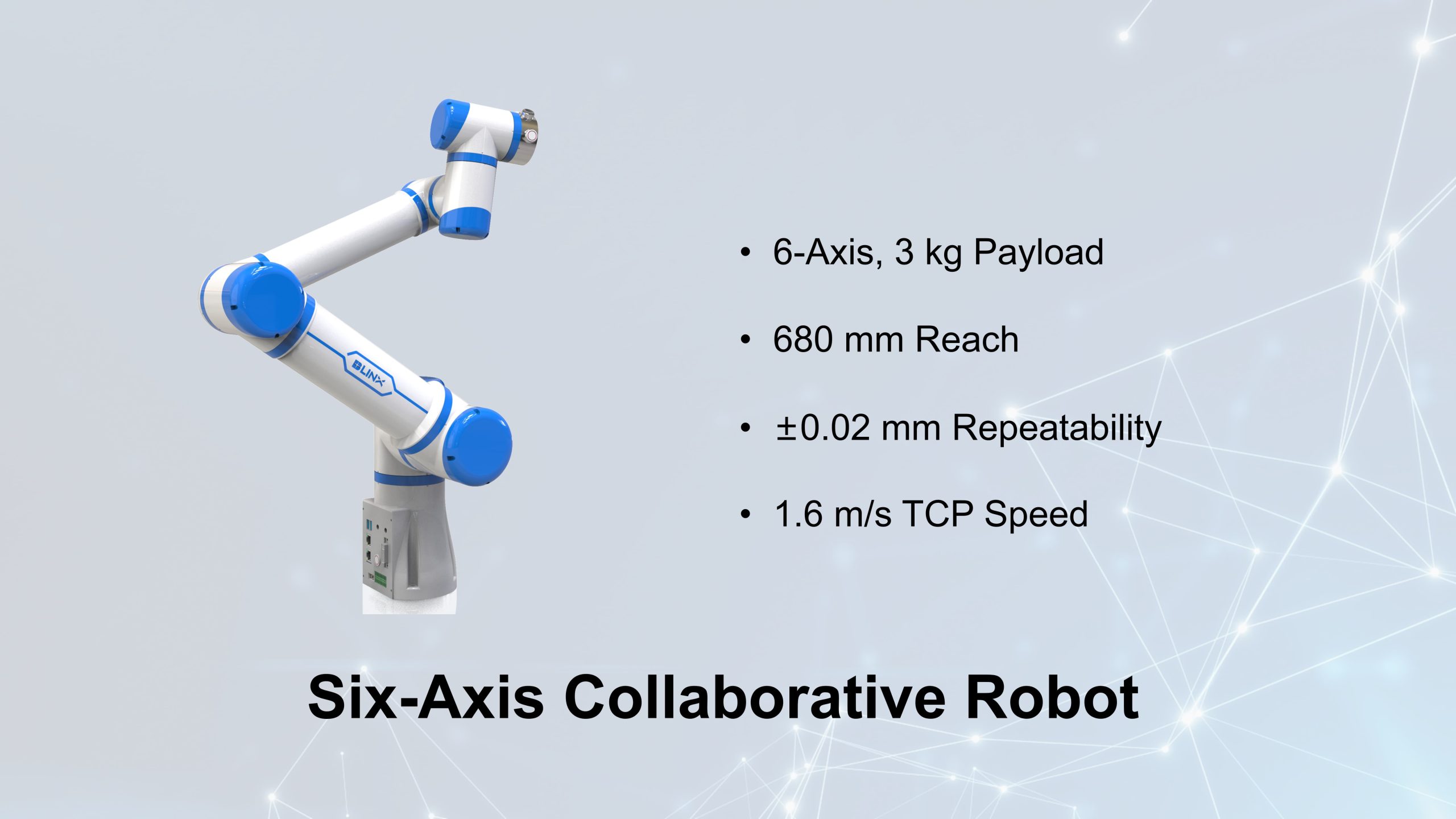
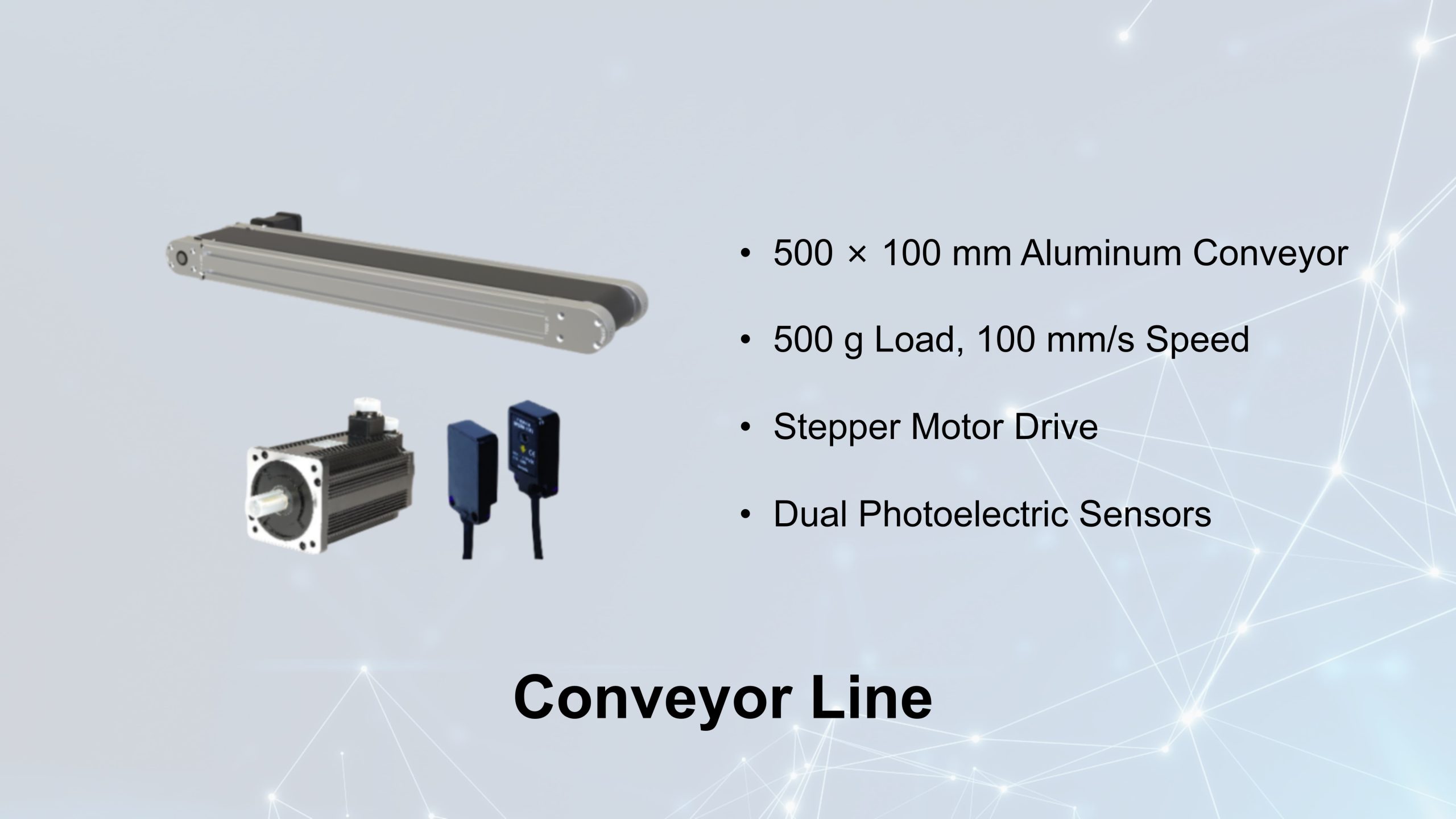
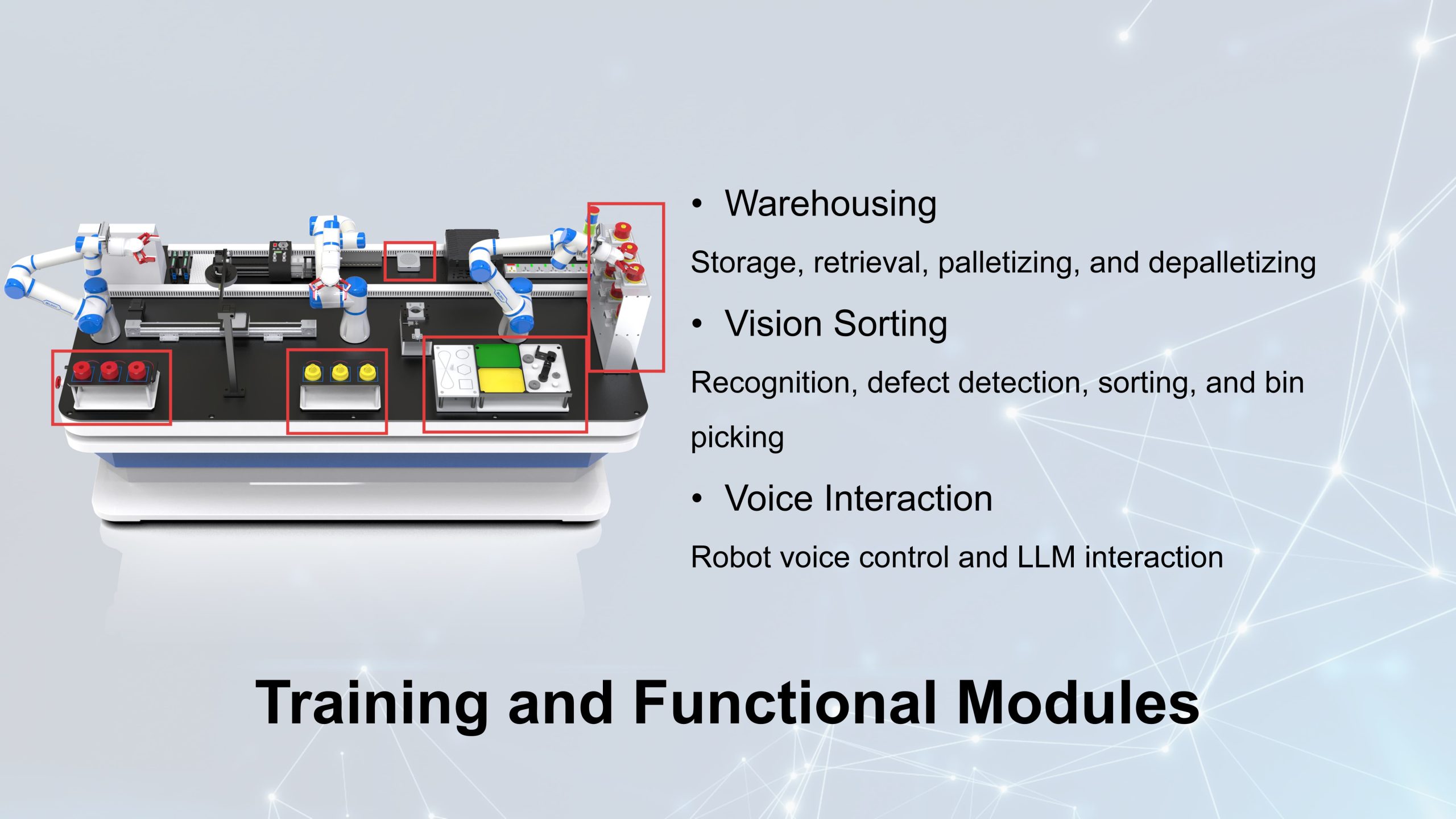
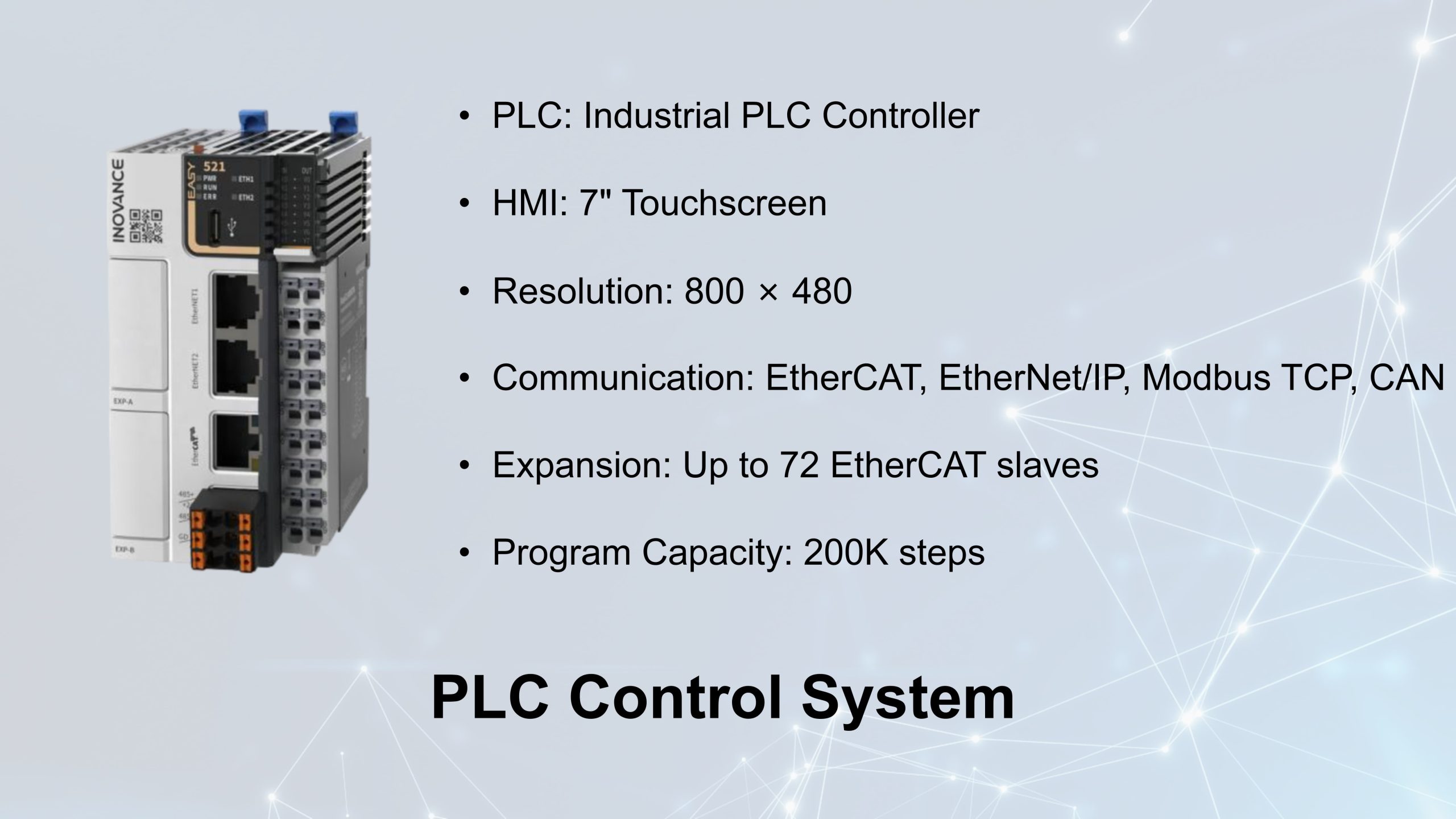
Cobot Multi-Robot Collaborative Training Line is an intelligent manufacturing training platform integrating three collaborative robots, dual conveyor systems, machine vision, and PLC control. It recreates a complete industrial production workflow, enabling hands-on training in robotic assembly, vision inspection, material handling, warehousing, and production management. With local deployment of DeepSeek and Qwen on the computing unit, the platform also supports practical development of AI, machine vision, voice interaction, and collaborative robotics applications.
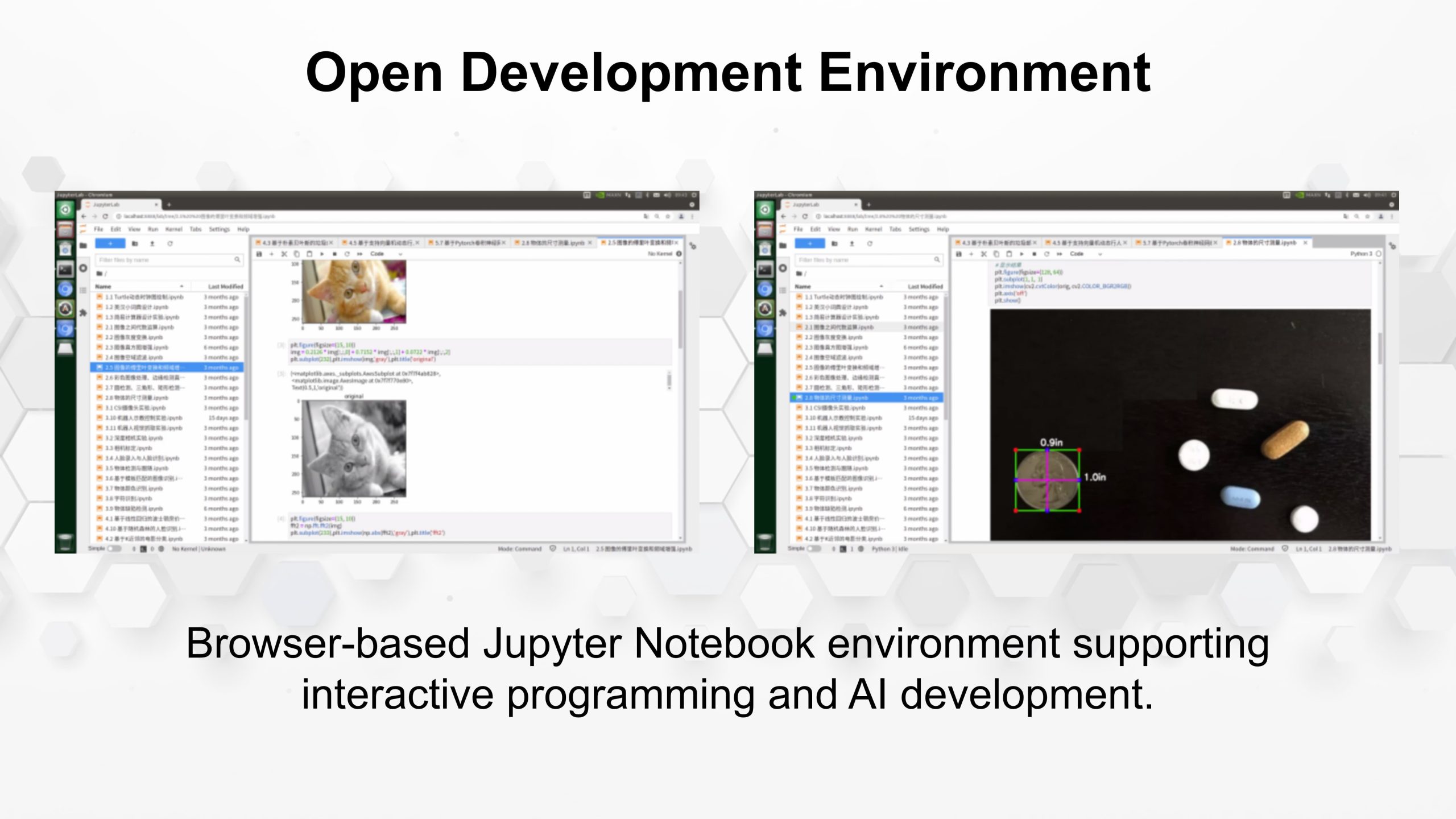
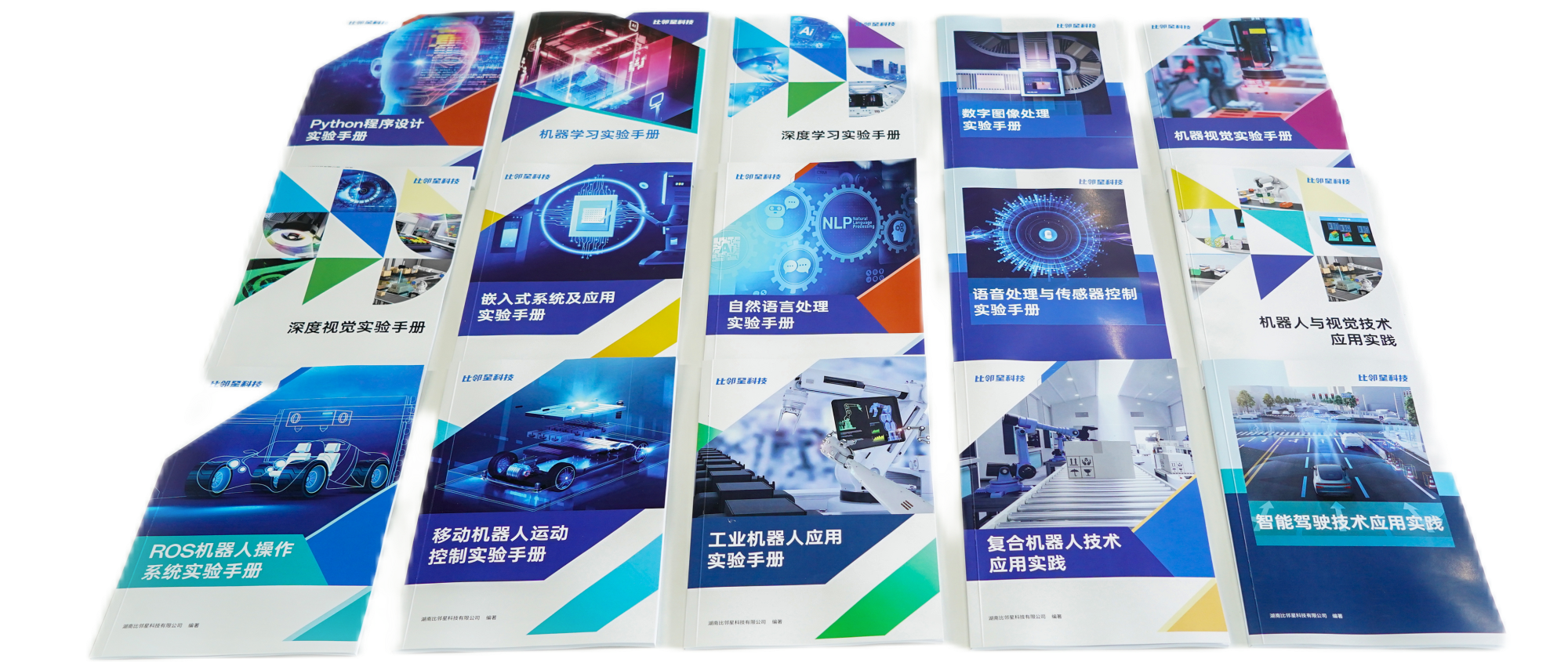
(1) Data Types, Conversion, and Operations
(2) Basic Usage of Python Operators, Built-in Functions, and Sequences
(3) Program Selection Structures
(4) Experiment on Loop Structures
(5) List Experiment
(6) Set Experiment
(7) Function Applications
(8) String Experiment
(9) Data Processing in Python
(10) 0 File Operations in Python
(11) Extracting telephone numbers using regular expressions
(12) Data Visualisation
(13) Python Multi-Processing
(14) Multithreading in Python
(15) The Difference Between Python Processes and Threads
(16) Python-based Serial Communication
(17) Socket TCP Communication in Python
(18) UDP Socket Communication in Python
(19) Modbus Communication in Python
(20) Understanding Object-Oriented Programming in Python
(21) Using Python Classes and Class Instantiation
(22) Using Instantiated Objects in Python
(23) Using Inheritance in Python Classes
(24) Setting up the PyQt5 environment
(25) Using PyQt5
(1) Data Classification on the AdaBoost Movie Dataset
(2) Verification of a Two-Coin Toss Model using the EM algorithm
(3) Clustering of Unlabeled Data Using the K-Means Algorithm
(4) Film Genre Classification Based on the K-Nearest Neighbors Algorithm
(5) Dynamic Pedestrian Detection Based on HOG and Support Vector Machine (SVM)
(6) Decision Tree-Based Diagnosis of Breast Cancer
(7) Naive Bayes-Based Spam Filtering
(8) Face Recognition Based on Random Forests
(9) House Price Forecasting Based on Linear Regression
(1) Linear Regression Modeling and Training
(2) Clothing Classification Using a Neural Network
(3) Neural Network Regularization-Based Clothing Classification
(4) Optimization of Neural Network Parameters
(5) Building and Testing Neural Network Models
(6) Design of an Optimization Model Based on Residual Networks
(7) Neural Network Optimizer
(8) Handwritten Digit Recognition Based on LeNet
(9) Image Object Detection Based on YOLOv5
(1) Algebraic Operations on Images
(2) Image Processing, Encryption, and Decryption
(3) Spatial Domain Filtering
(4) Affine Transformations of Images
(5) Frequency-Domain Filtering of Images
(6) Morphological Rice Grain Detection
(7) Image Extraction Based on the Canny Algorithm
(8) Watershed-Based Contour Segmentation
(9) Hu Moment-Based Shape Matching
(10) Smoothing and Morphological Processing
(1) Introduction to the Vision System
(2) Pixel Dimension Measurement
(3) Bearing Dimension Measurement
(4) Object Localization and Angle Measurement
(5) Measurement of Object Edge Lengths and Area
(6) Object Color and Shape Recognition
(7) Offline Barcode Recognition
(8) Offline QR Code Recognition
(9) Character Segmentation
(10) Character Training and Recognition
(11) Product Surface Defect Detection Based on Morphological Processing
(12) LED Defect Detection
(13) Screw Appearance Defect Detection
(14) Camera Checkerboard Calibration
(15) Electronic Product Recognition
(16) License Plate Recognition Using OpenCV
(17) Vision-Based Barcode Recognition
(18) Vision-Based QR Code Recognition
(19) Vision-Based Object Shape and Color Recognition
(20) Vision-Based Fruit Classification
(1) Robotic Arm Fundamentals and Basic Operations
(2) Robotic Arm Teaching and Motion Control
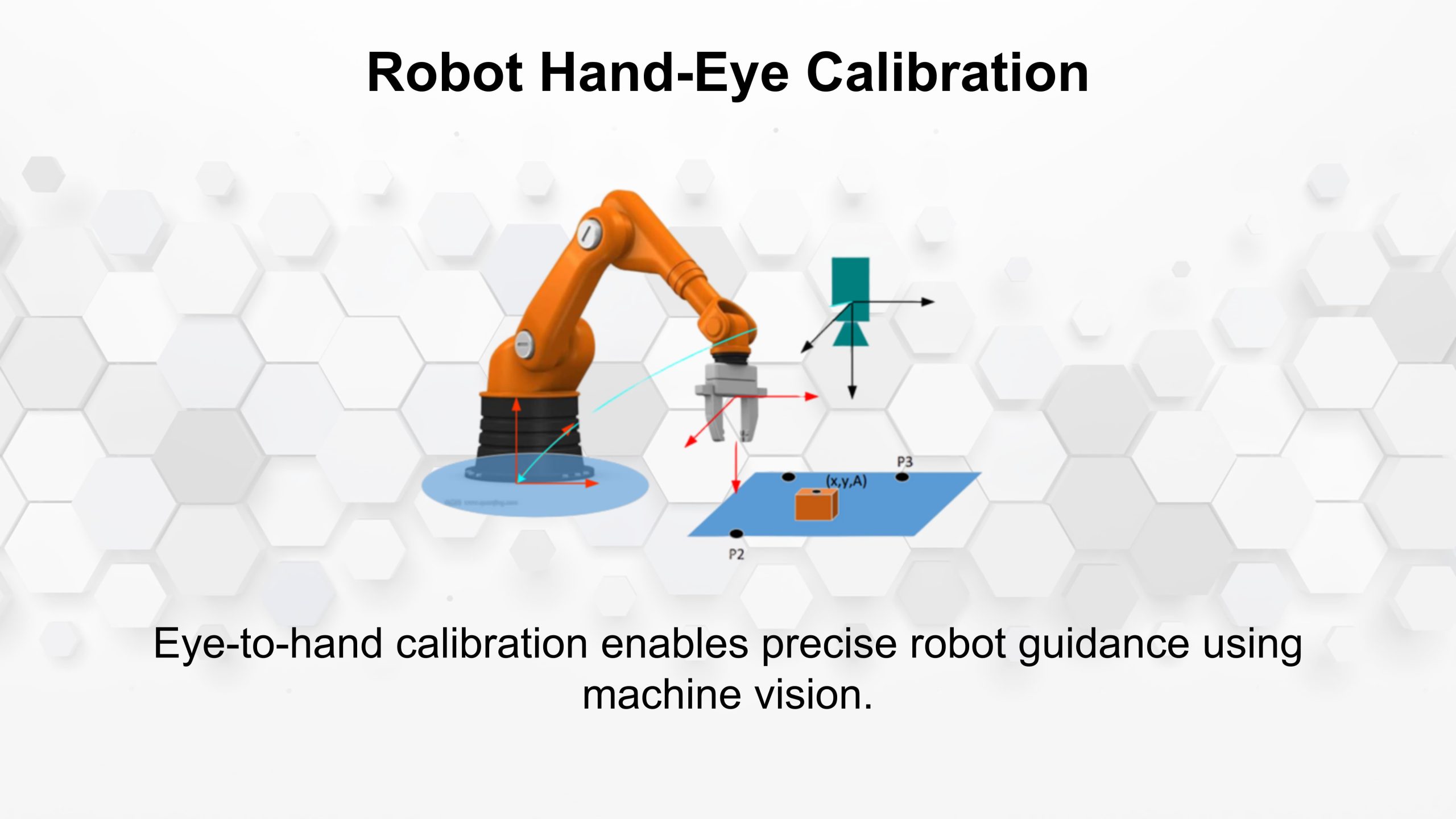
(3) Calibration of the Robotic Arm and the Vision System
(4) Vision-Based Robotic Arm Object Classification
(5) Vision-Based Robotic Arm Object Palletising
(6) Vision-Based Robotic Arm Digital Sorting
(7) Vision-Based Robotic Arm Fruit Sorting
(1) Definition and Key Characteristics of Large Language Models
(2) Current Applications of Large Language Models Across Various Industries
(3) Data Collection and Preprocessing for Large Language Models
(4) Fine-Tuning and Training of Large Language Models
(5) Local Deployment and Inference of Large Language Models
(6) Local Service Integration and API Invocation of Large Language Models
(7) Prompt Engineering for Text-Based Large Language Models
(8) Intelligent Text Question-Answering Systems Based on Large Language Models
(9) Intelligent Voice Conversation Systems Based on Large Language Models
(10) Deployment and Applications of Multimodal Large Models
(1) Knowledge-Based Question Answering System Using Large Language Models
(2) Industrial Parts Sorting Experiment Based on Large Language Models
(3) Multimodal Large Model Applications Integrating Vision and Language
(4) Cloud-Based Large Model Image Generation Applications
Contact us if you need a custom course.
The platform supports courses in robotics, machine vision, PLC programming, intelligent manufacturing, AI applications, mechatronics, industrial automation, and large language model (LLM) technologies.
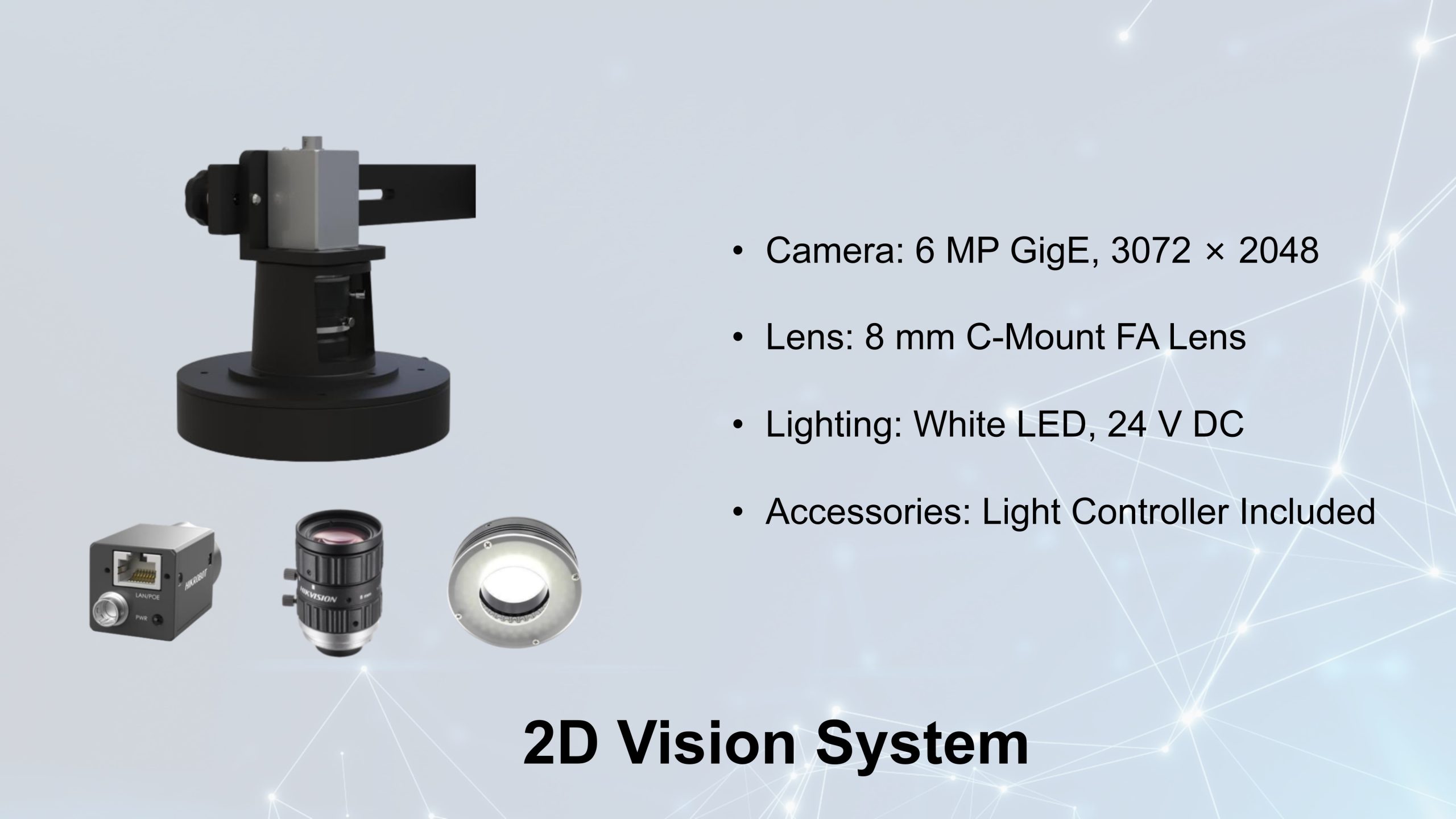
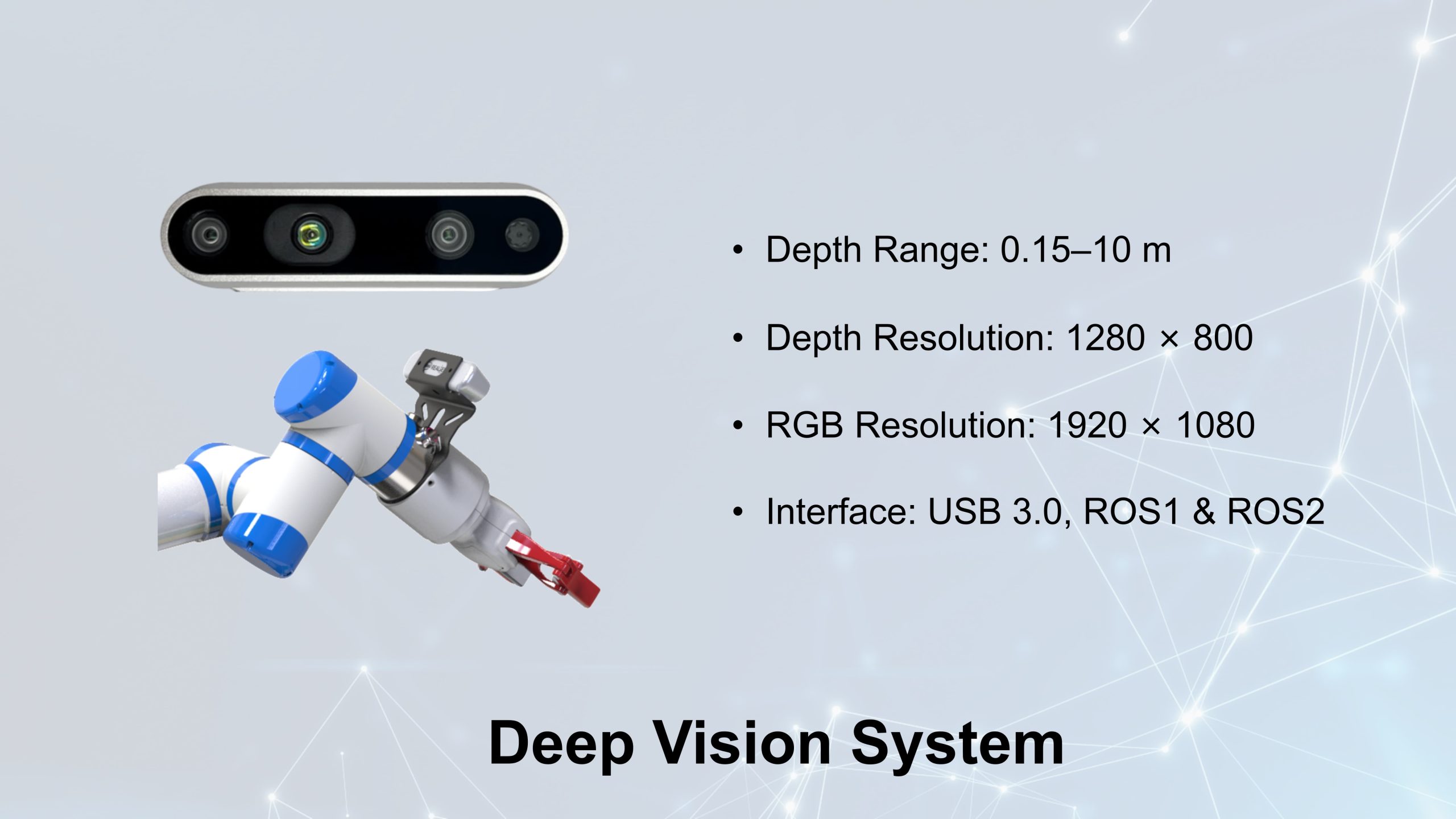
It integrates three collaborative robots, one 2D vision system, two depth vision systems, PLC control, conveyors, sensors, and locally deployed AI models to simulate a complete intelligent manufacturing workflow.
Yes. Students can learn robot programming, trajectory teaching, kinematics, coordinated motion, SDK development, and multi-robot control using fully open collaborative robots.
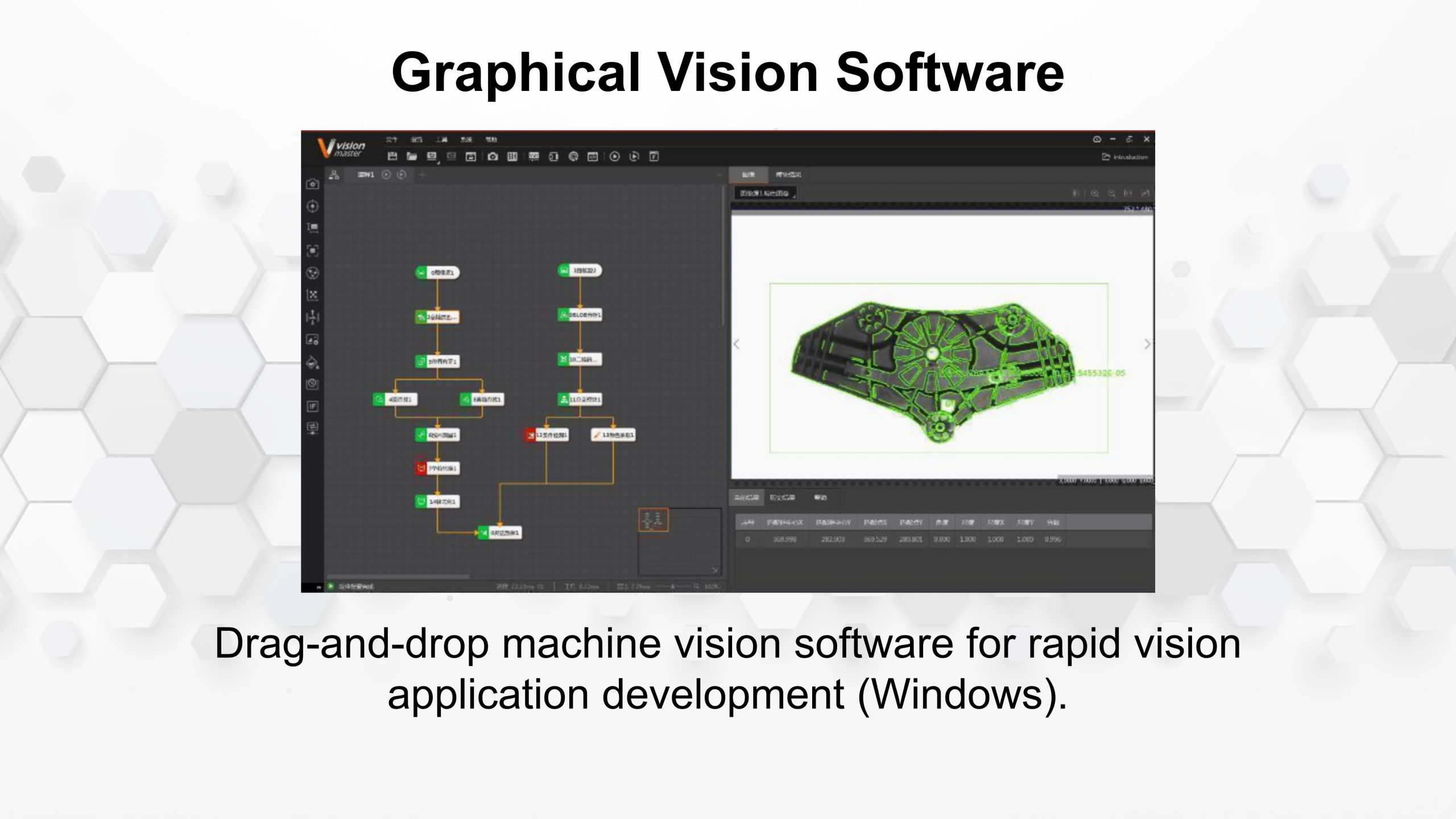
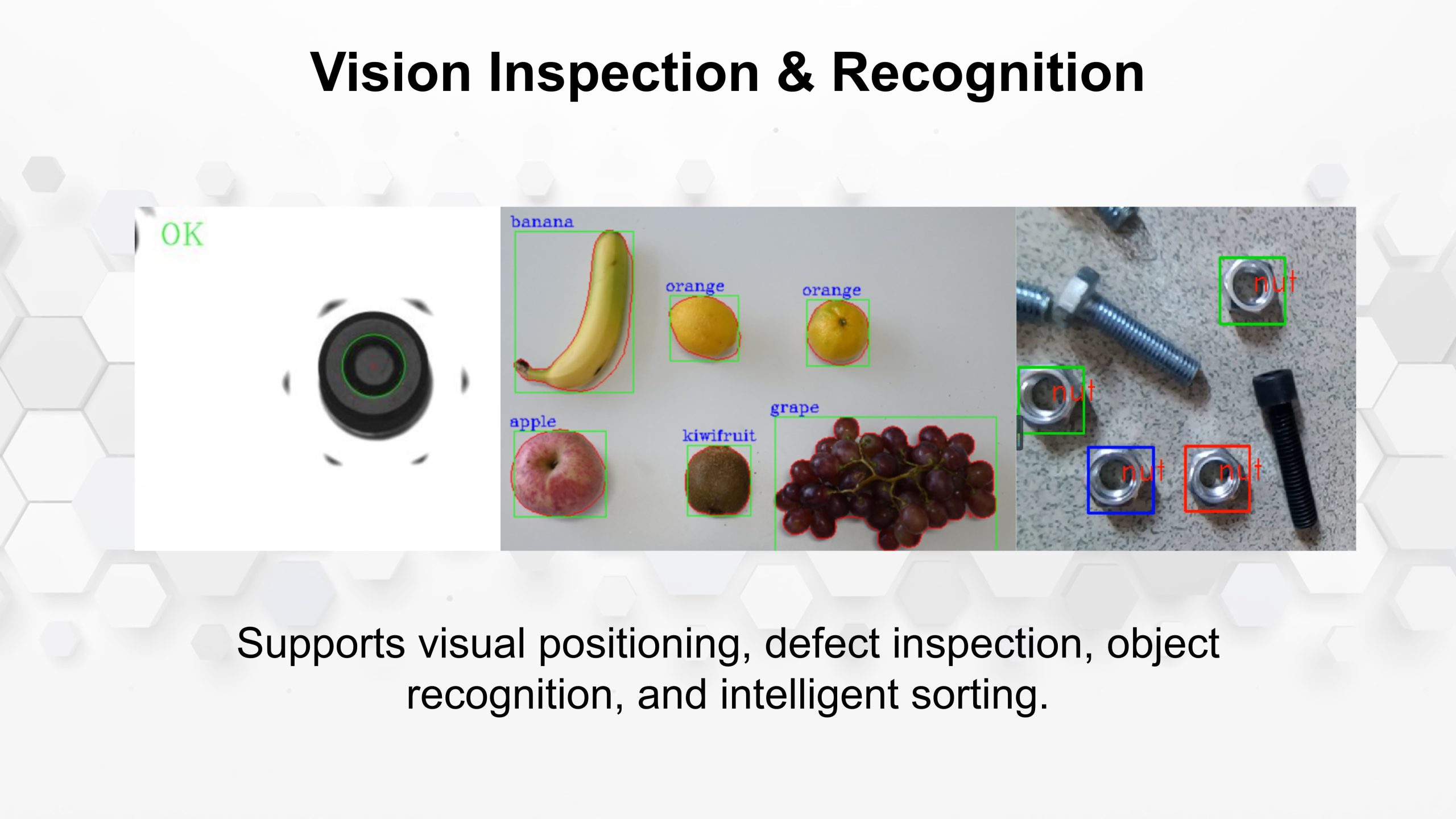
Yes. The platform supports 2D vision and 3D depth vision, enabling positioning, guidance, inspection, measurement, OCR, defect detection, and robotic picking applications.
Yes. Three collaborative robots can operate simultaneously with the vision systems, conveyor, PLC, and sensors to complete coordinated manufacturing tasks.
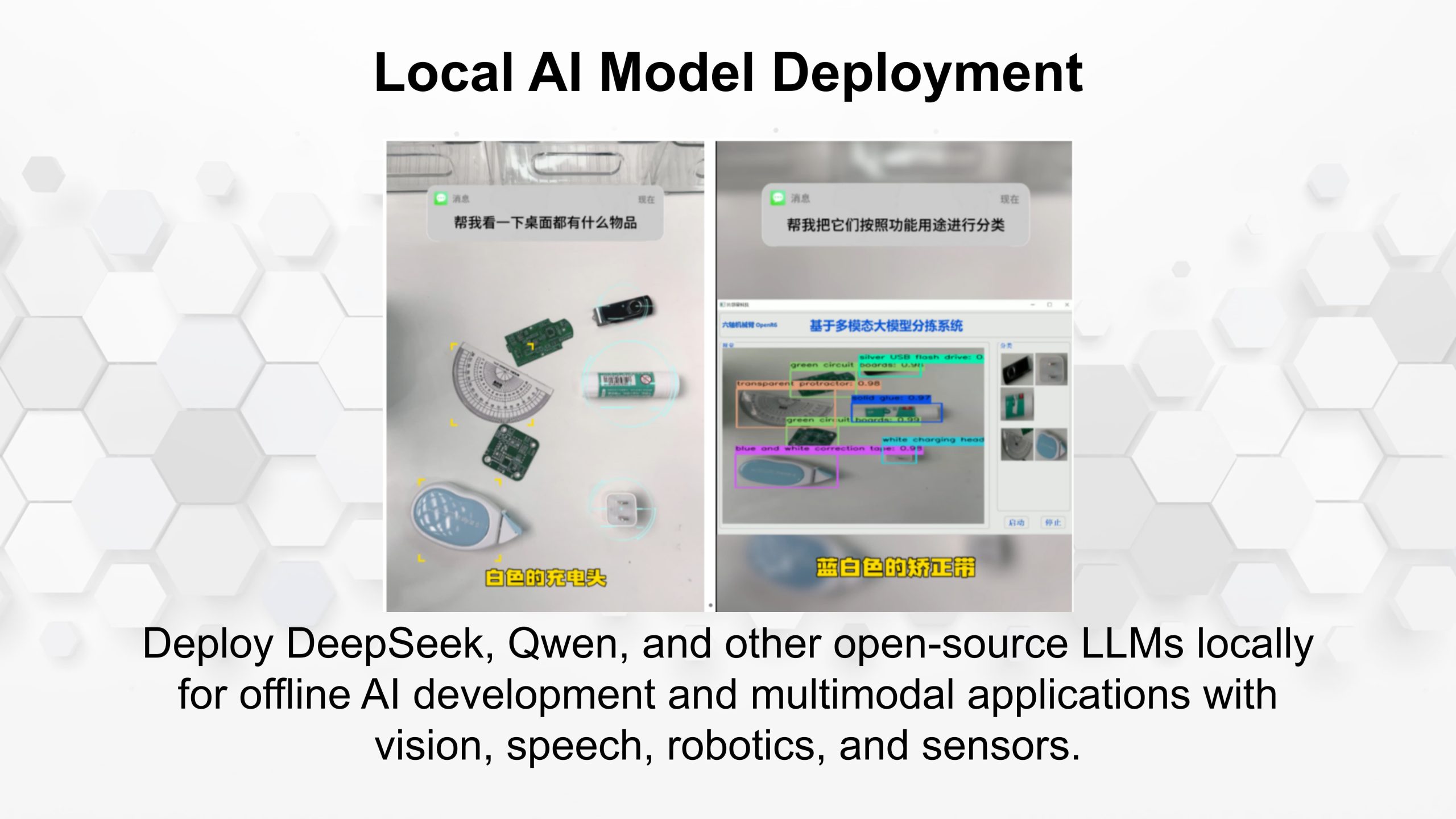
Yes. DeepSeek, Qwen, and other open-source LLMs can be deployed locally, enabling offline development for AI-powered robotics, vision, speech interaction, and intelligent automation.
Yes. Students can develop PLC logic, HMI interfaces, industrial communication, and coordinated control between robots, conveyors, sensors, and vision systems.
The platform supports robot loading, visual inspection, robotic assembly, object sorting, material handling, warehousing, and intelligent production line automation, closely matching real industrial workflows.
Yes. The modular architecture supports additional end-effectors, sensors, vision devices, AI models, and industrial automation modules for advanced teaching and research.
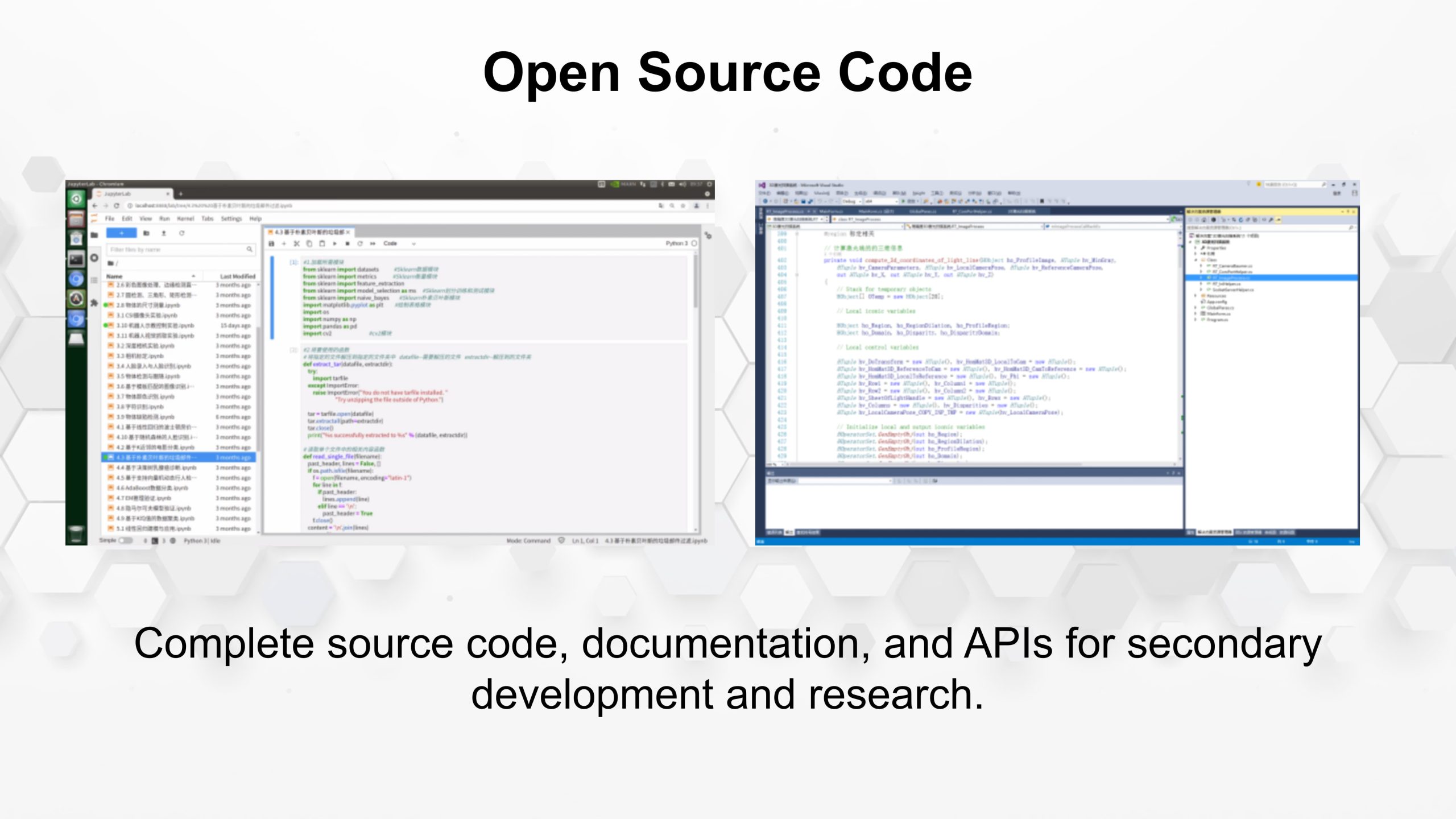
The platform includes experiment manuals, curriculum resources, industrial image datasets, application examples, robot development guides, and fully open software frameworks and source code for secondary development.
Our engineers can help you choose the right platform, customize laboratory solutions, and provide technical support for your education and research projects.
✔ Product Selection
✔ Laboratory Planning
✔ Curriculum Support
✔ Global Technical Service