
Introduction: Why Low-Cost Robotics Training Matters
Low-cost robotics training is becoming an important topic for universities that want to introduce artificial intelligence and robotics education without building expensive industrial laboratories. As technologies such as machine vision, deep learning, and intelligent manufacturing become part of modern engineering education, schools are searching for practical ways to provide hands-on learning while keeping costs under control.
In many cases, universities believe that robotics education requires a large investment in equipment and infrastructure. However, with the right low-cost robotics training platform, institutions can still deliver high-quality courses covering robotics, AI applications, and machine vision.
By integrating compact robotic systems, edge computing devices, and open-source AI frameworks, universities can create a robotics training lab that supports both teaching and experimentation.
Low-Cost Robotics Training in Modern Engineering Education
brp_mask:0;
brp_del_th:null;
brp_del_sen:null;
module: photo;
hw-remosaic: false;
touch: (-1.0, -1.0);
sceneMode: 8;
cct_value: 0;
AI_Scene: (-1, -1);
aec_lux: 67.0;
aec_lux_index: 0;
albedo: ;
confidence: ;
motionLevel: 0;
weatherinfo: null;
temperature: 17;
Today, low-cost robotics training plays an increasingly important role in engineering and technology education. Students are expected to learn not only theoretical knowledge but also practical skills related to robotics systems and intelligent manufacturing.
Typical courses supported by robotics training platforms include:
- Python programming
- Machine vision and digital image processing
- Deep learning applications
- Vision-guided robotics
- Robot motion control
- Intelligent manufacturing systems
A compact robotics training environment allows students to see how AI algorithms interact with real machines. For example, a machine vision system can detect objects on a conveyor belt, while a robotic arm performs picking and sorting tasks.
This type of hands-on robotics training helps students understand how AI technologies are applied in real industrial scenarios.
A Compact Lab Setup for Low-Cost Robotics Training
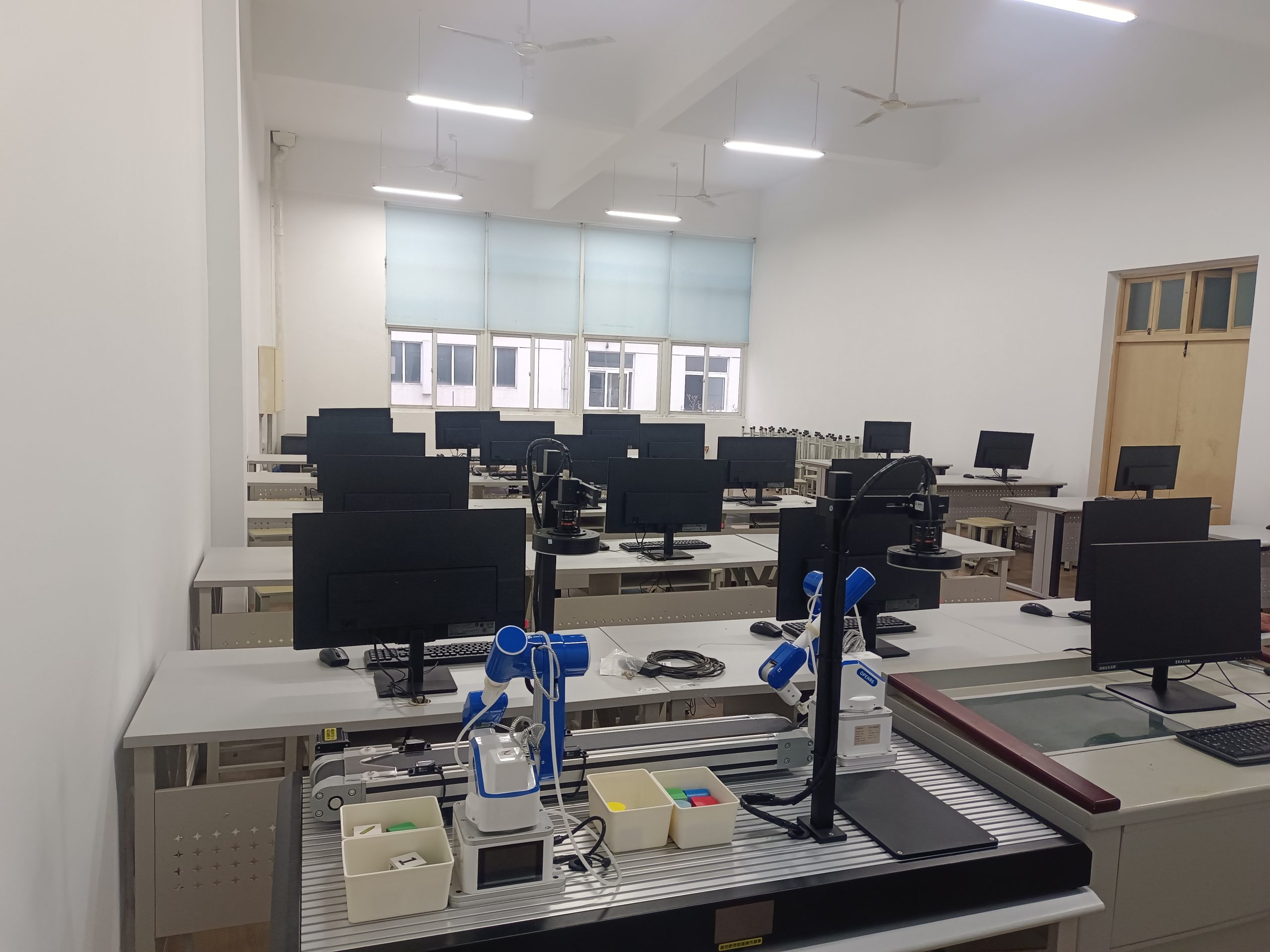
One effective approach to low-cost robotics training is to build a small but integrated robotics laboratory. Instead of installing multiple complex industrial systems, universities can focus on a single training production line that combines several technologies.
A typical setup may include:
- 20 computers for programming and model training
- One robotic vision sorting system
- Basic classroom equipment such as desks and display screens
Although the configuration is simple, it allows students to complete many experiments related to AI and robotics.
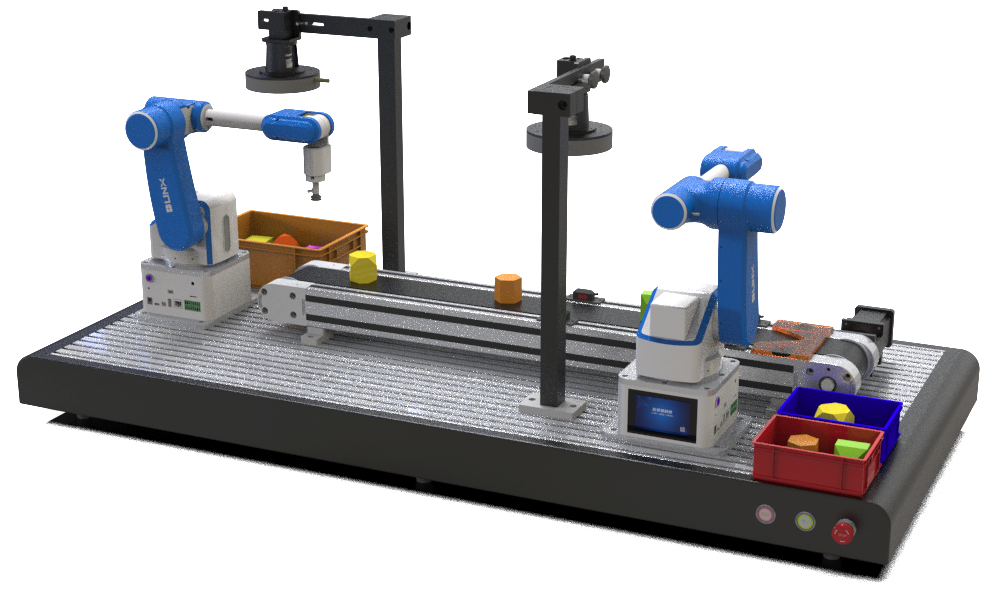
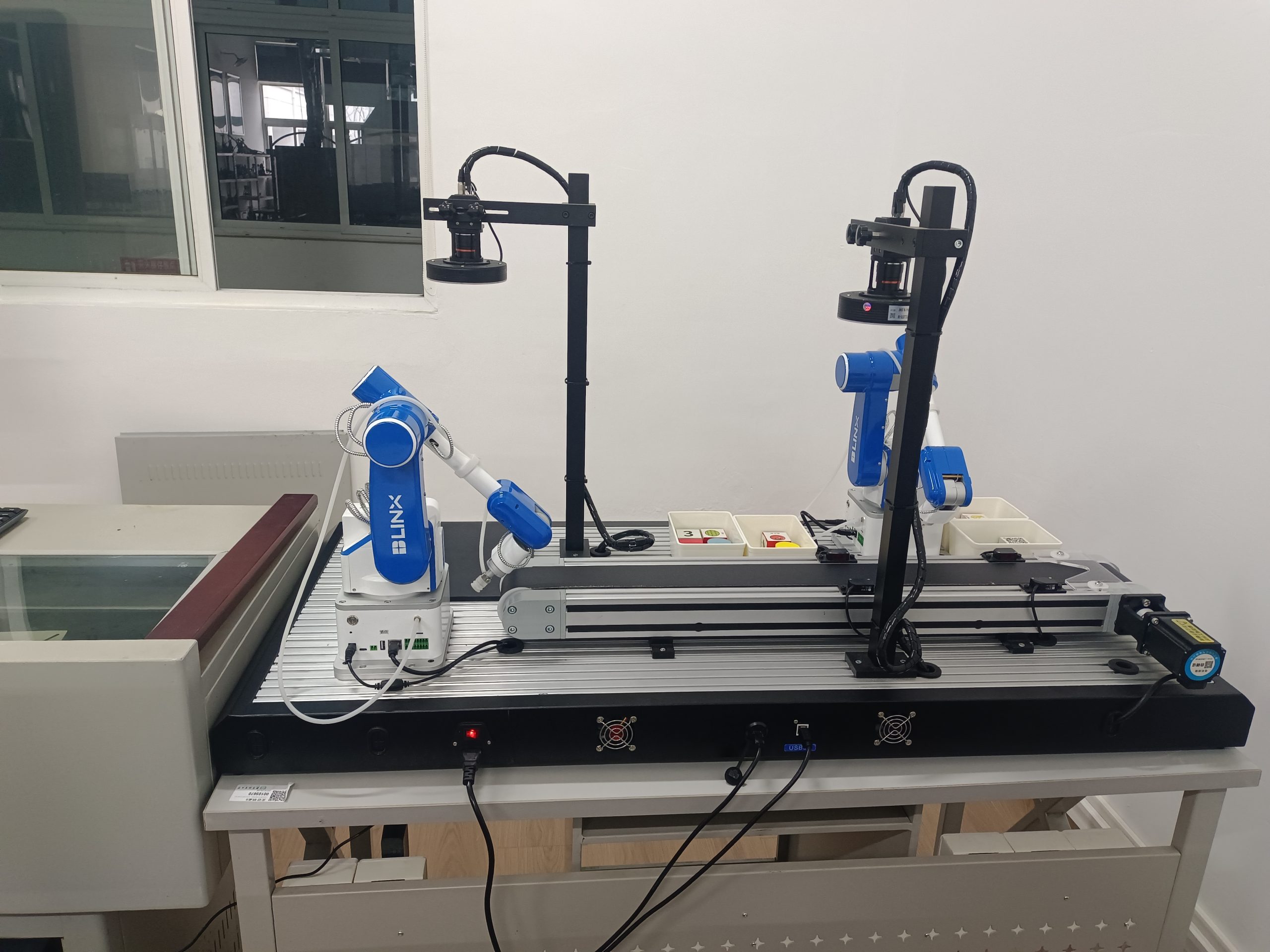
For example, a robot vision sorting production line may include:
- Two six-axis robotic arms
- Two machine vision systems
- A conveyor system with sensors
- An edge computing terminal for AI processing
Using this type of robotics training platform, students can learn the full workflow of an automated system.
Low-Cost Robotics Training with Machine Vision and AI
Machine vision is one of the most important technologies in low-cost robotics training. When combined with robotic arms, vision systems enable robots to perform intelligent tasks such as object detection and automatic sorting.
In a typical experiment, the workflow may include:
- Visual positioning – the vision system detects the location of objects.
- Robot picking – a robotic arm picks the object from the conveyor.
- Inspection or recognition – the vision system identifies the object type or checks for defects.
- Automatic sorting – another robot sorts the object based on the recognition result.
Through this process, students learn how AI algorithms, machine vision, and robot control work together.
Many low-cost robotics training systems also support open-source frameworks such as PyTorch and TensorFlow. This allows students to run deep learning models, modify algorithms, and build their own AI applications.
Advantages of Low-Cost Robotics Training Platforms
Universities are increasingly adopting low-cost robotics training solutions because they provide several advantages.
First, they reduce the financial barrier for building robotics laboratories. Instead of purchasing many separate systems, schools can use a compact integrated platform.
Second, these systems support multiple courses. A single training platform can be used for robotics programming, machine vision, deep learning, and intelligent manufacturing classes.
Third, open-source robotics training environments allow students to experiment with real code and develop new applications.
Finally, a low-cost robotics training platform makes it easier for universities to upgrade their laboratories as technology evolves.
Conclusion: The Future of Low-Cost Robotics Training
As artificial intelligence and robotics continue to transform industry, universities must provide students with practical experience in these technologies. Low-cost robotics training offers a realistic solution for building modern AI and robotics laboratories without excessive investment.
By combining compact robotic systems, machine vision technology, and open AI frameworks, universities can create powerful training environments that support both education and innovation.
In the future, low-cost robotics training platforms will play a key role in helping students understand how robotics, AI, and intelligent manufacturing systems work together in real-world applications.